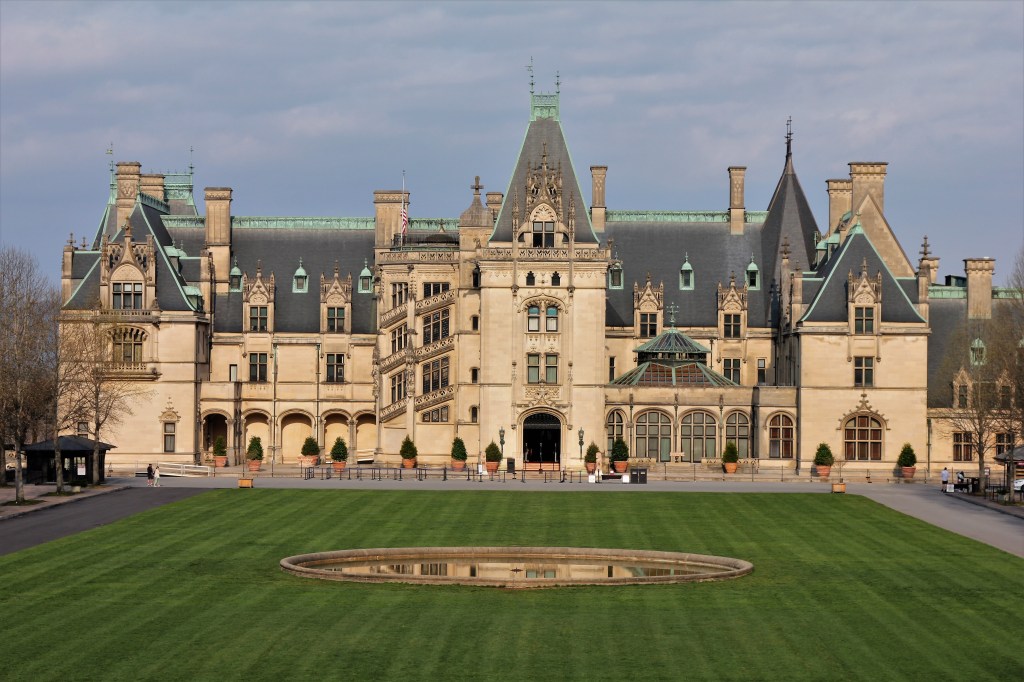
As we are nearing the end of the COVID-19 pandemic, people are itching to escape the confines of home to see a bit of the world again. One noteworthy attraction just over 2 hours from Charlotte, NC is the Biltmore mansion located in Ashville, NC. This was my first visit to the Biltmore home and I hadn’t done any research, but I learned a ton on our tours.
So, what do you do when your grandfather was a railroad baron and you inherit over $5 million dollars in 1885 (equivalent to $135,000,000 today)? I guess you build the nations largest privately owned residence. At just under 180,000 square feet of living space. the Biltmore provided just enough space for George Vanderbilt, his wife, Edith and their daughter, Cornelia. Yes, 3 people lived in the home and it started as a bachelor pad.
Building the Mansion
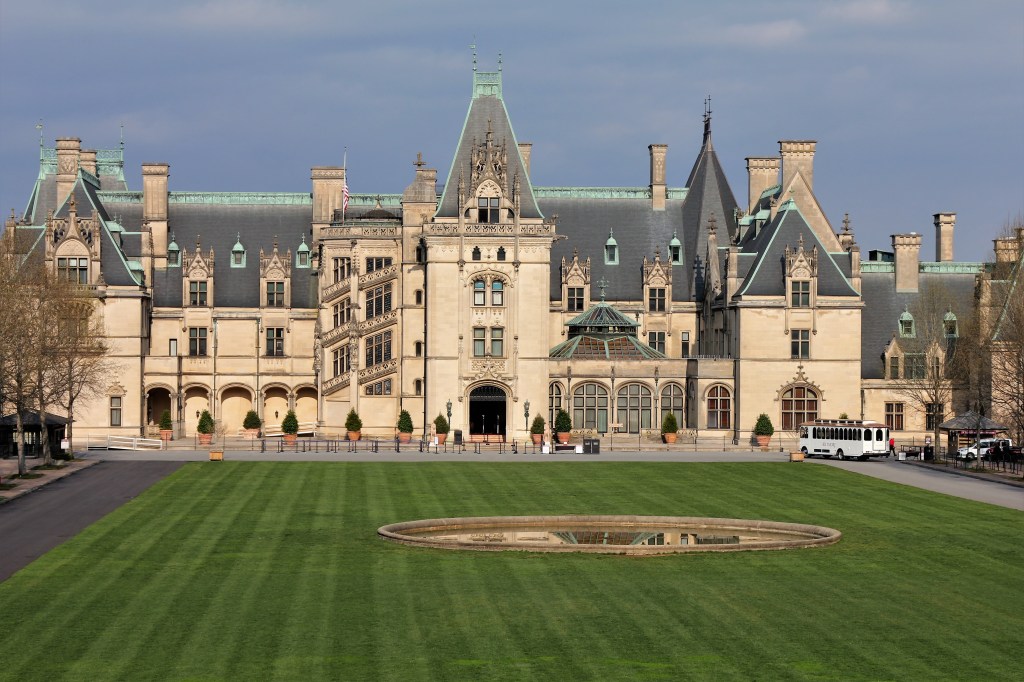
George Vanderbilt started the construction in 1889, employing over 1000 workers and 60 stonemasons. During our tour the guide informed us that most of the stonemasons were from Europe and every stone façade or carved artwork was done by hand. The house isn’t really a limestone block home but a steel framed home with a 4-6 inch skin of limestone. To keep it looking fresh, the stone was hand cut with small grooves, called crandalling, so the water would not leave marks and the silica in the stone would reflect the sun more than unaltered limestone. I must admit the morning sun did reflect nicely from the home.
The stone was shipped to Ashville from Indiana and moving the many tons while cumbersome wasn’t as difficult if you are the son of a railway baron. George Vanderbilt moved by rail and a even had a 3 mile spur constructed to deliver it to the front of the mansion.
Arriving in Ashville, we found ourselves nestled in the Blue Ridge Mountains. The town itself is an amalgam of college students, art museums and relaxed people that in the late ’60s we would have called “hippies”; however, all of this is generally fueled by an infusion of capital brought by tourists visiting the Biltmore mansion.


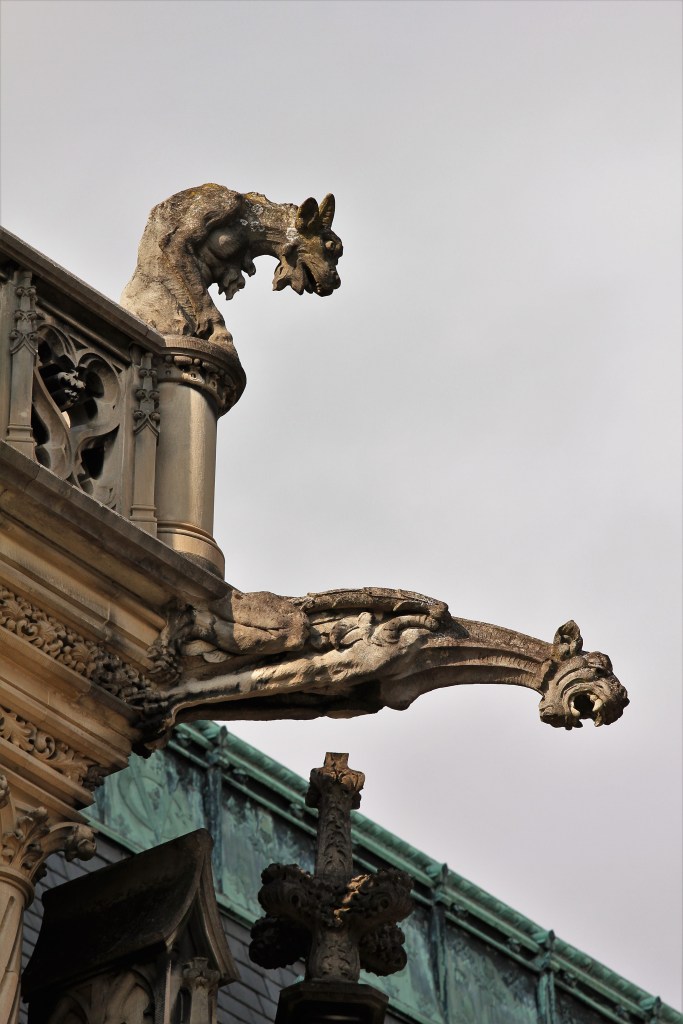
The above is a Grotesque while the below is a Gargoyle 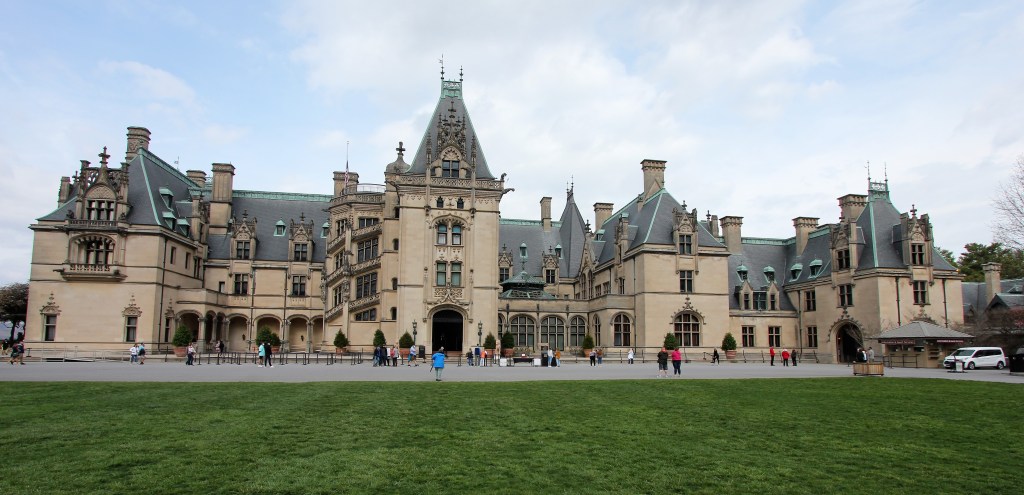
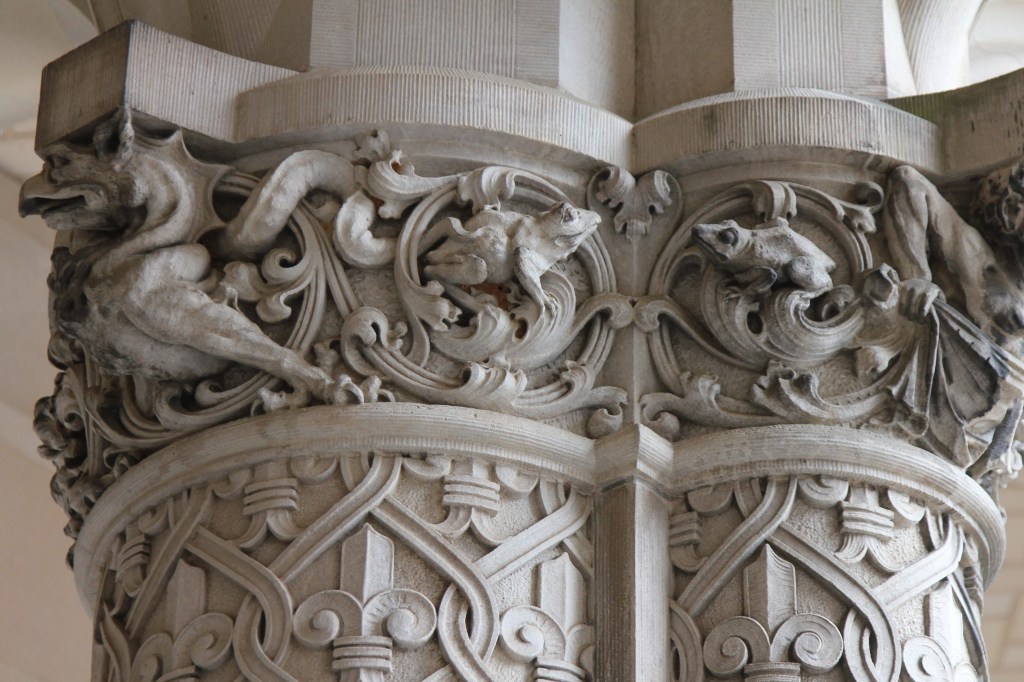
Lots of manual stonework 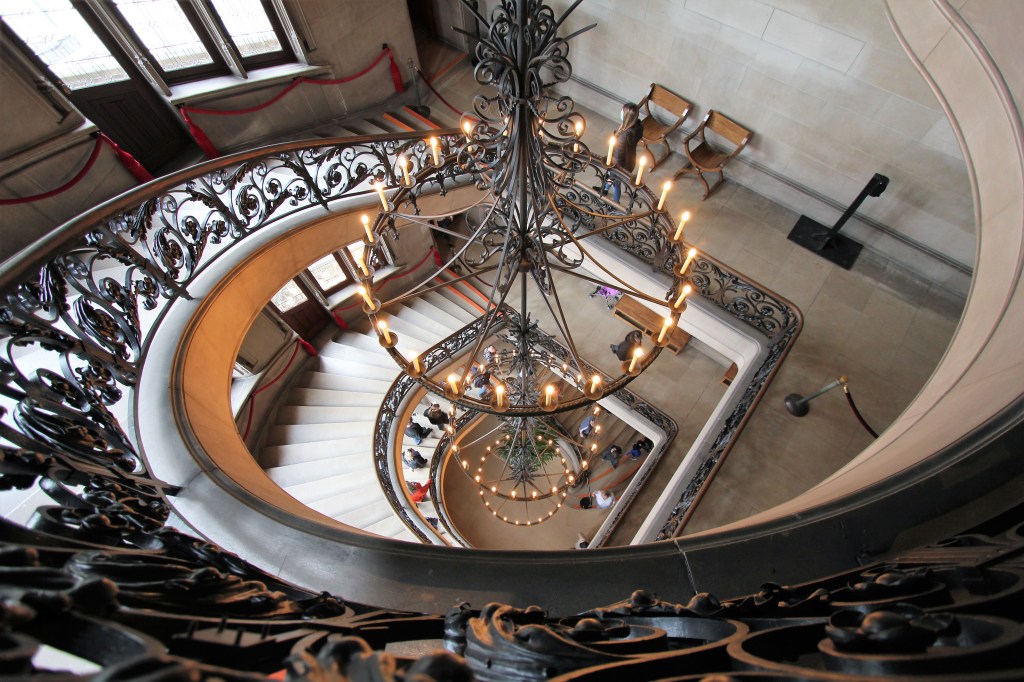
Beautiful cantilevered staircase 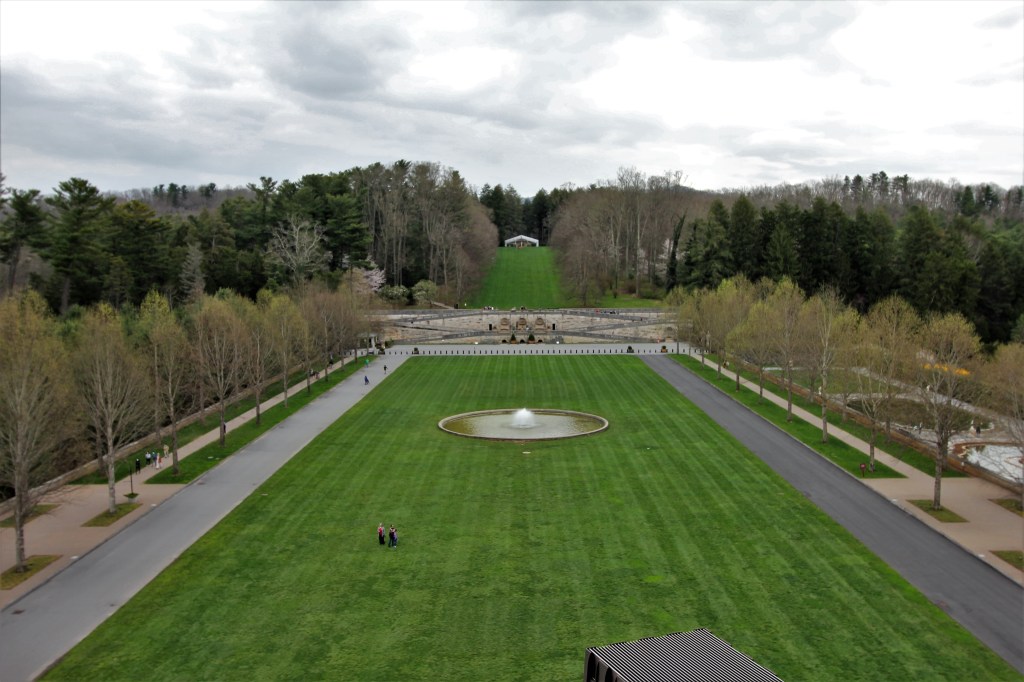

Grotesque butt crack 
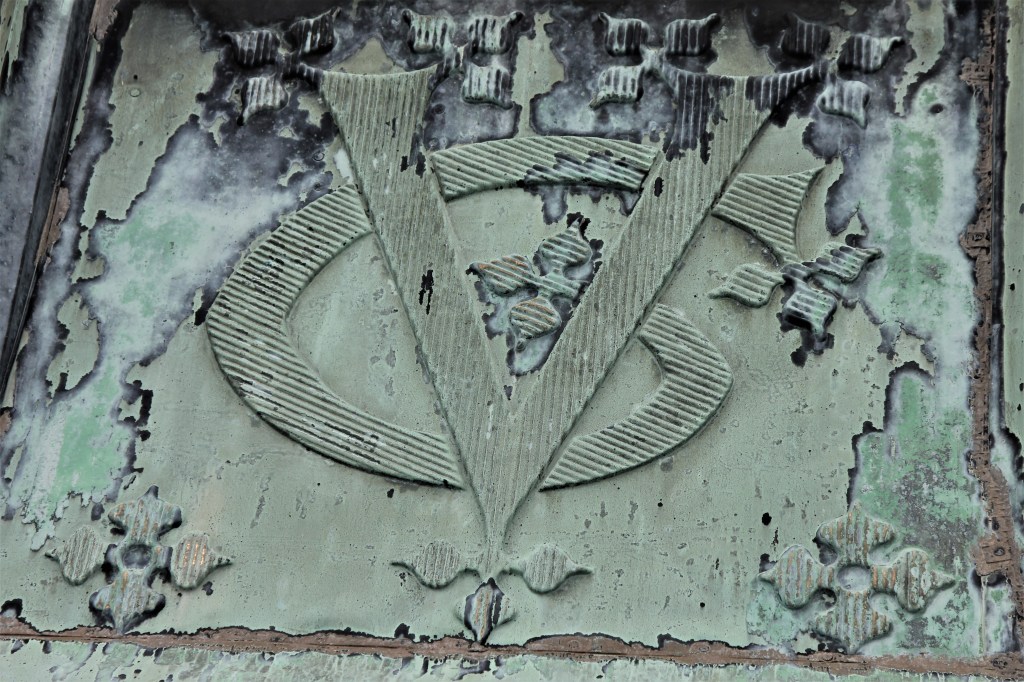
Doesn’t everyone have monogrammed roof ridge caps? 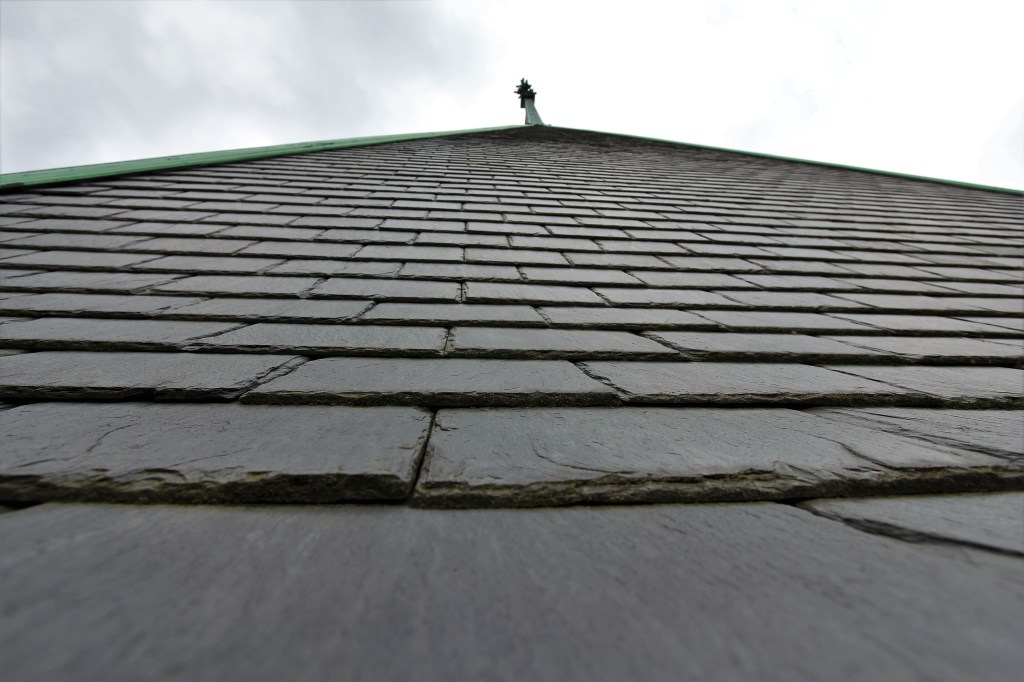
Lots of slate roof tiles 
Slate tiles hand wired to angle iron roof supports 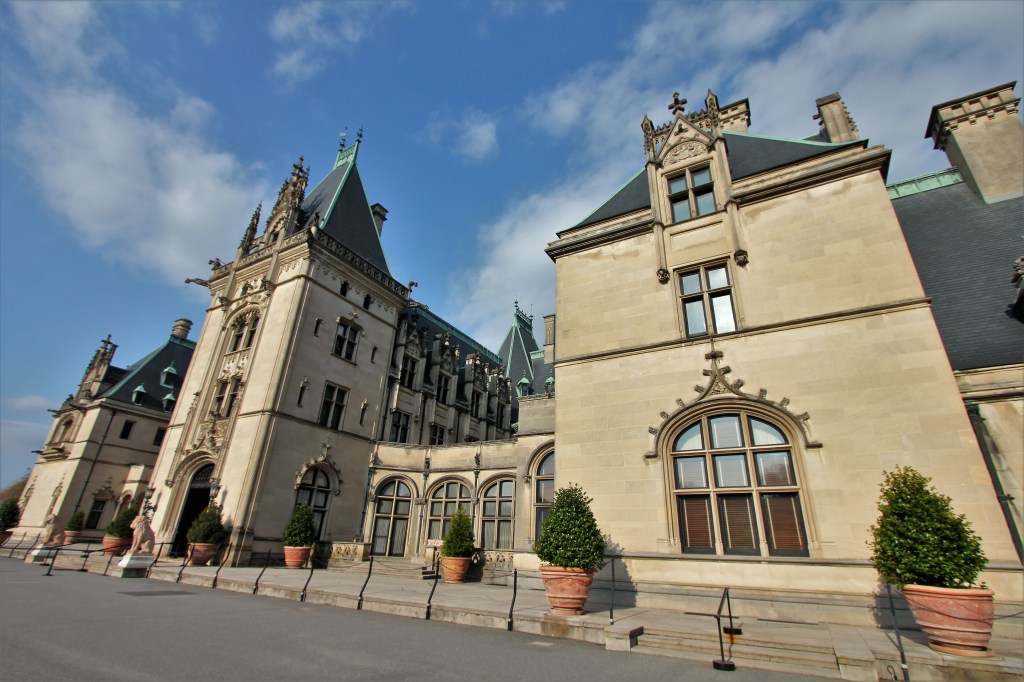
Built in the style of a French chateau, it is also adored by may European items including precious tapestries, carpets, a huge collection of prints, grand pianos, and linens all dating from the 16th century. One particular architectural feature I really liked was the grand staircase, which has no central support. In order to balance the weight and keep the staircase sound the actual stone rungs pierce the outside wall and are counterbalanced by the outside steps and railing. A neat piece of engineering. The mansion was opened Christmas eve in 1905 for the single owner!
The Gardens
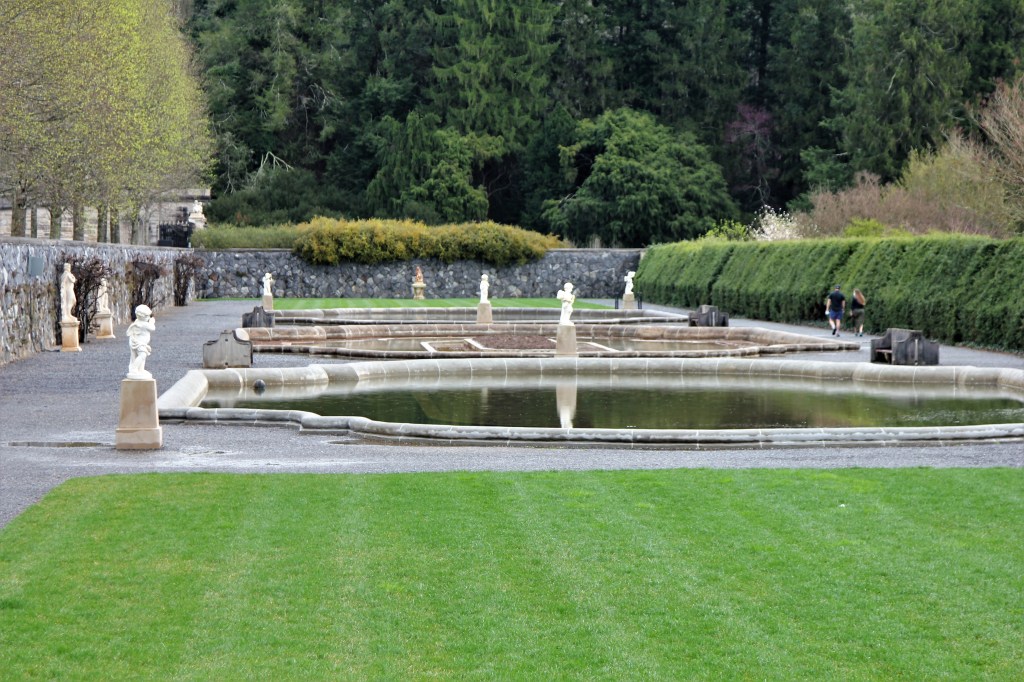
Designed by Fredrick Olmsted the Biltmore gardens and grounds cover 8,000 acres the Biltmore has several gardens. The closest garden to the house is the Italian garden with it’s three pools statures, walkways and feminine statues. Following the crowds one continues walking towards the conservatory, where you will pass the walled garden with its formal gardens. We saw hundreds of tulips, daffodils and other flowers.

Too early to see in full bloom 
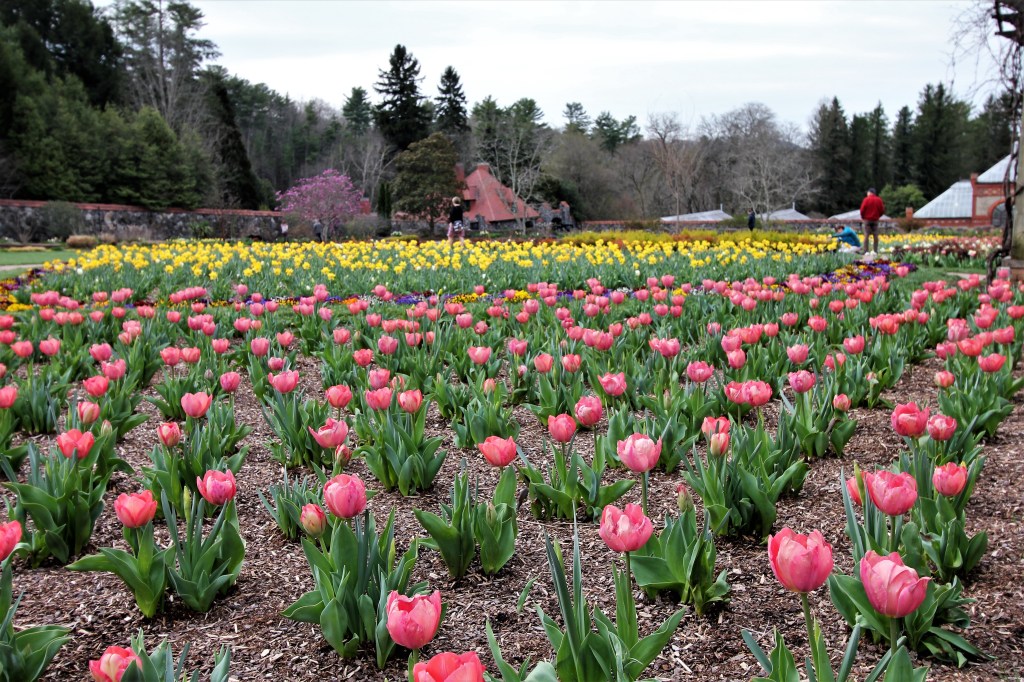

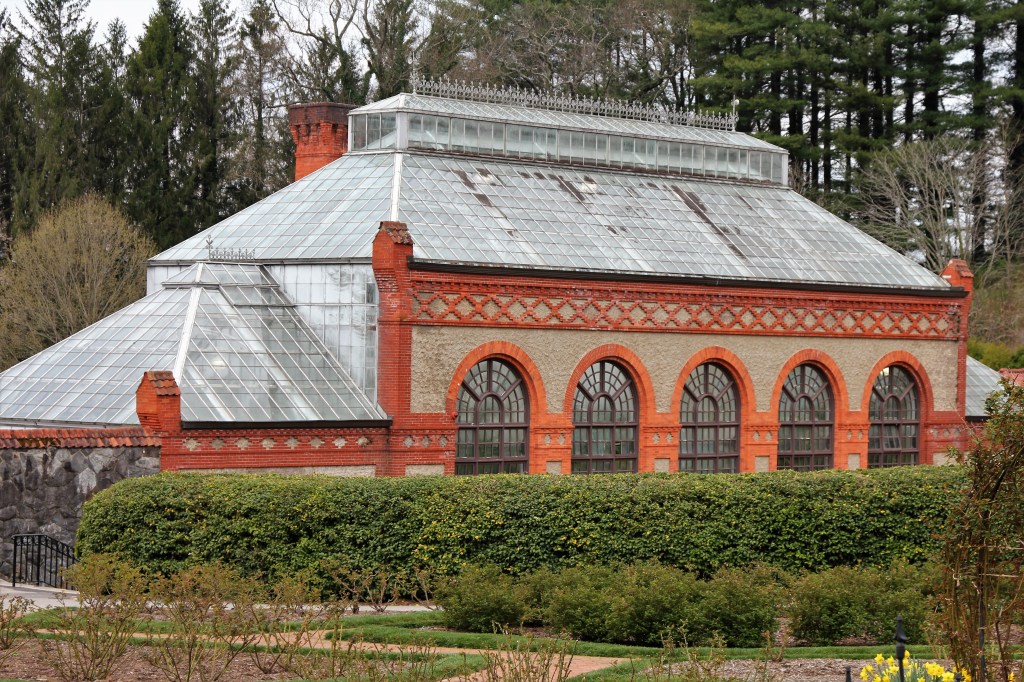
Conservatory 
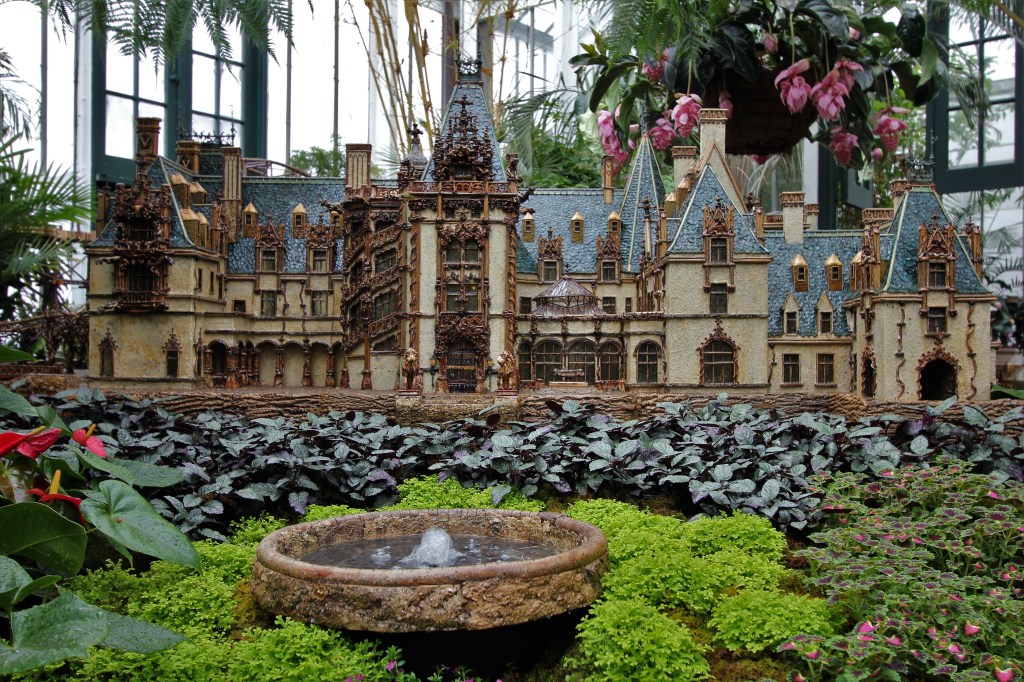

Italian Garden
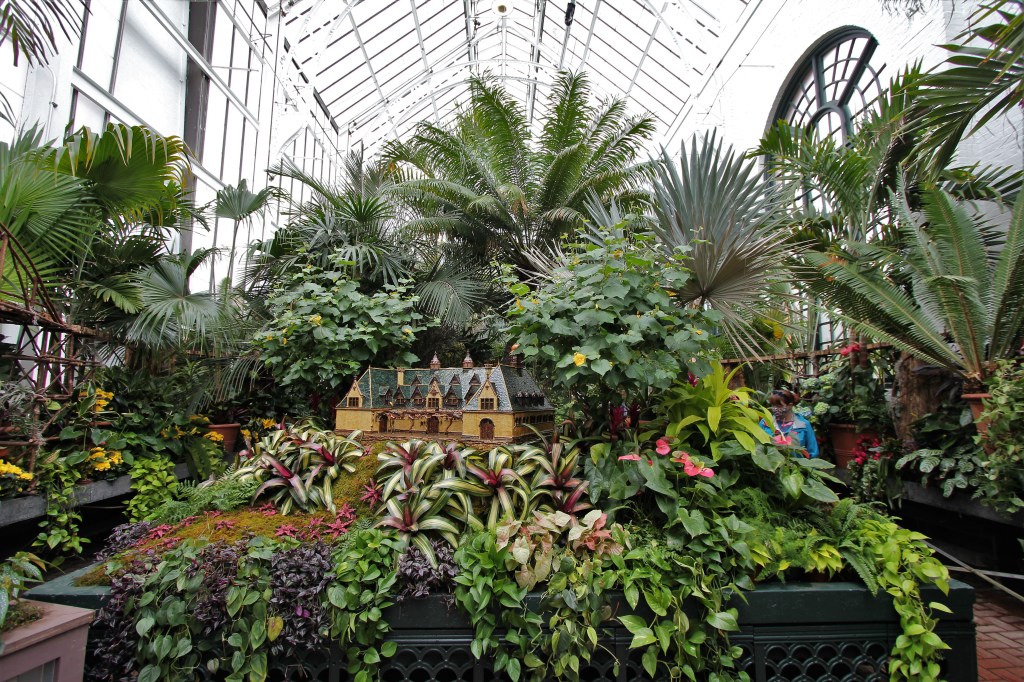
Entering the conservatory, built in 1895 you are greeted with even more flowers. The conservatory has three specifically designed sections: the cool house, the hot house and the orchid room. Each area is presented magnificently with miniature replicas of the house and other estate structures. I wish we could have spent more time and relaxed a bit more in the gardens but we had an early tour of the mansion, so we needed to keep moving. We did manage to swing by the shrub garden and the rose garden as we made our way back to the main house but missed the spring garden and Azalea garden. I recommend wearing comfortable shoes as you will likely do plenty of walking and climbing stairs during your walks of the grounds and tours.
Inside the Mansion
Of course, the highlight of visiting the Biltmore was the mansion tours. We ended up doing three tours, the main mansion tour, the backstairs tour (where the employees worked) and the rooftop tour. Personally, I was not impressed by the backstairs tour as it added precious little that the main tour didn’t give you an appreciation for. The mansion itself (at least what as been restored for public viewing) is quite stunning and is a splendid time capsule of how the Vanderbilt’s lived. While still a privately owned, residence it is preserved in it’s original form and has not been updated for the 20th or 21st centuries. The family heirs live in separate homes from the mansion and tours help with the upkeep and preservation of the Biltmore home, grounds and now hotels and other complexes.
Garden Atria 
Billiard room 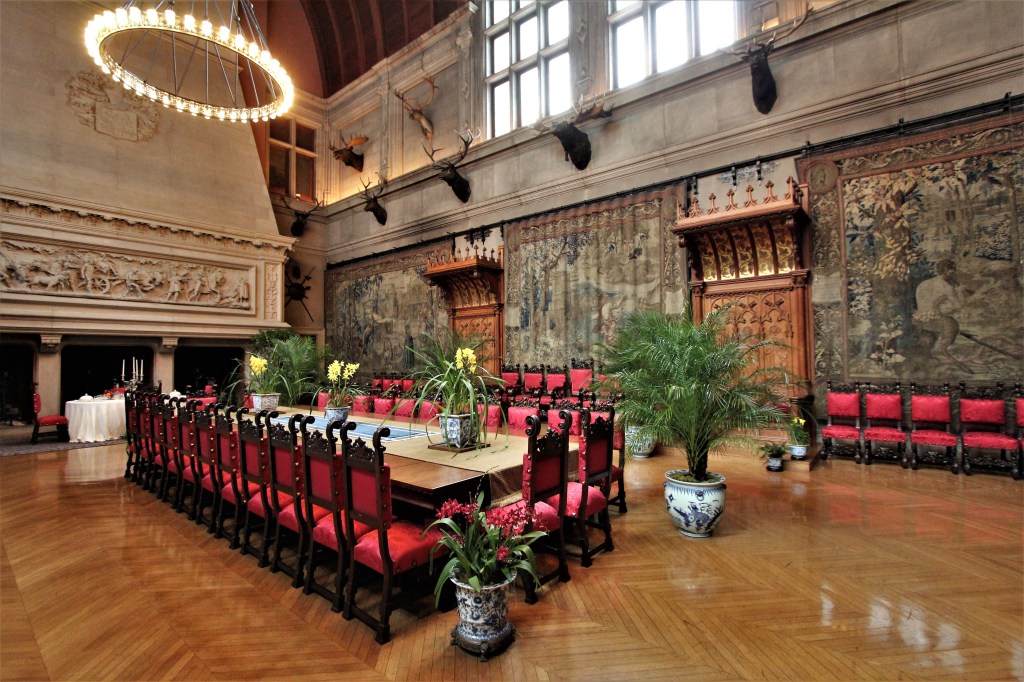
Dining for 52? 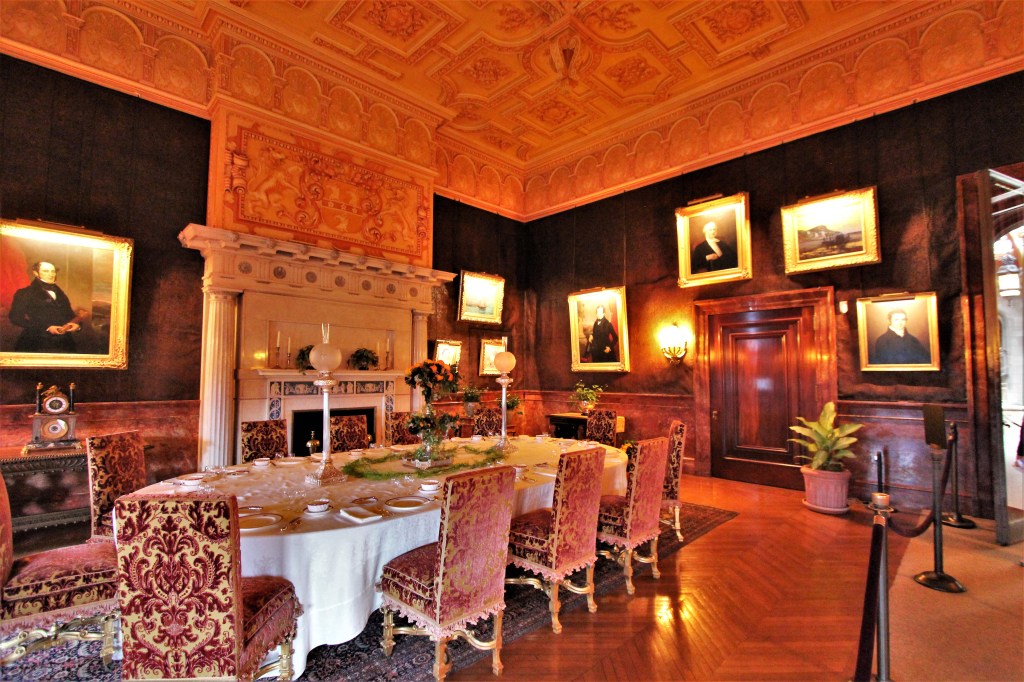
Breakfast nook 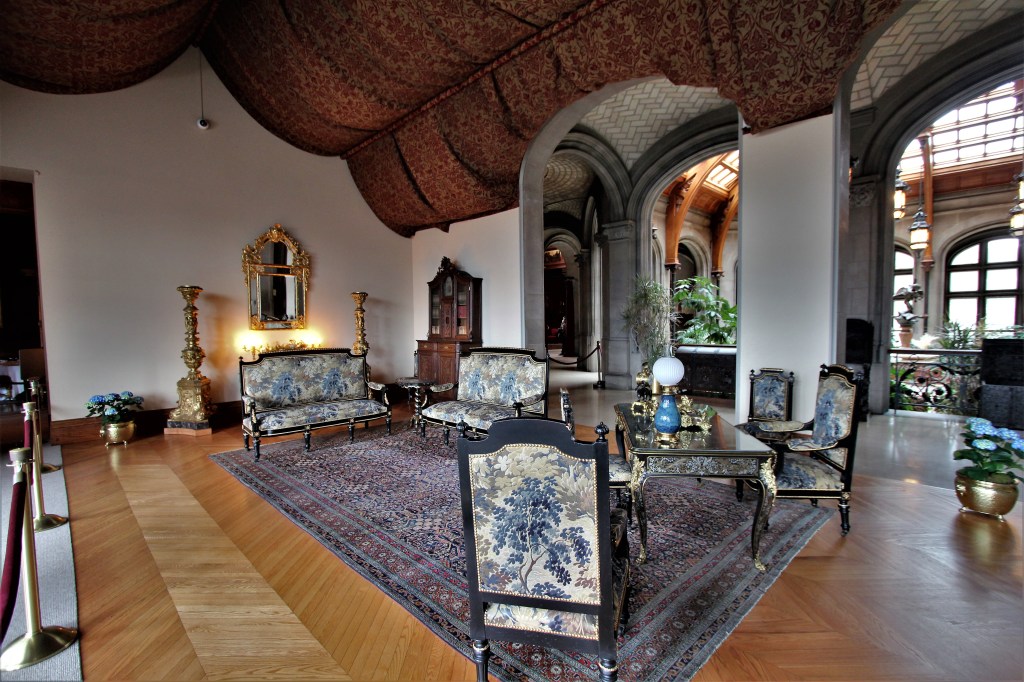
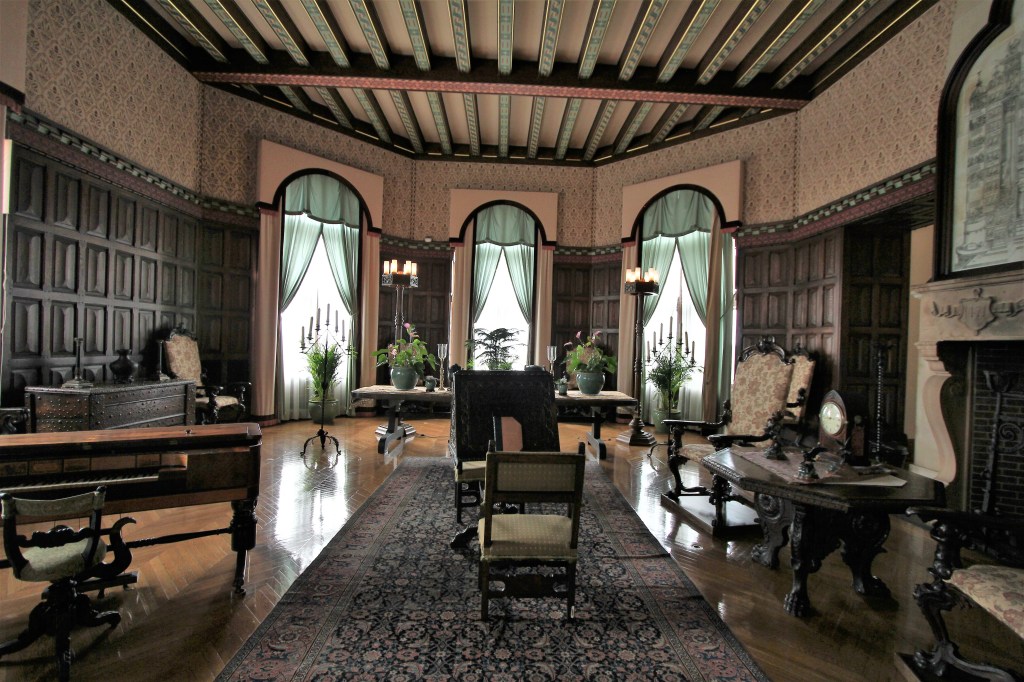
Music room 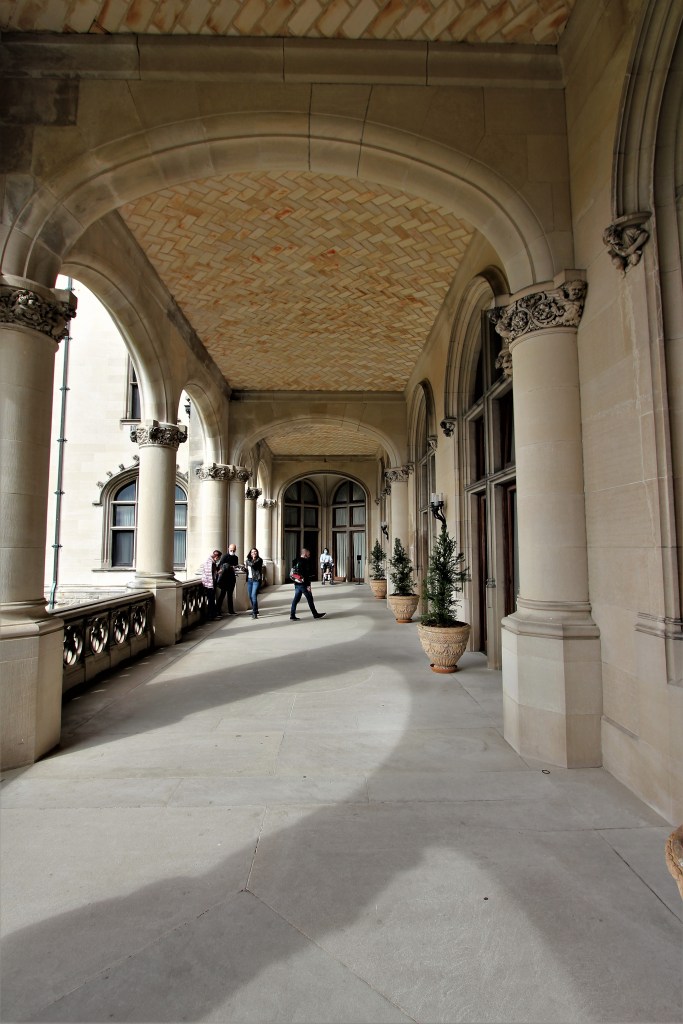
Portico overlooking the rear grounds 
Two floor library with hidden door to second level 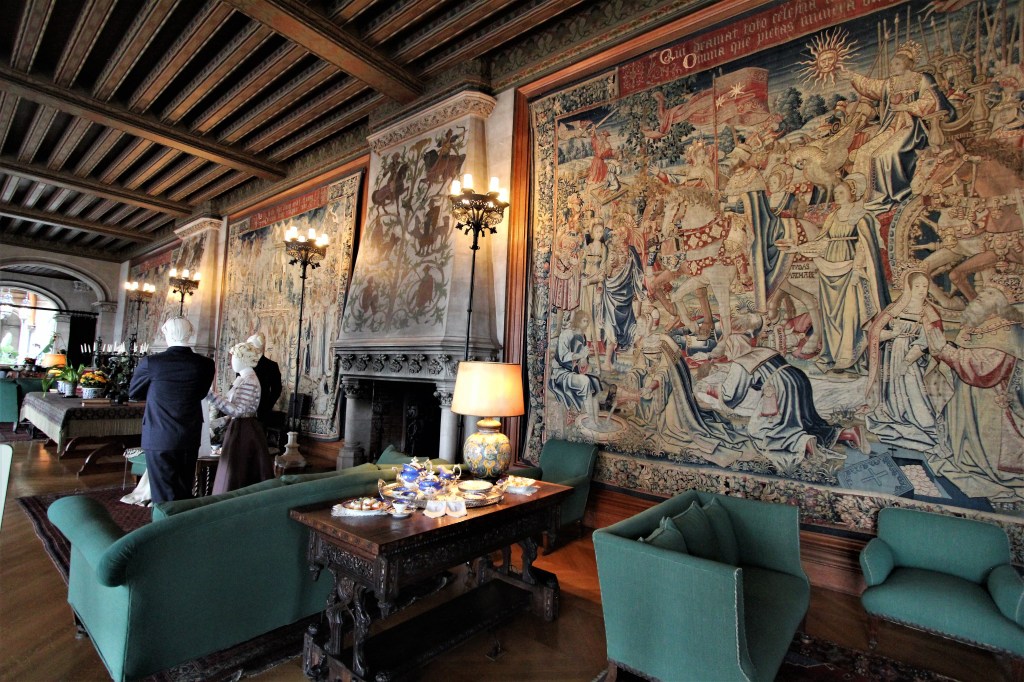
Sitting room with imported tapestries 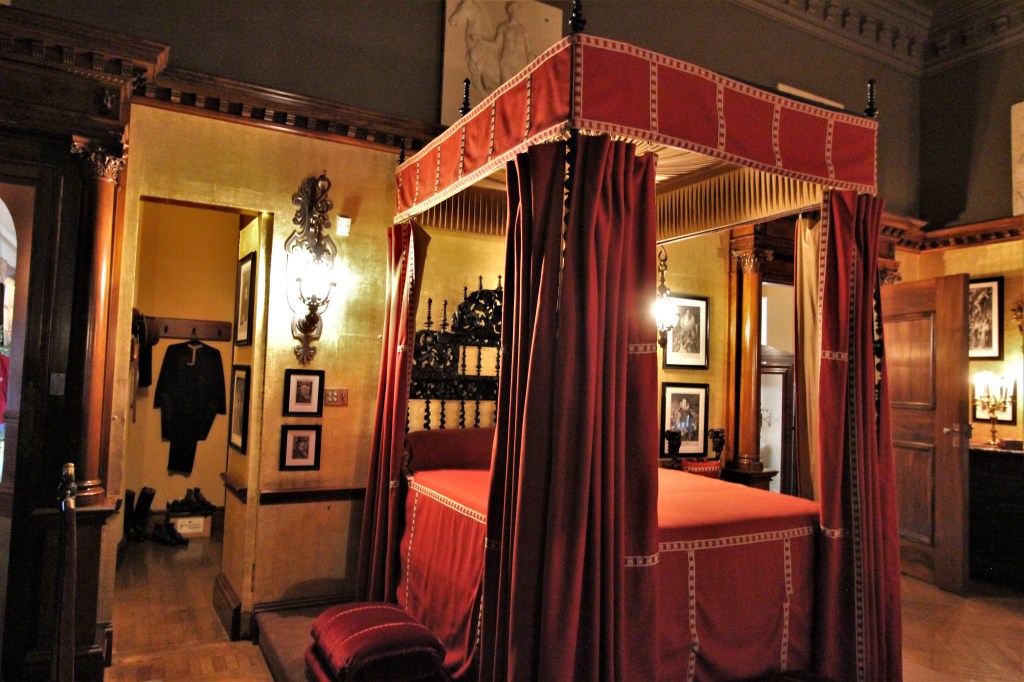
George Vanderbilt’s room 
Mrs Vanderbilts private room 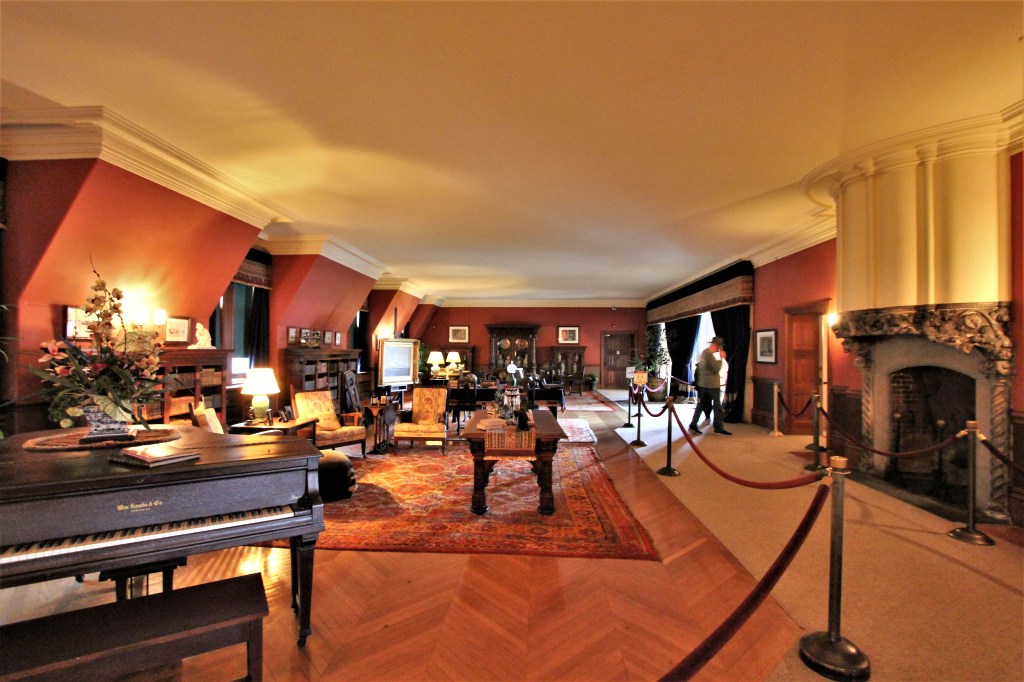


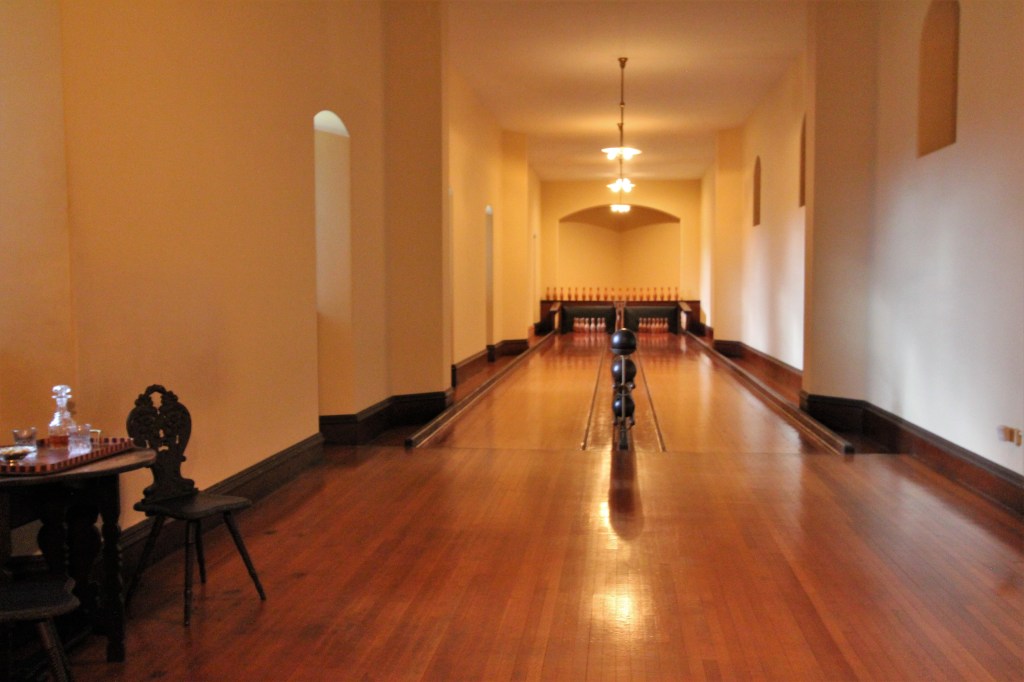
Two lane bowling alley by Brunswick 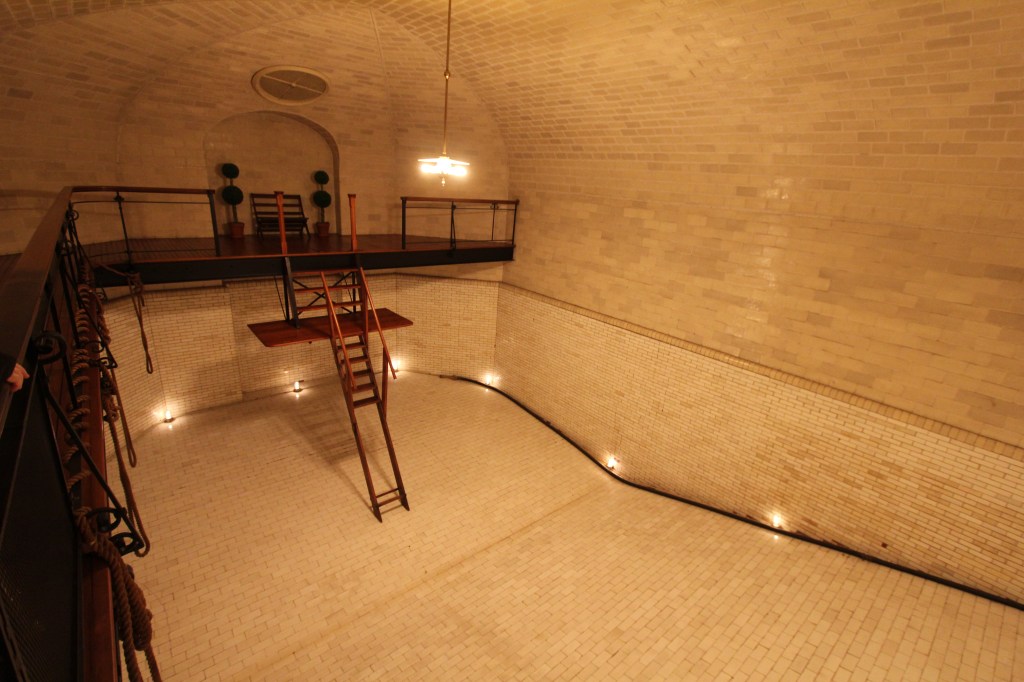
A basement swimming pool 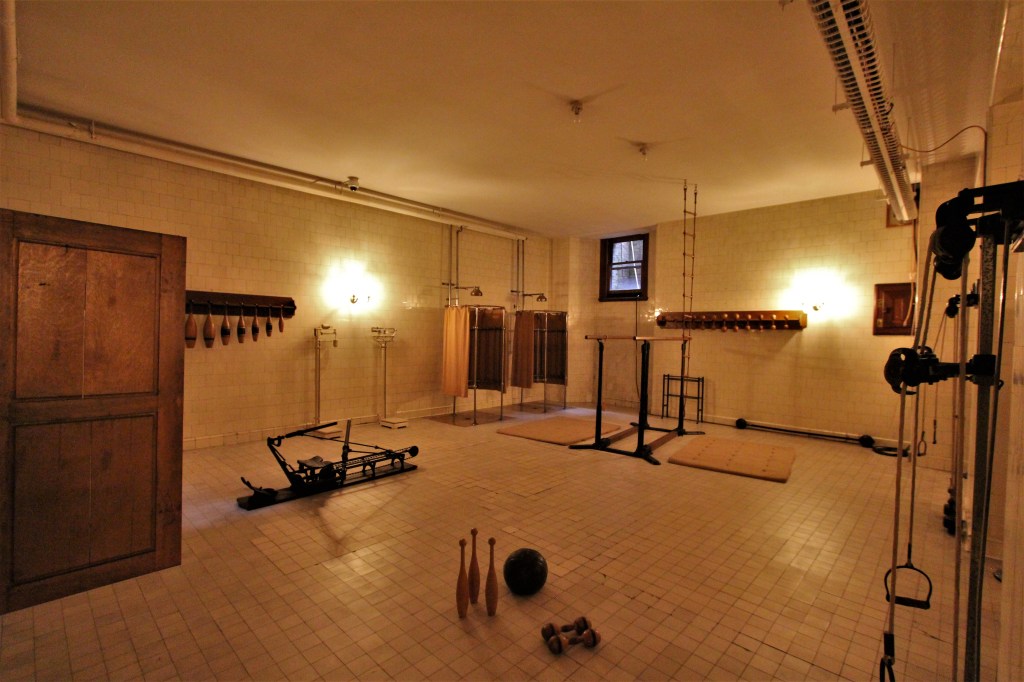
Personal Gym 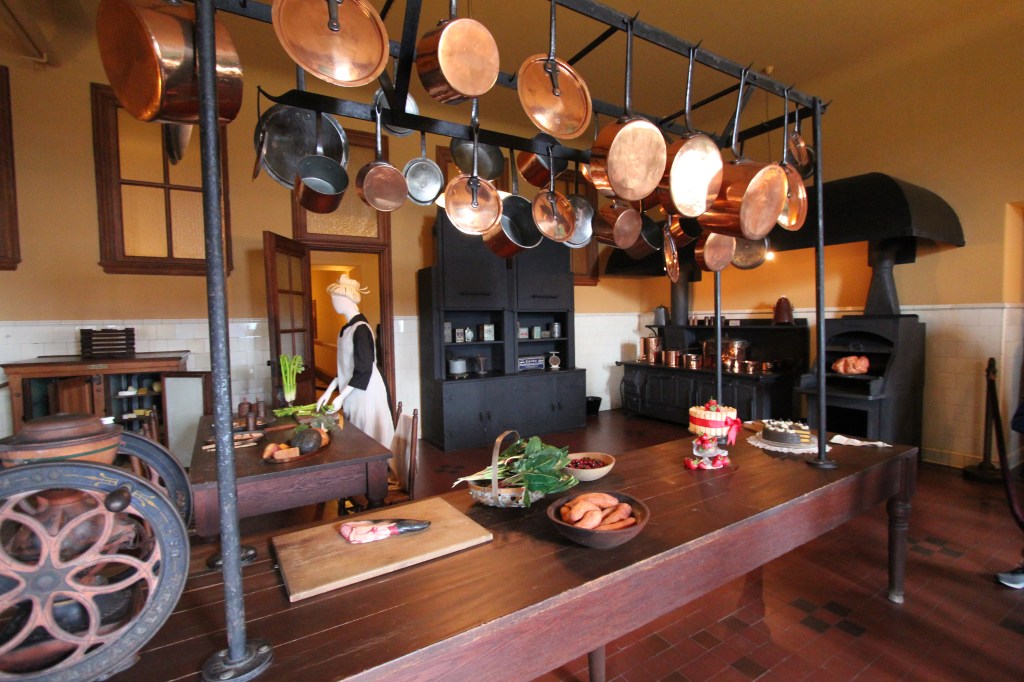
Modern Kitchen? 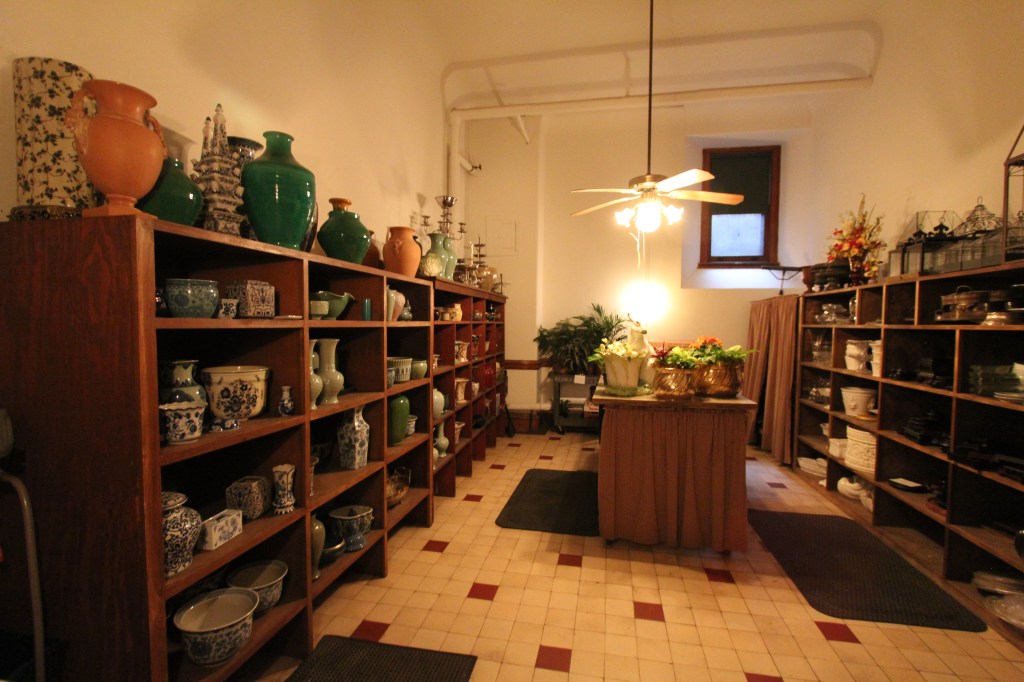
Gardeners shop in mansion 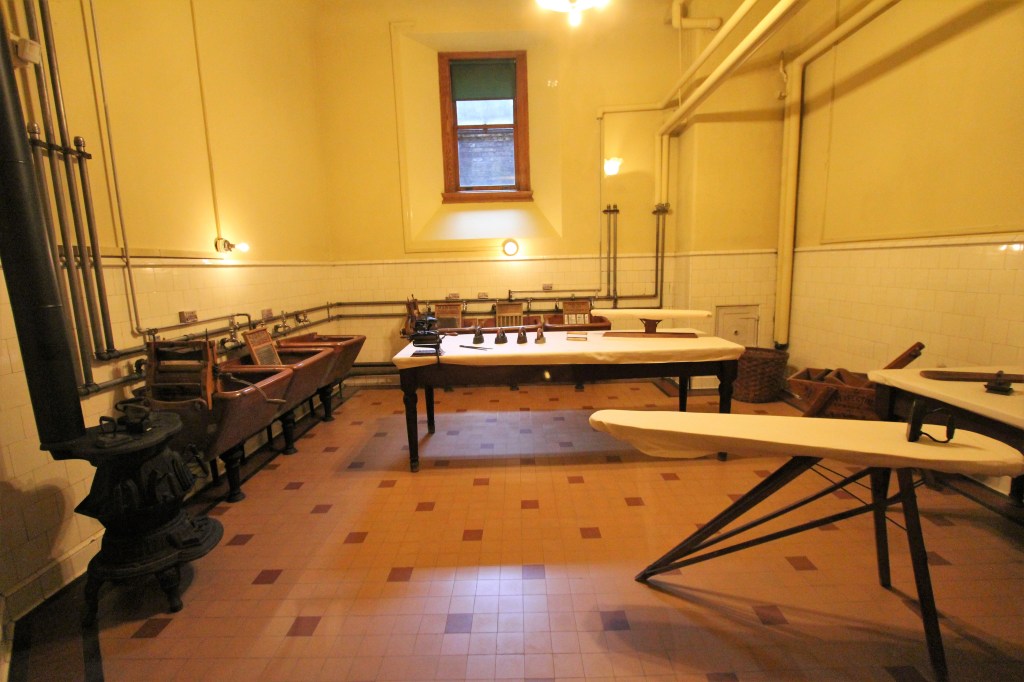
Lots of laundry by hand 
In the study 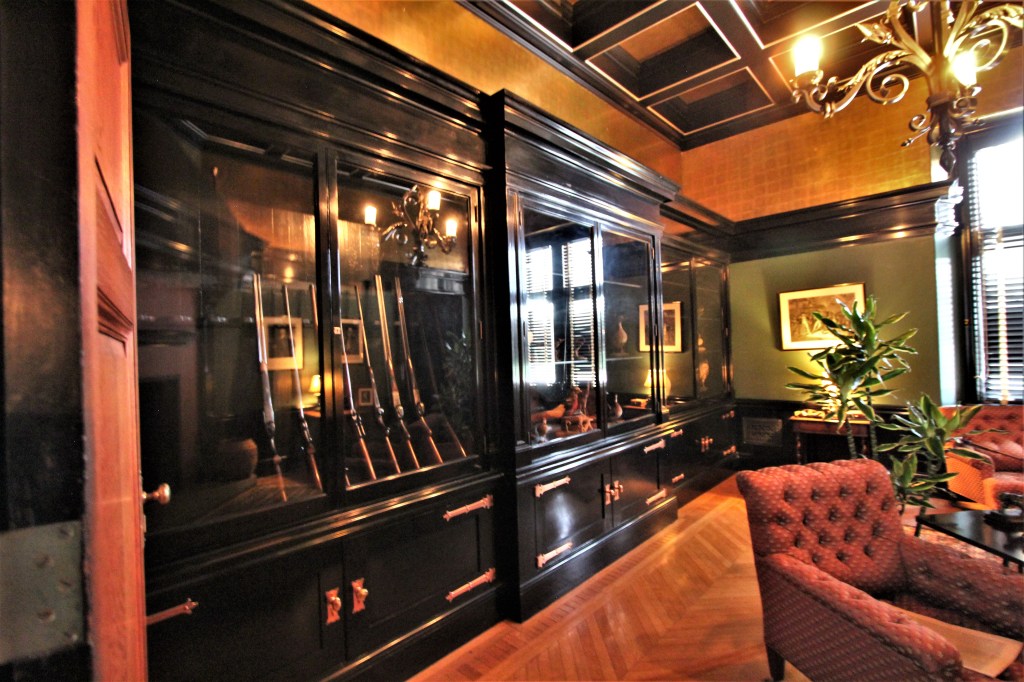
Gun Room
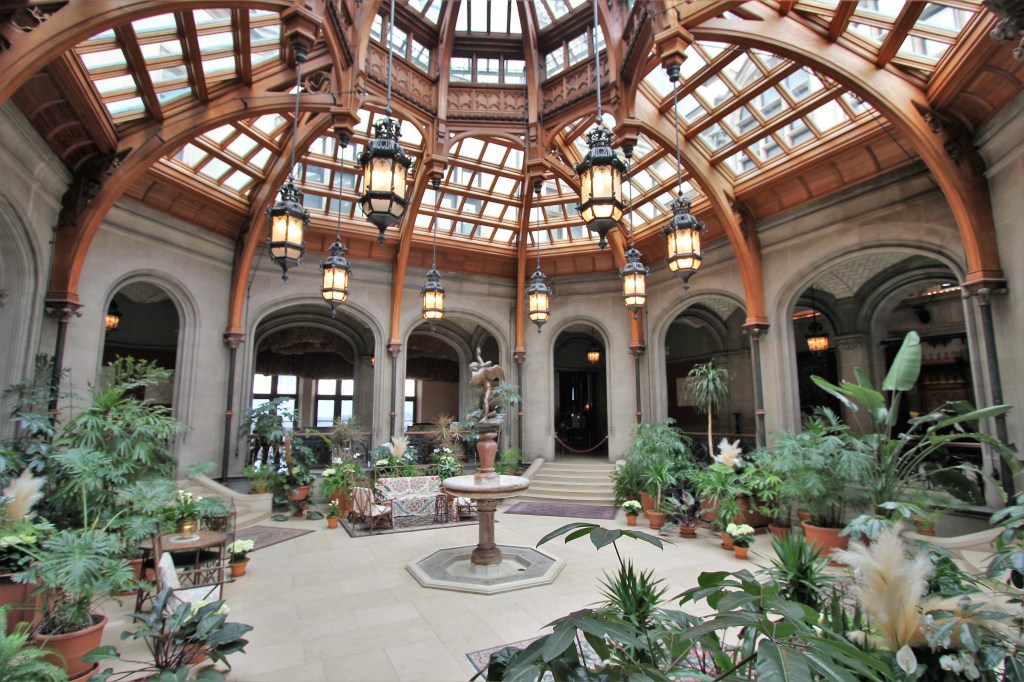
The main house tour covers three floors of the mansion (main floor, 2nd floor family residence and the basement area) and while quite extensive you really only see a small part of the 250 room house. However, what you see is stunning and provides a glimpse into the life of the super-rich of the late 1800’s. The rooms I enjoyed the most were the library, the atrium garden room, the dining room and the billiard room. While I didn’t see Colonel Mustard, Miss Scarlet, or a lead pipe, the home could indeed have been the inspiration for the Clue game.
Final Thoughts
I really enjoyed my visit to the Biltmore and it was a great “local” attraction to give my wife and I something to do as most international travel is halted and travel between some of the US states is still curtailed. The Biltmore and Vanderbilt family now employ over 2000 people from the Ashville area and we did hear it was a nice place to work. Personally, I am also thankful my wife planned the weekend trip as I enjoyed the time away, but visiting the Biltmore once is enough for me. Somehow, if it was a historical site maintained for the public as part of the park service or as some other public trust I would be more likely to return and support.
Let me know your thoughts about the Biltmore and if you have toured it or may be planning a trip. Feel free to leave comments!



 The Sane Adventurer
Leave a comment