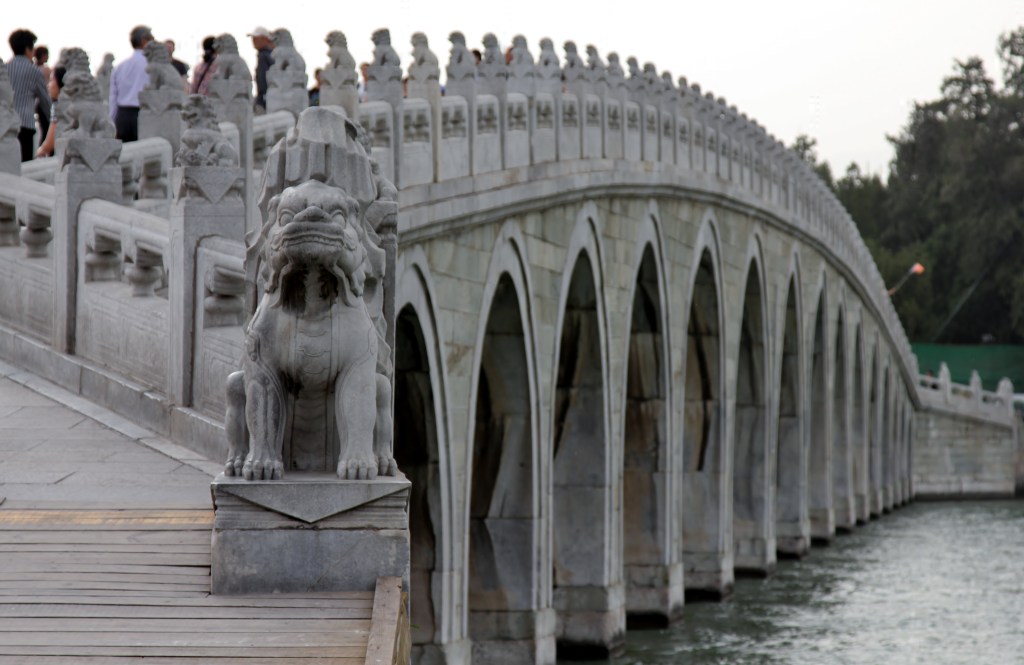
My colleague and I finished up our business meetings a day early and found ourselves with a free Saturday in Beijing, given our return flight home was scheduled for Sunday the question was “What to do?” We booked a Gray Line tour and selected a tour which included a silk factory, a jade factory, the Great Wall of China and the Summer Palace. We ended up with sore feet and 30,000 steps but we don’t go to China often so lets make the most of the day!
Silk Factory
Silk fabrics have been dated since 3650 BC and, as a natural fiber, has been used in many cultures around the world. Silk production or sericulture starts with rearing the larva. These larvae are fed mulberry tree leaves. When old enough the larva spins its silken cocoon with a single continuous thread. This multiple overlapping thread is “glued” together with sericin, which is also secreted by the larvae.
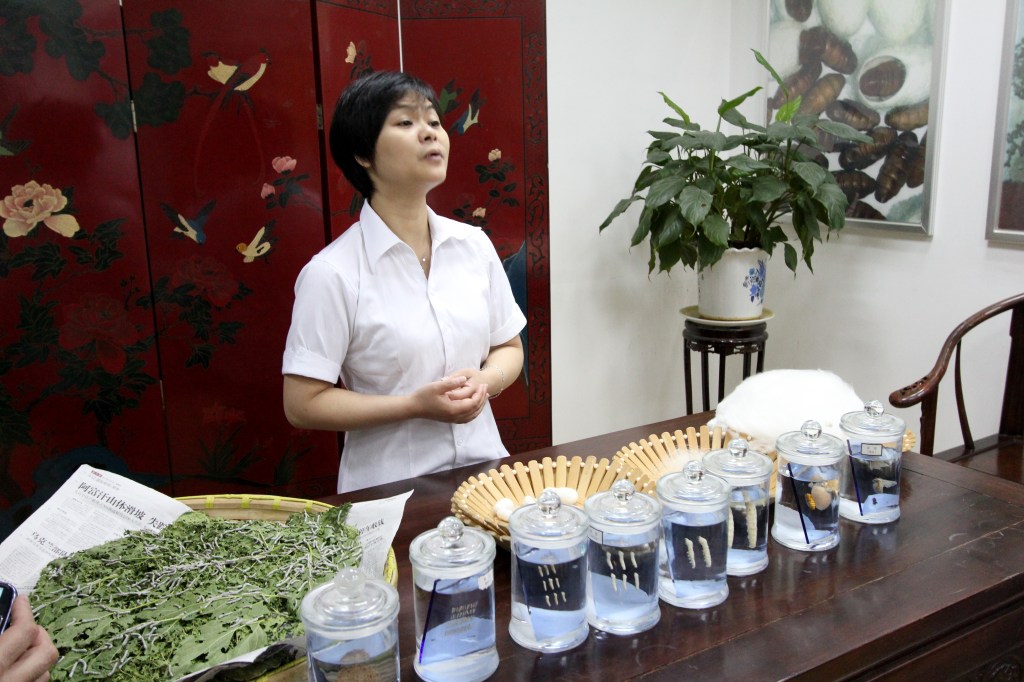
Overview 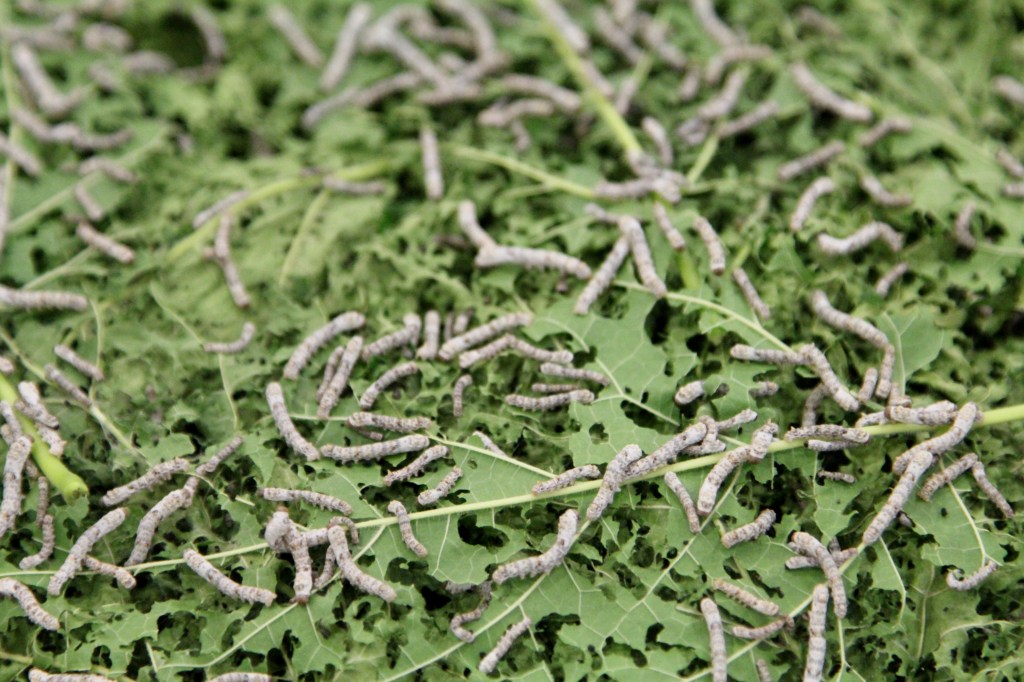
Lots of Larvae
At the silk plant, the cocoons are soaked in hot water to remove the sericin and the workers somehow find the end of the silk filament and start to unwind it from the cocoon. I need reading glasses just to read a book let alone trying to fine a wispy filament end from a whole cocoon. Amazing.
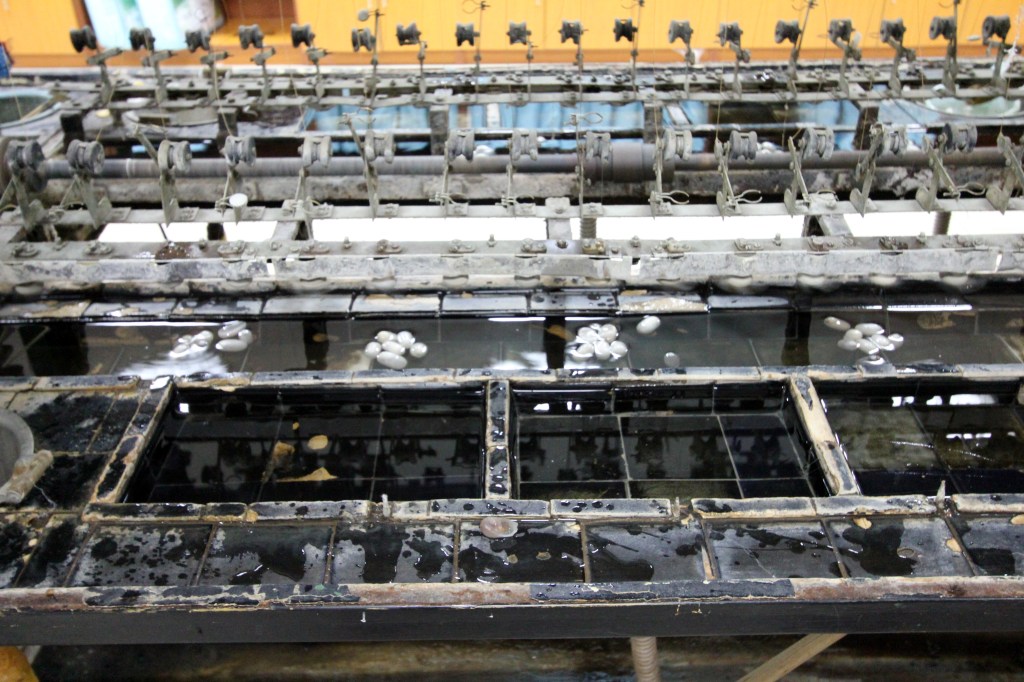
Soaking cocoons 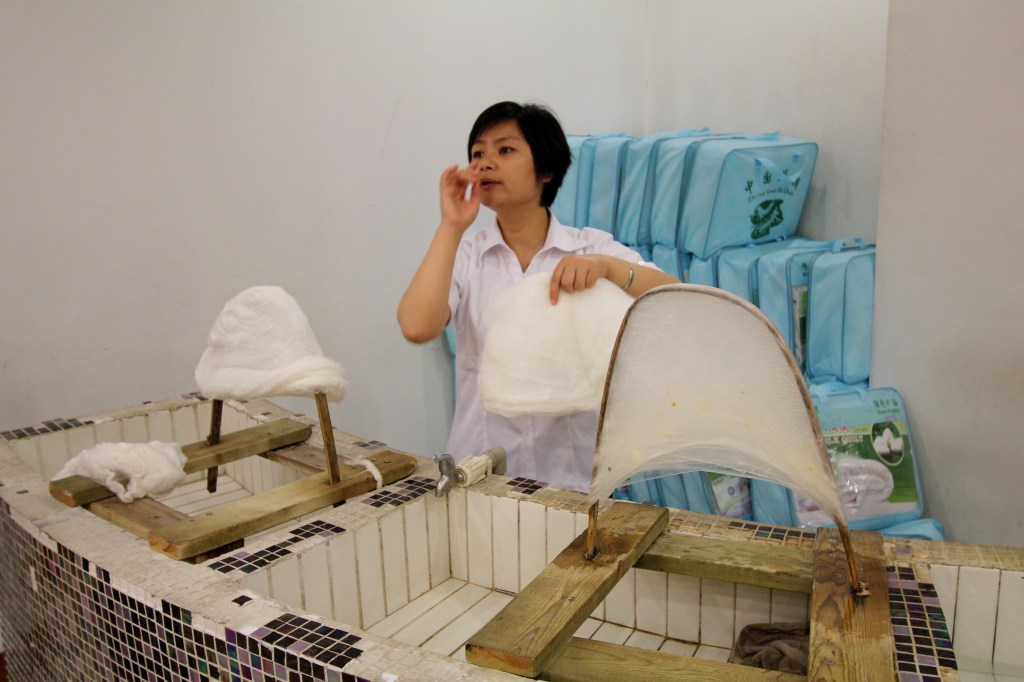
Unraveling the cocoon and stretching threads
From here multiple filaments are woven together to make a thread and then off to dyeing and finally to the looms. I find it staggering the number of cocoons it takes to construct sheets, shirts, etc. The finished items they had for sale were beautiful and knowing the work behind it made it even more so.
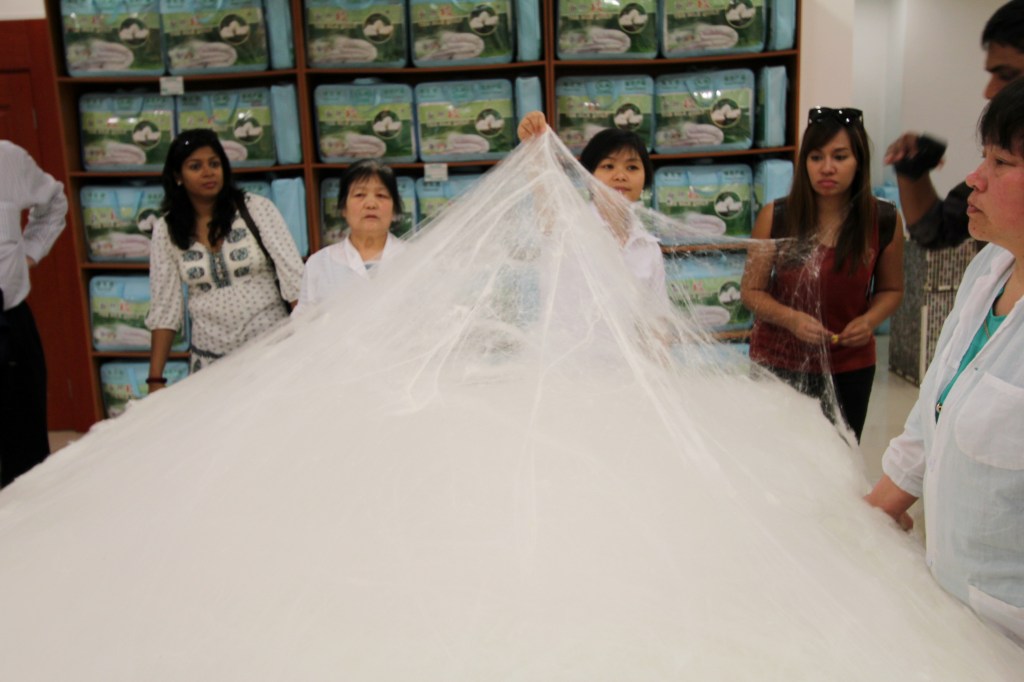
Batting 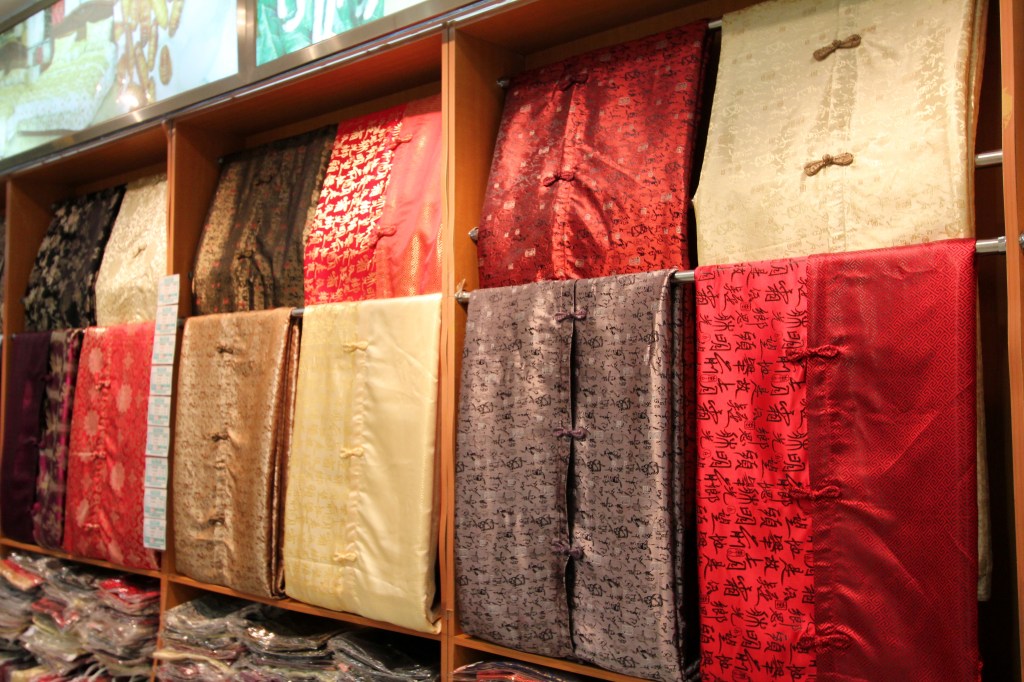
Bedspreads and more! 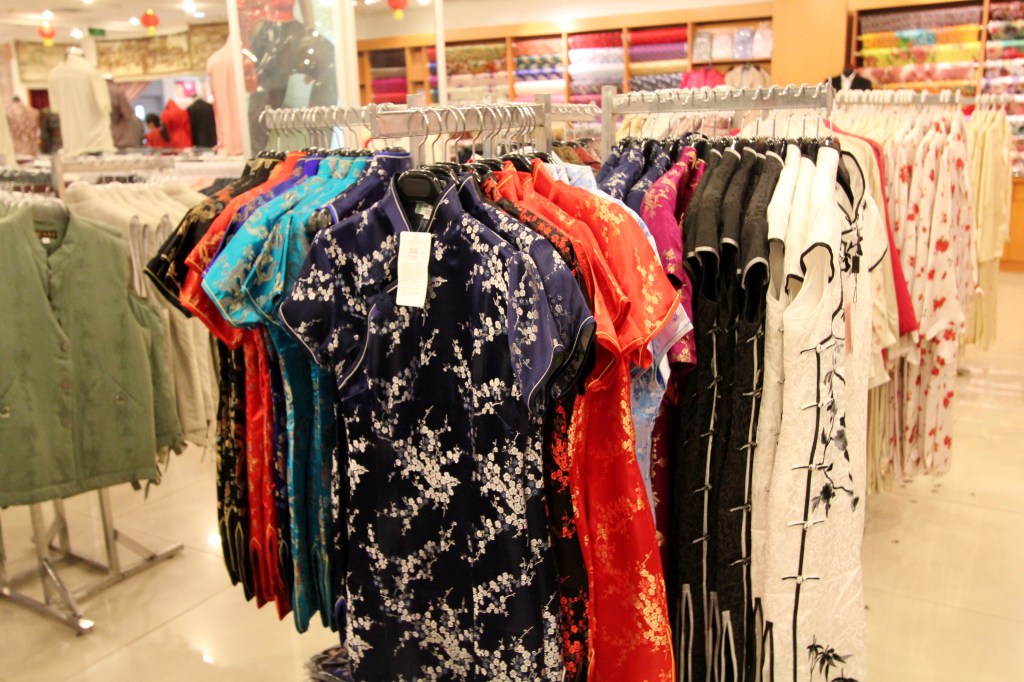
Jade Palace
Moving on from the silk factory we quickly made our way to the Jade Palace. While it was obvious that it was built for larger production, it was also a focus for tourism with designated lines and shopping areas. The craftmanship was somewhat uniform with larger pieces requiring more time, costing more than others. Jade was used for many items as the stone was the imperial gem, and felt to embody purity or purification, also because jade is regarded as a stone that protects and supports loving heart energy. Jade also symbolizes gentleness and nourishment. Here not everything was jade but included other minerals too that could be made into typical Chinese symbols.
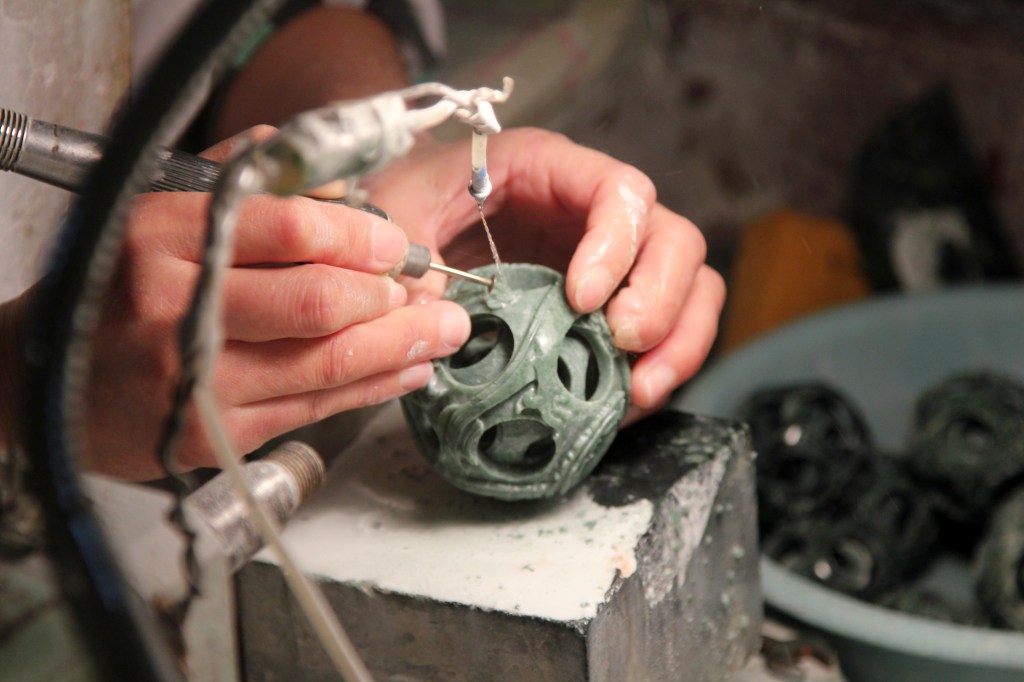
Balls within balls 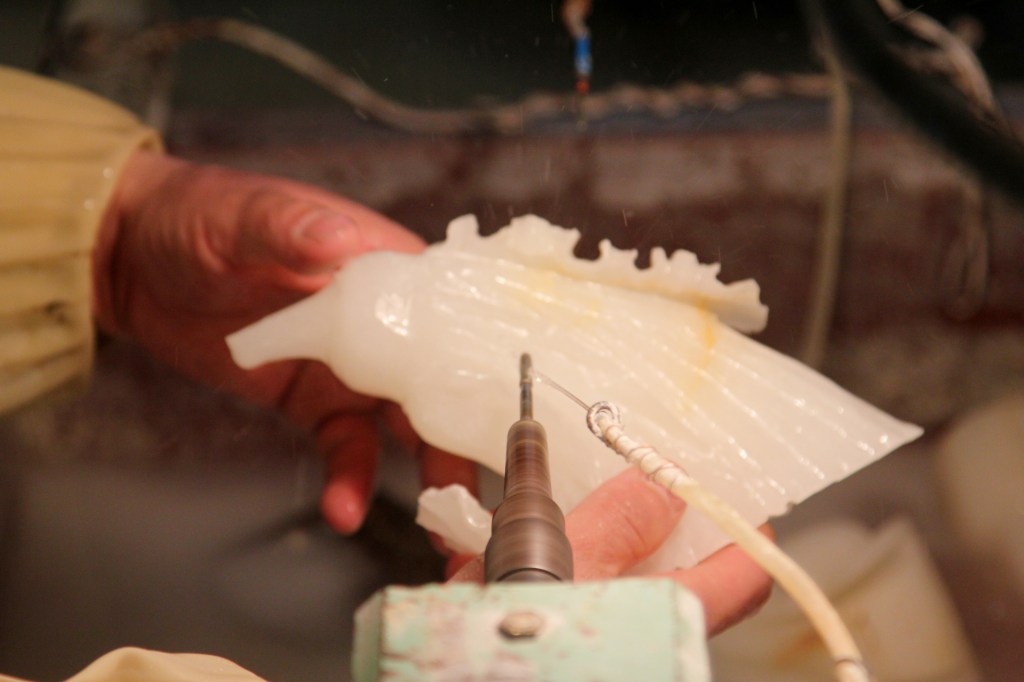
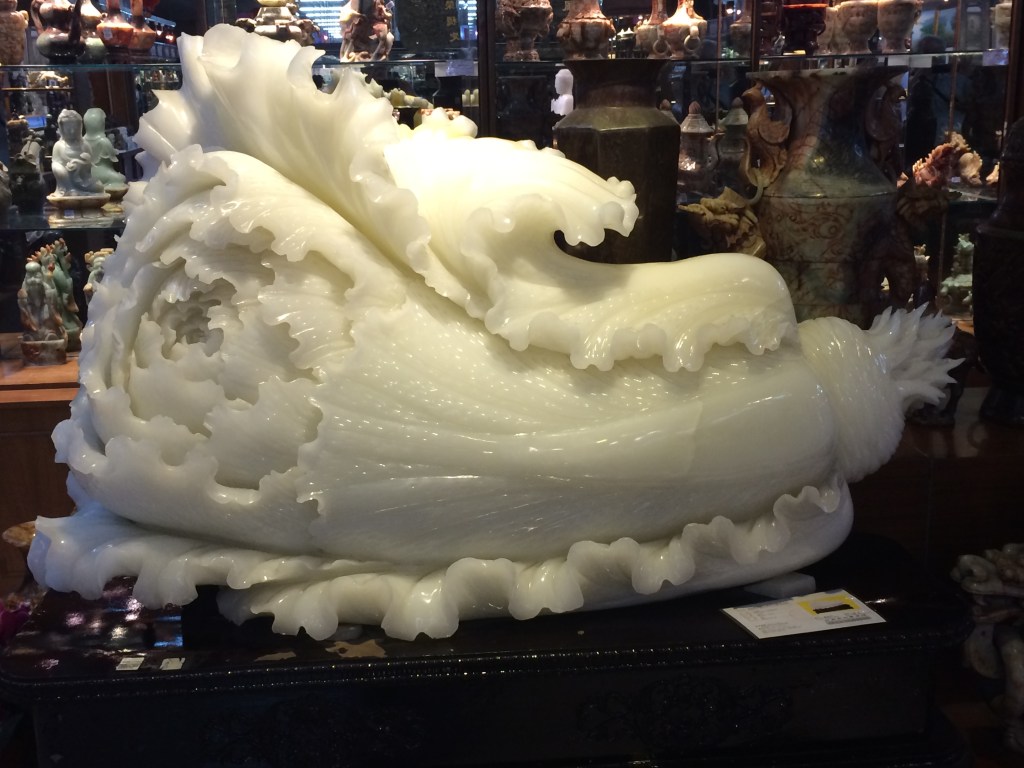
Make sure cabbage faces the right direction 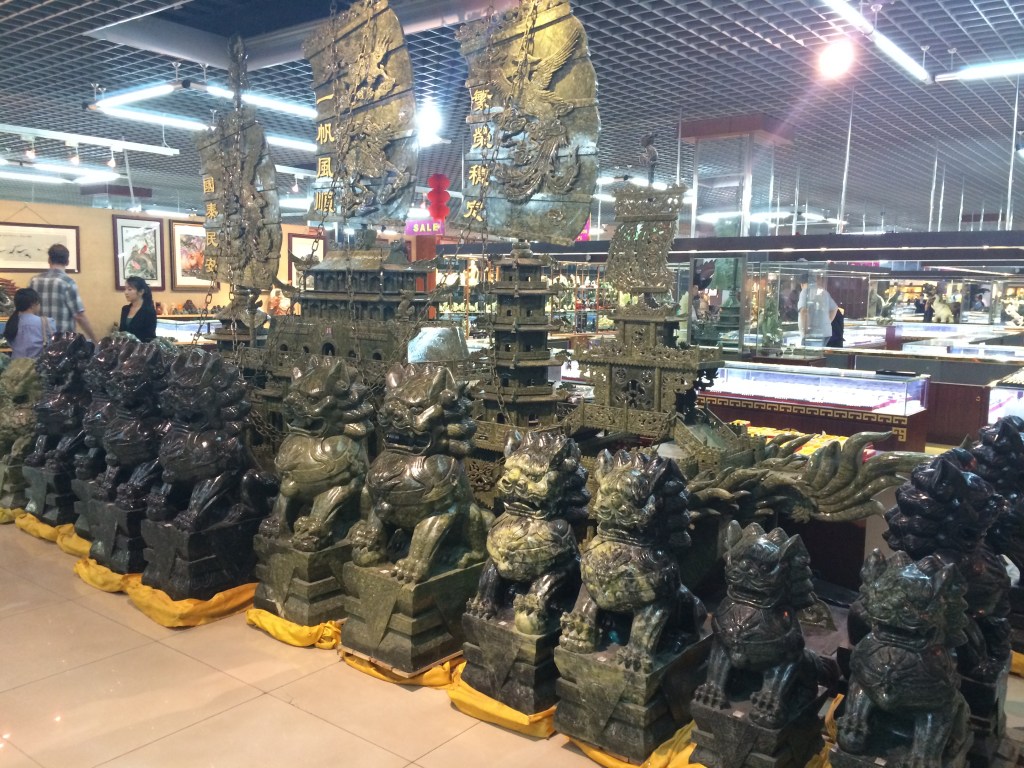
Massive ship in background
Cabbage is a sign of good luck for families, but you should always put the root end facing toward the center of the home with leaves pointing outward. Reversed you could lose money! Other more widely known images are dragons, lions, Buddha, etc. Of course, the shopping area had a wide variety of items to pick from that ranged from traditional to contemporary.
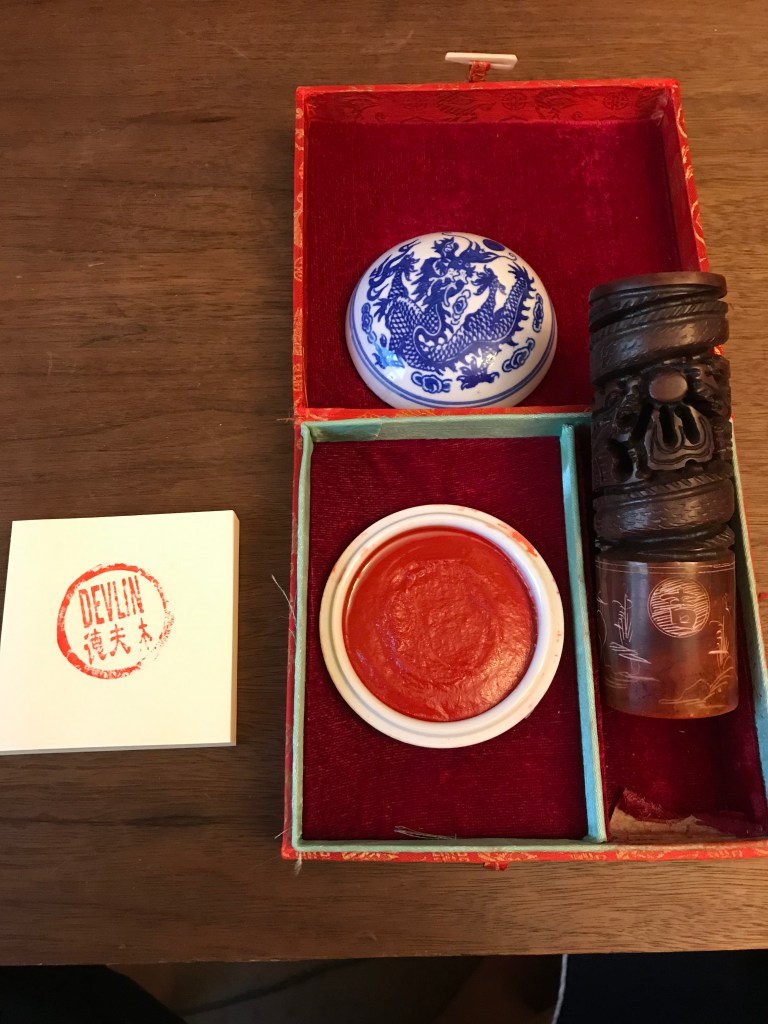
Carved stamps/seals have been important in China for centuries as a way to show authenticity and authority. Officials closely guarded their stamps so no one would copy them. I have one that is supposed to be inscribed with the Chinese letter(s) for Devlin family name, but not reading Chinese it could actually say “idiot tourist”. Still I nice memento and coupled with the traditional red cinnabar paste.
Lunch
The tour we we on also included lunch. It was served in the typical Chinese lazy-Susan style we had come to appreciate in China. Initially I was a bit concerned about an unsupervised lunch as our Chinese guests were happy and willing to help us find our way through the various offerings ensuring we didn’t select anything to “unusual”.
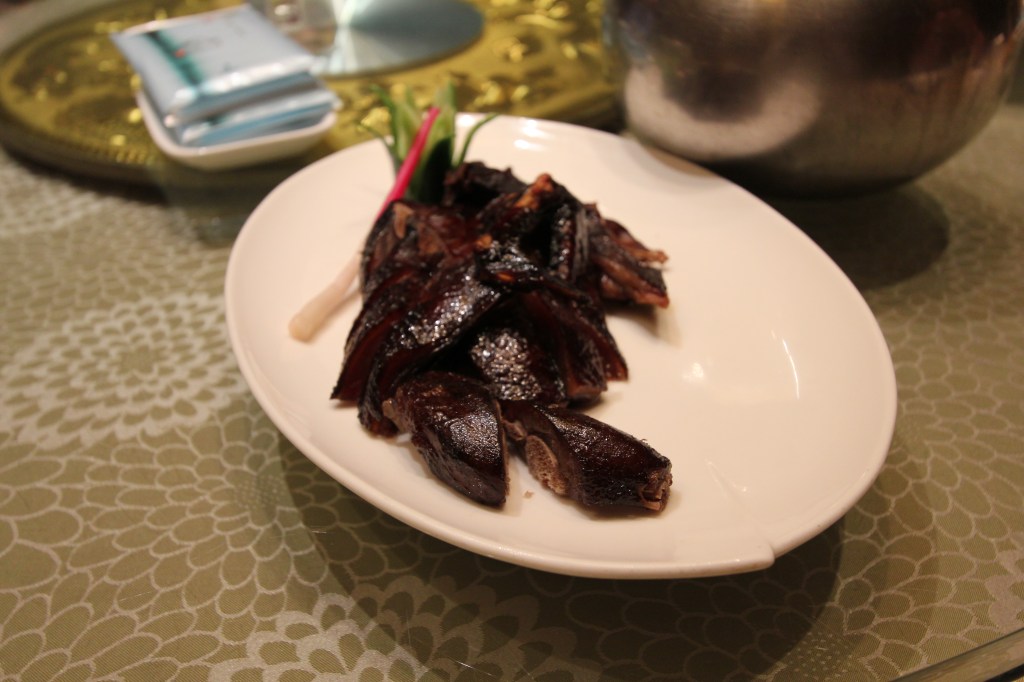
This meal was prearranged and when the food was presented our astonishment grew. It looked more like the US Chinese food we had grown to enjoy so much. In fact, even our shared tour attendees from Australia and Brazil also found delight in partaking of what we deemed was “typical” Chinese fare. Everyone ate with a renewed gusto and happiness spread throughout the table. After 20 minutes we were all sated, when our guides came around to check on us. With lots of food left untouched we offered for them to enjoy it as well. He politely informed us that that is “tourist food” and not really Chinese, so he never touches it. We all got a big laugh at this, as one’s perspective really does make the meal.
Great Wall of China
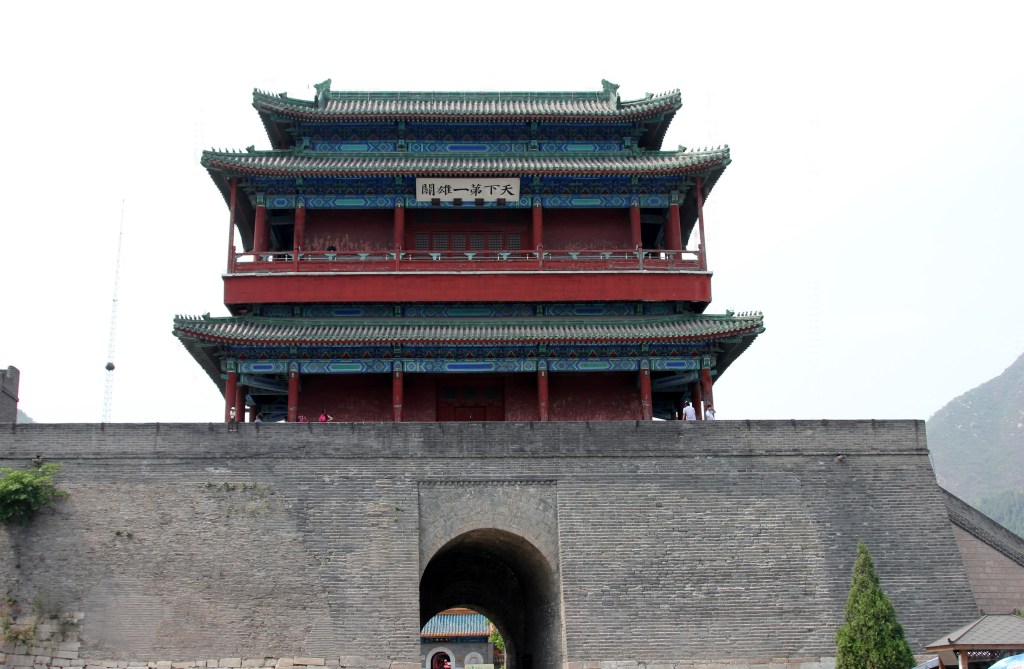
Part of the Great Wall of China is about an hour outside of Beijing. So, anyone going to Beijing needs to allocate time to see the Great Wall. The local part of the great wall has been restored while many other sections of this 3,889-mile structure is partially restored or unrestored. This is a definite bucket list item.
Looking across road to steeper section 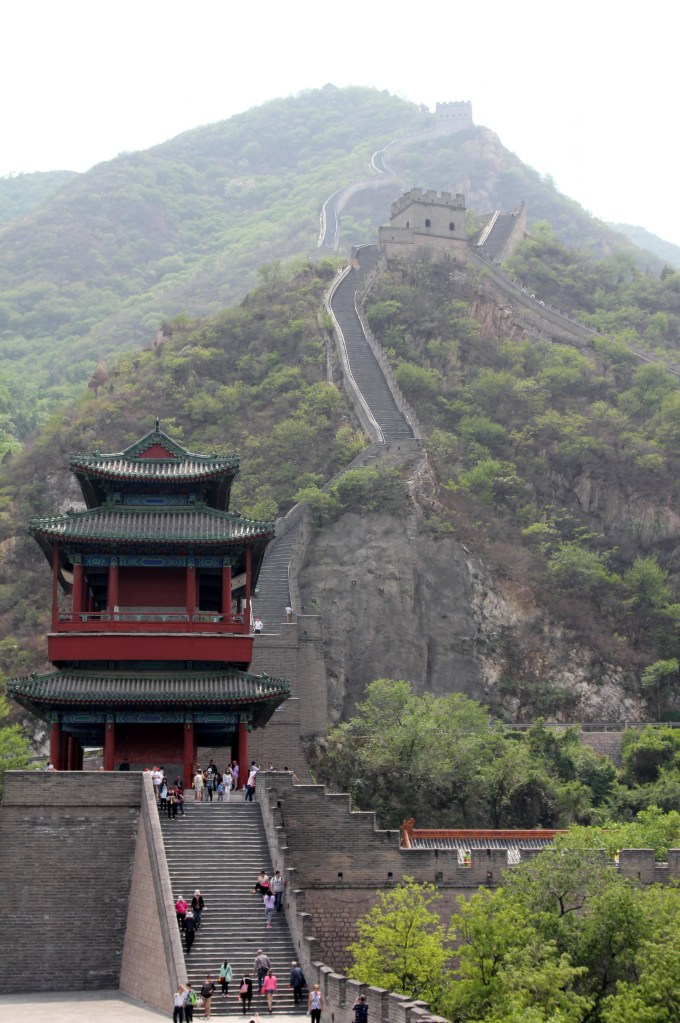
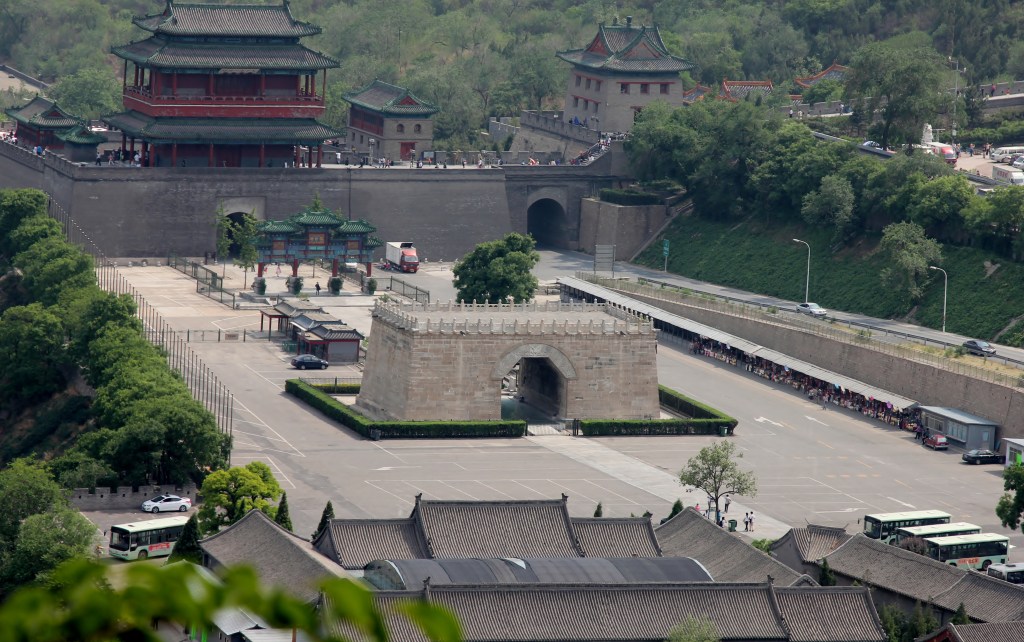
Inside the main Gate
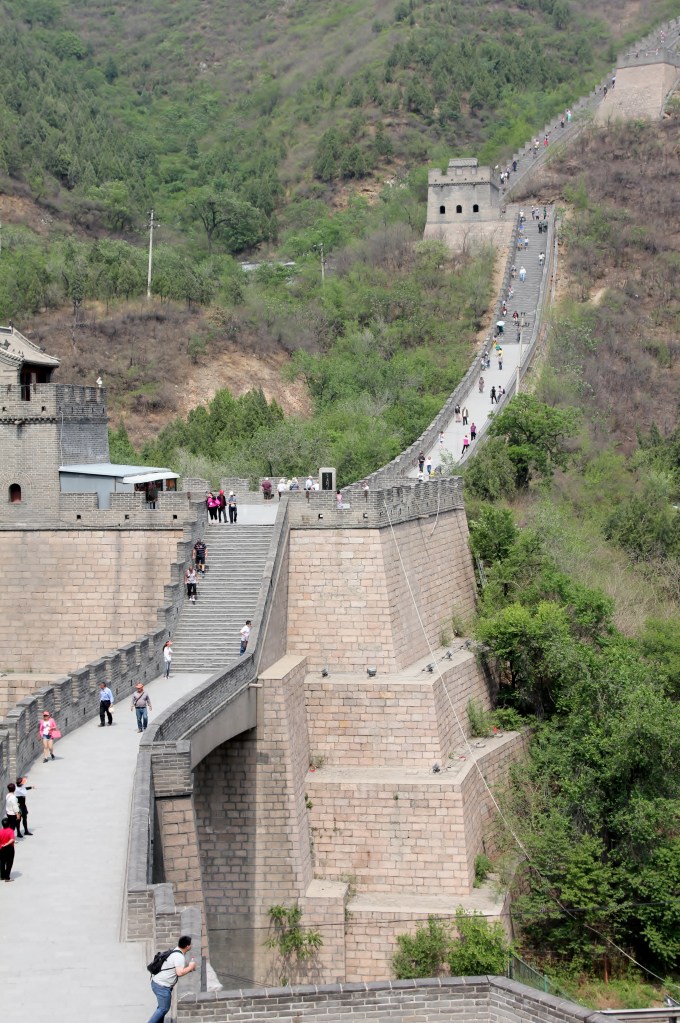
We arrived at the Juyongguan gate in the Badaling section. Our guide said we had about an hour to tour the site. The left side was fairly steep and it was advised that the young and energetic should only attempt. The right side was less steep and still had commanding views. My colleague and I opted for the right side. The weather was beautiful but a bit hazy due to a storm nearby in the Gobi Desert. In fact, we could feel tiny sand particles hit our eye lashes and eyelids from time to time.
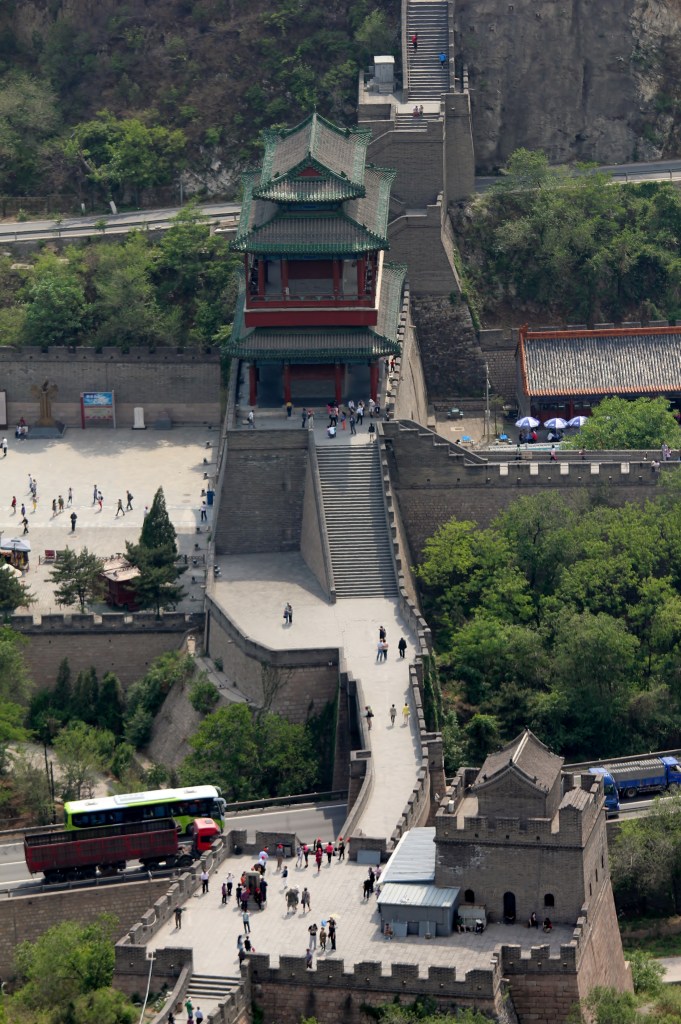
Looking down 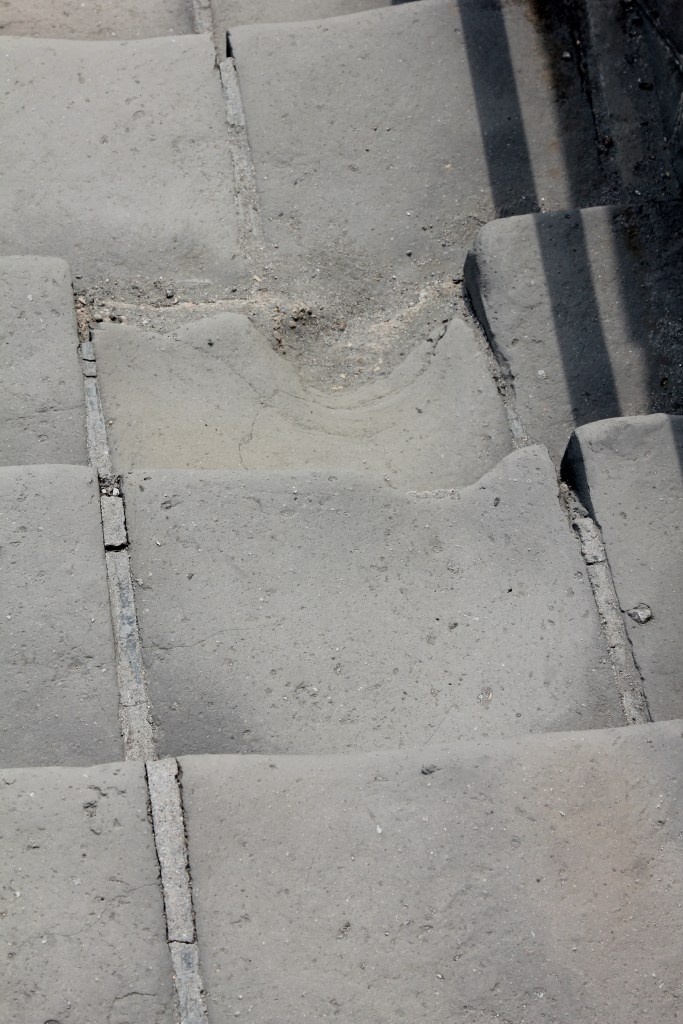
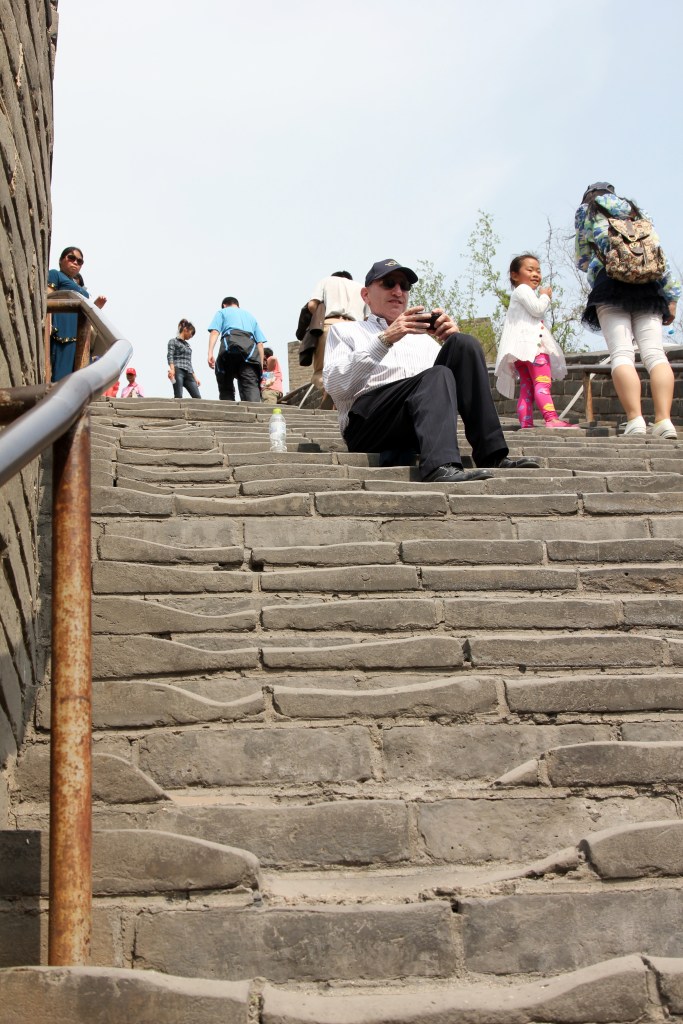
Worn steps 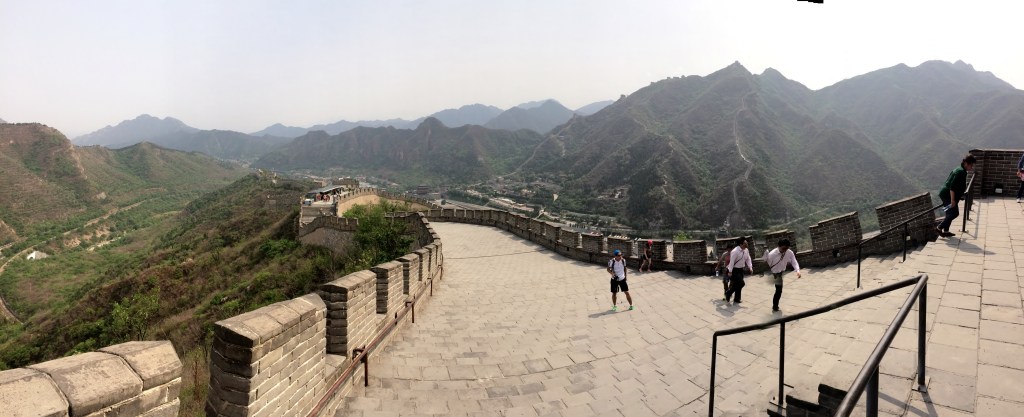
Near the top a bit more level 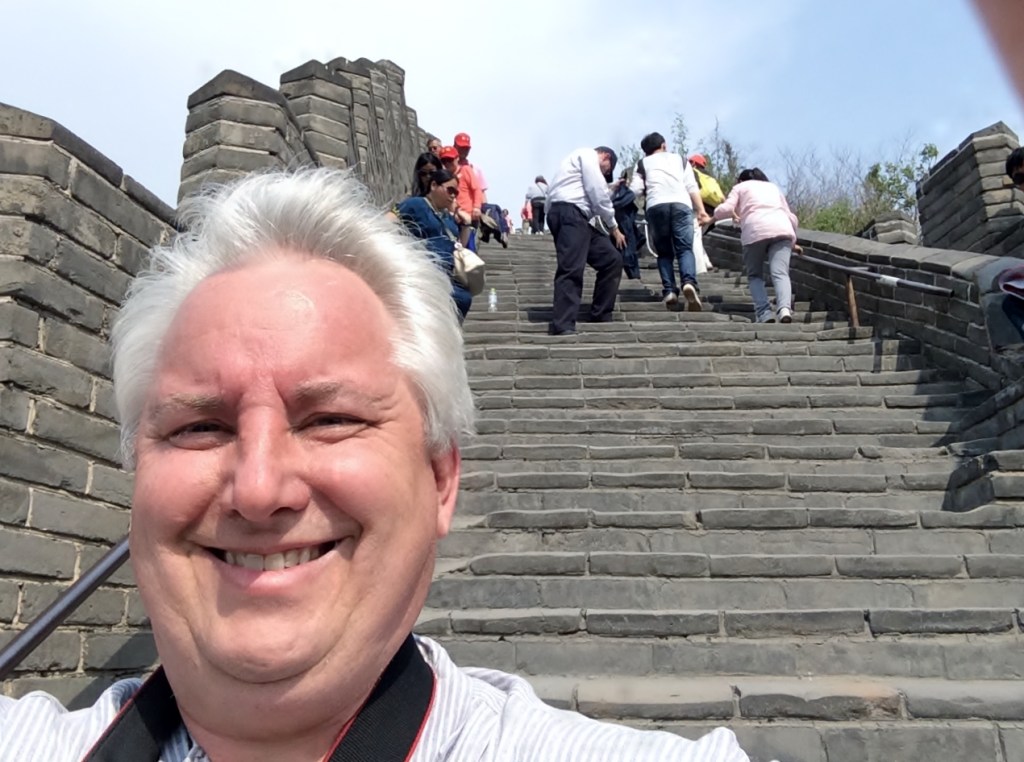
Trying not to be winded climbing stairs
The steps on the Great Wall were not OSHA approved. Please note if you go that some rise 2-3 inches a time while other steps may be 12 inches. Additionally, many have been worn down over the years and have a significant divot in the footfall area. All of this makes for a more interesting and fatiguing climb as you really don’t get a typical stepping rhythm. Take your time, rest if needed, snap a few photos, drink a bit of water and soon you will be at the top.
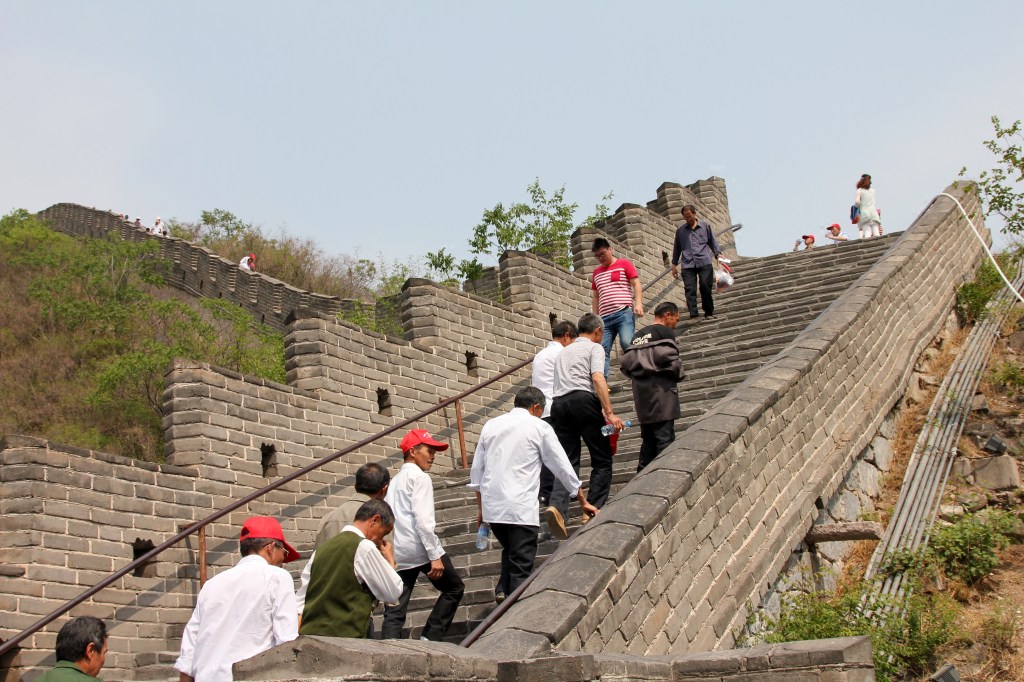
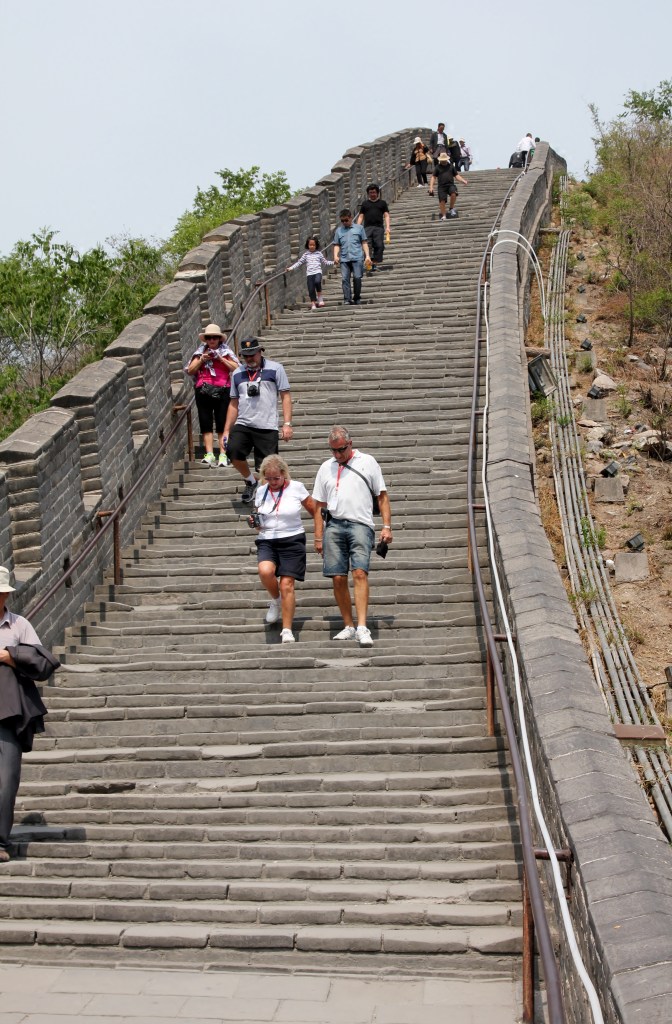
Lots of steps 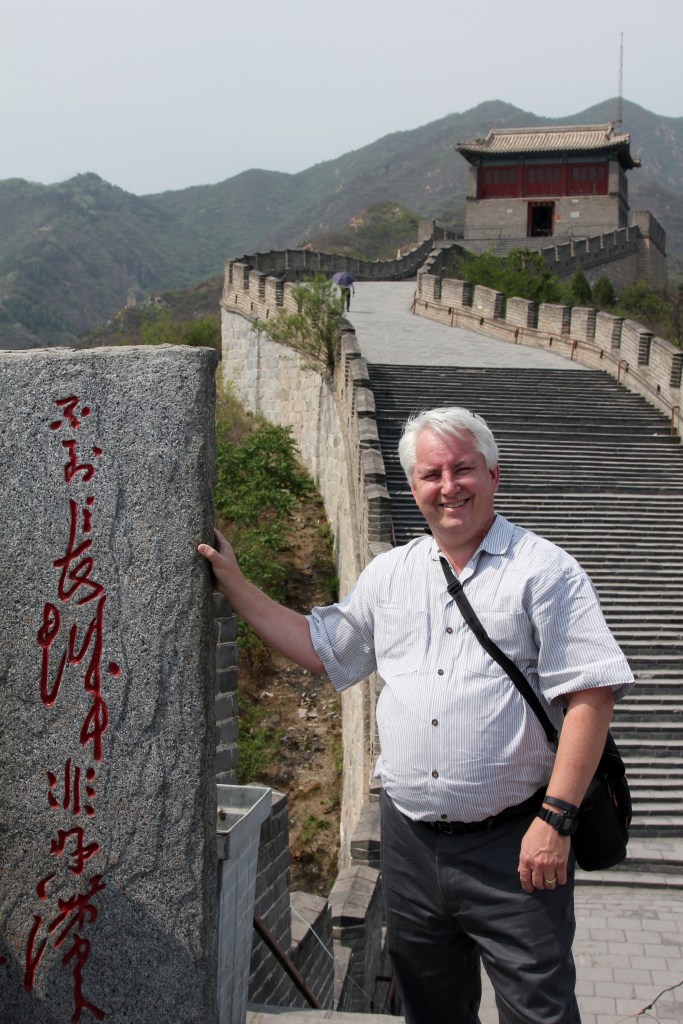
At the top! 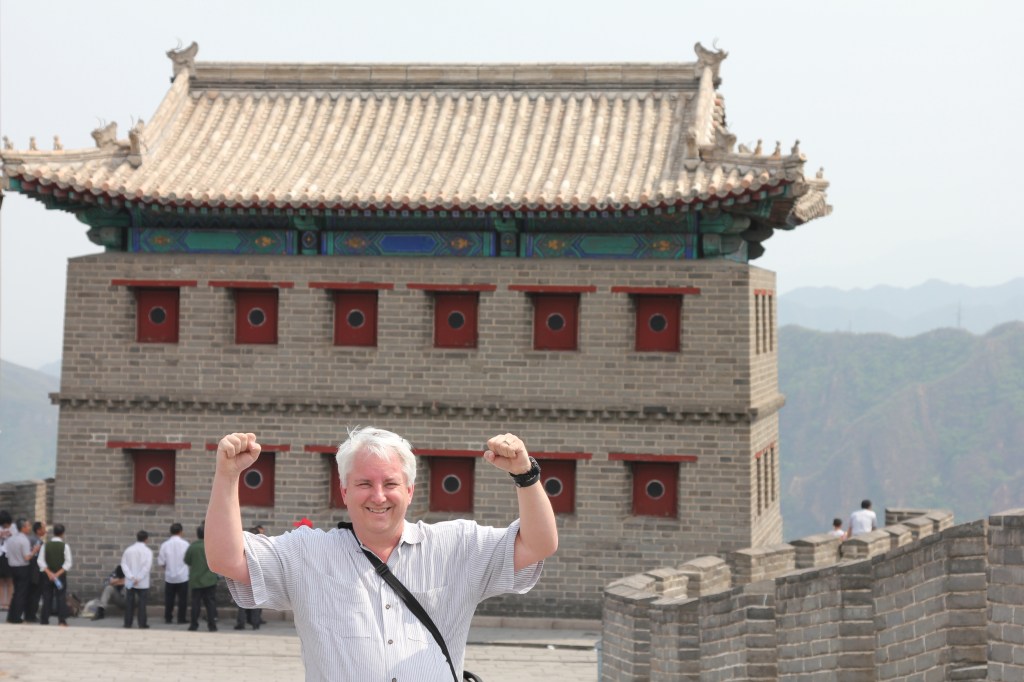
Jumping for joy 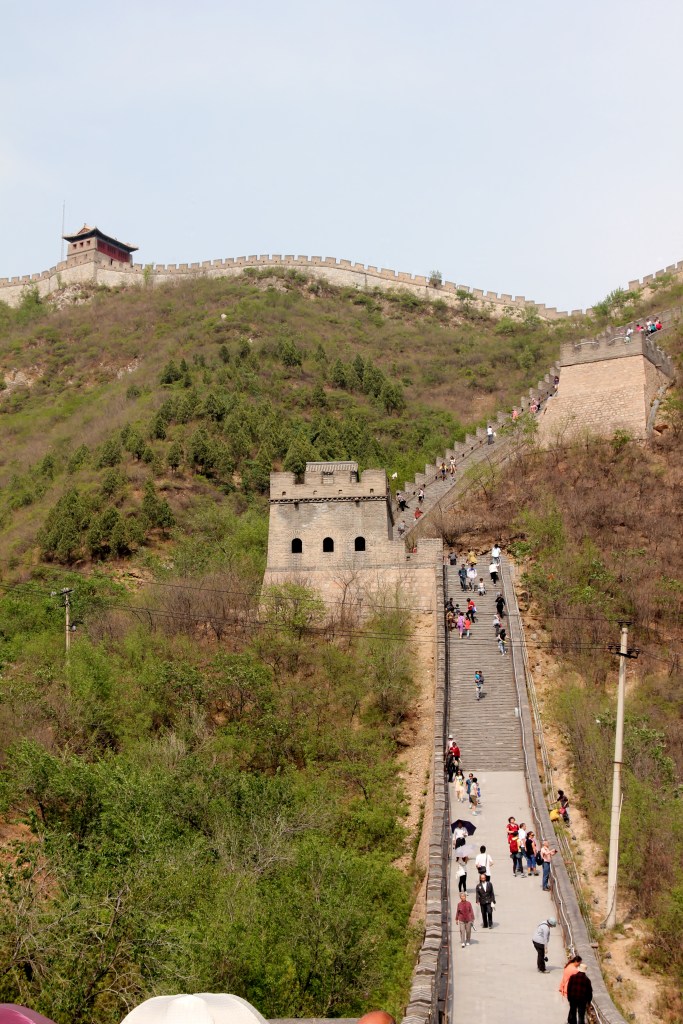
Back down looking at where we have been 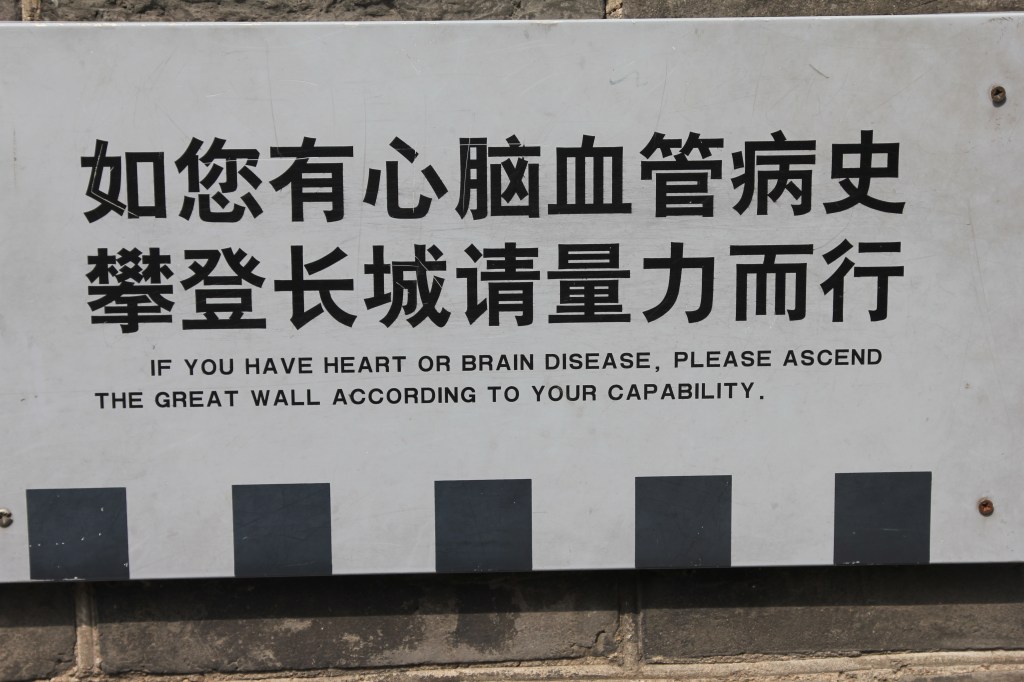
Now they tell me
Summer Palace
The Summer Palace is a group of lakes, gardens and imperial buildings just on the northwest corner of Beijing. Covering 1.1 square miles (most of which is water) it was created during the Qing dynasty (1735-1796). After walking much of the day, walking here seemed much farther than the 1 mile per side.
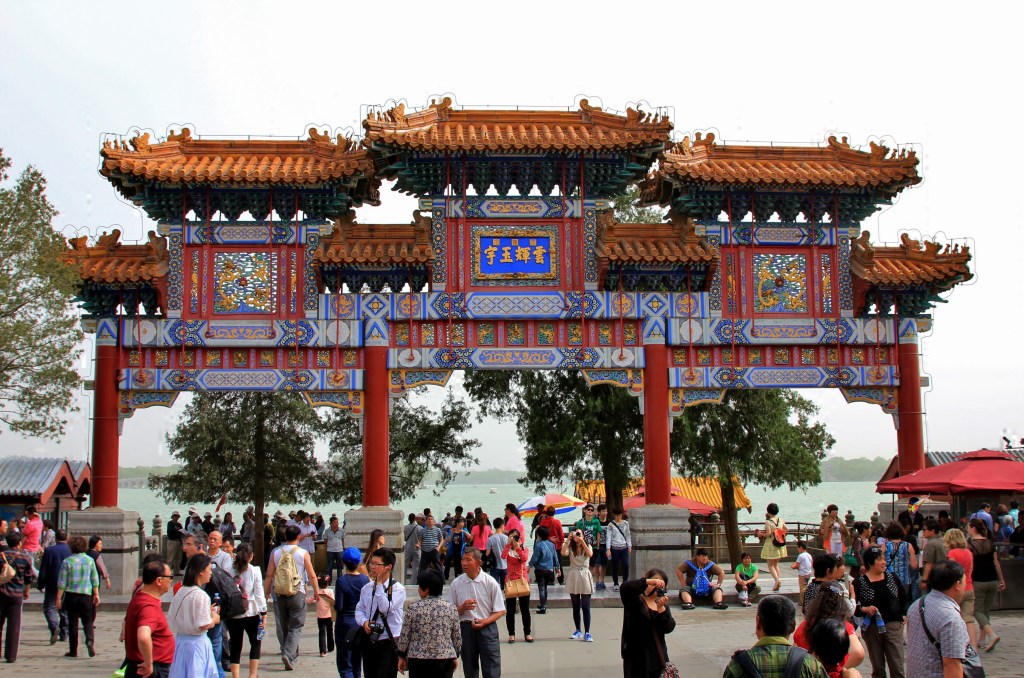
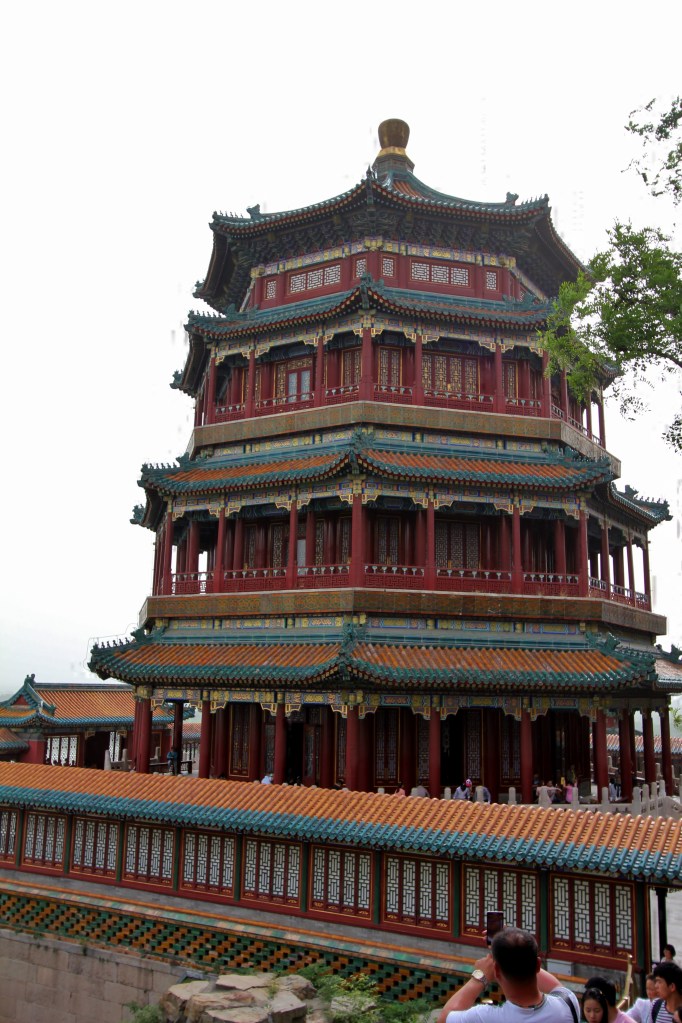
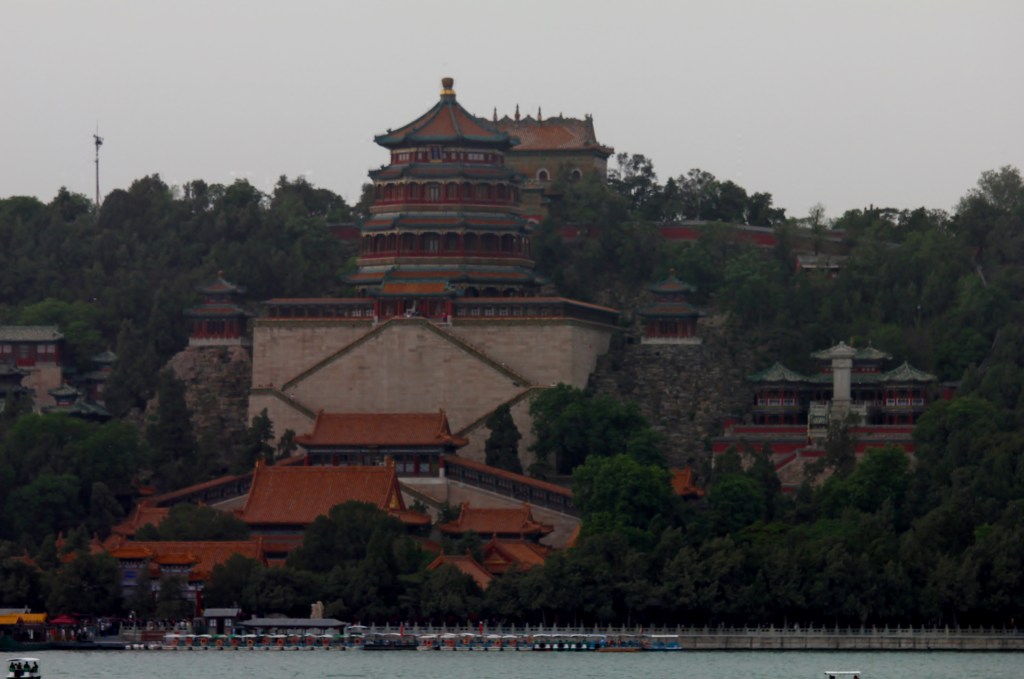
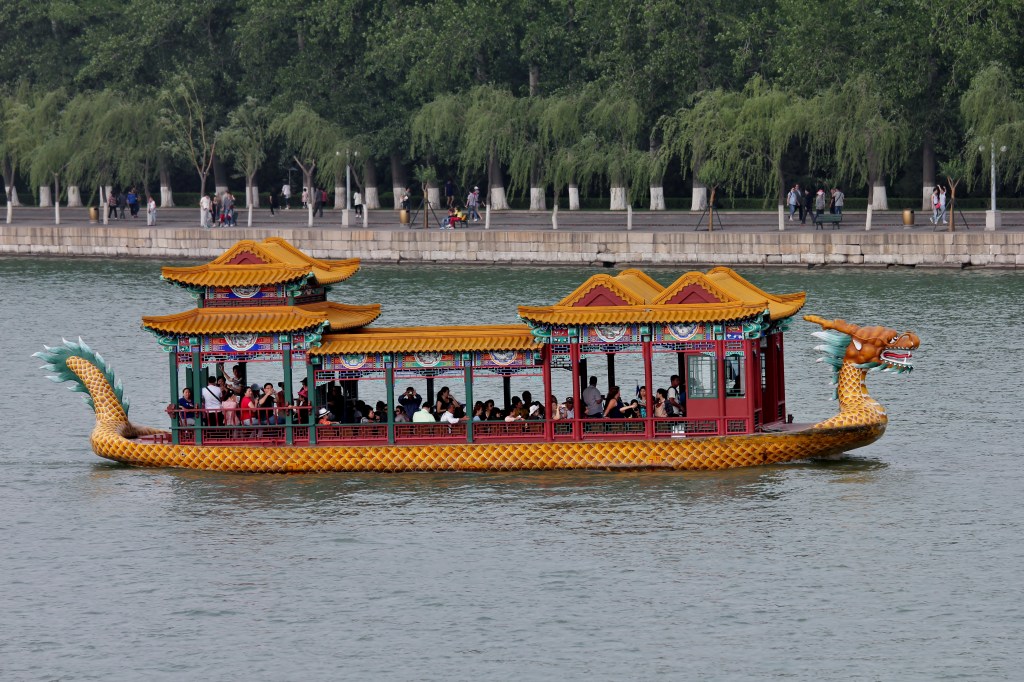
After the Qing dynasty the site stared to decay and maintenance costs were deemed excessive. This coupled with the looting of the Summer Palace by the French and English during the Second Opium war left most of the buildings empty. Today many buildings have been restored with the site being used as a public park. While there is a fee to get in it is minimal for the vistas you see and the Summer Palace was designated a UNESCO World Heritage site since 1998.

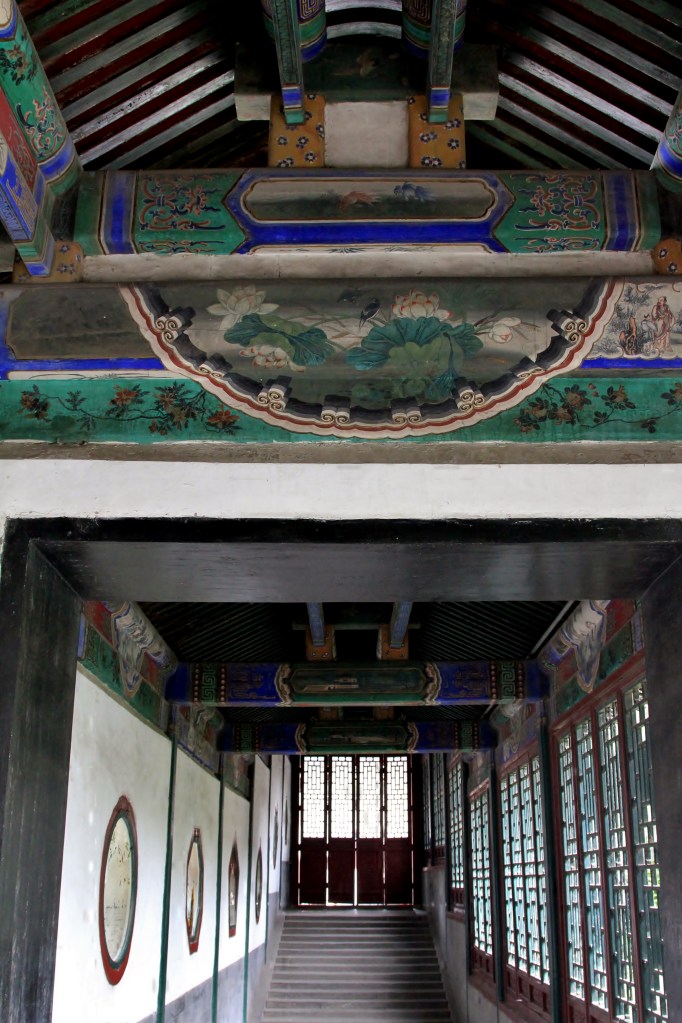
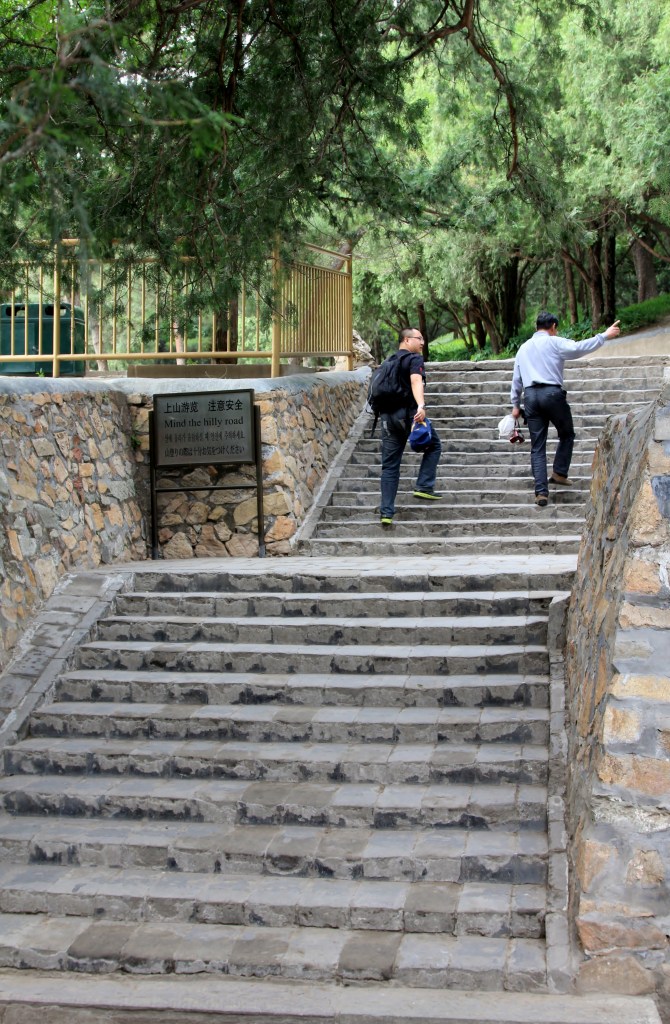
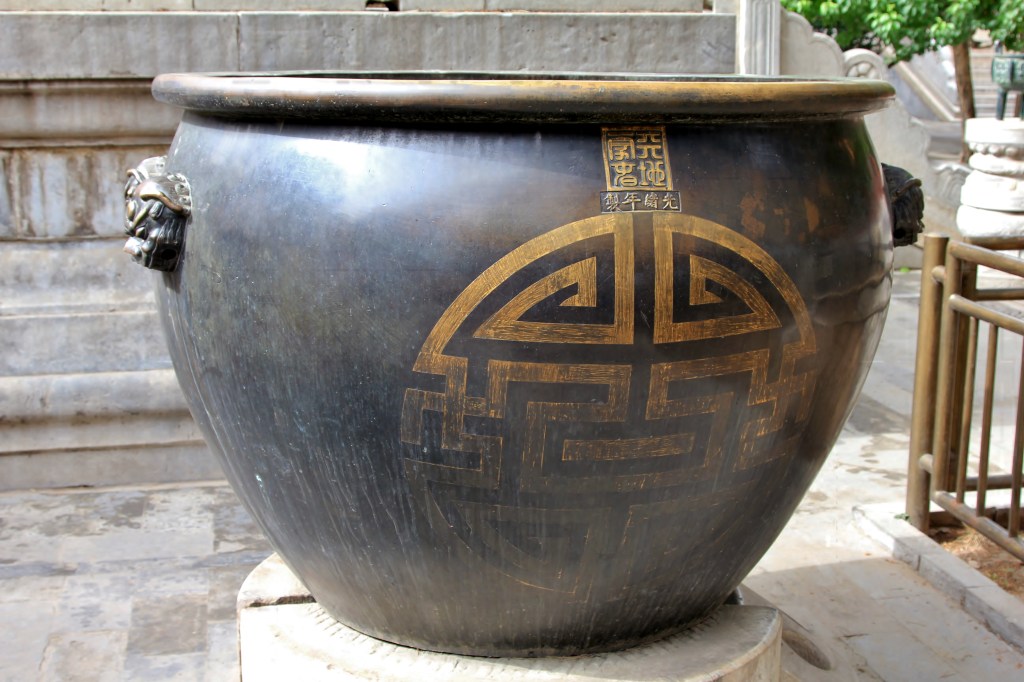
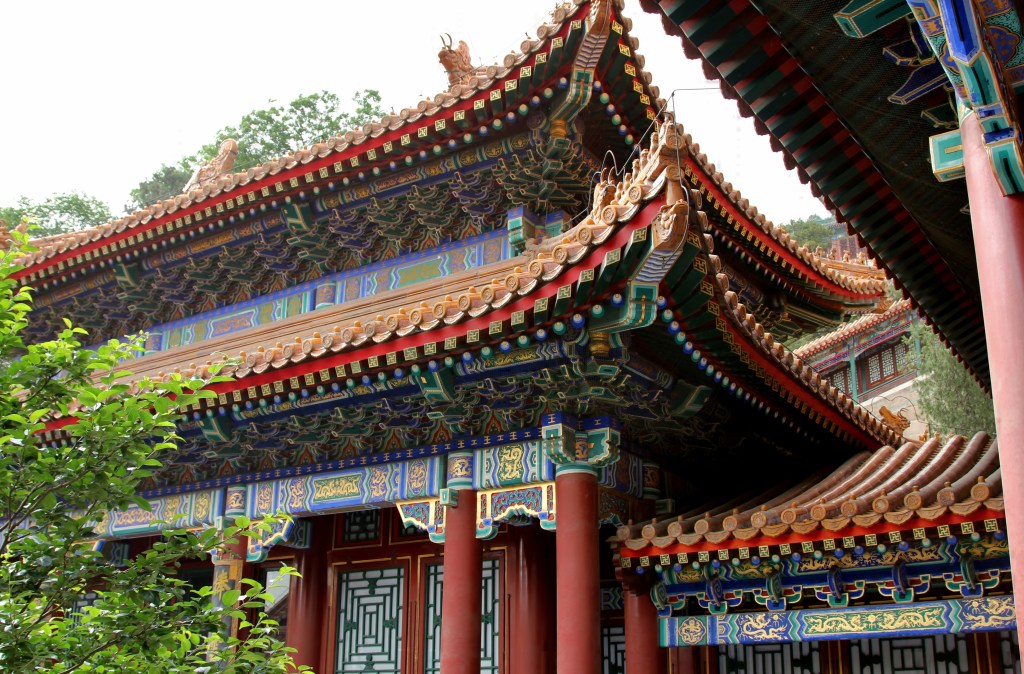
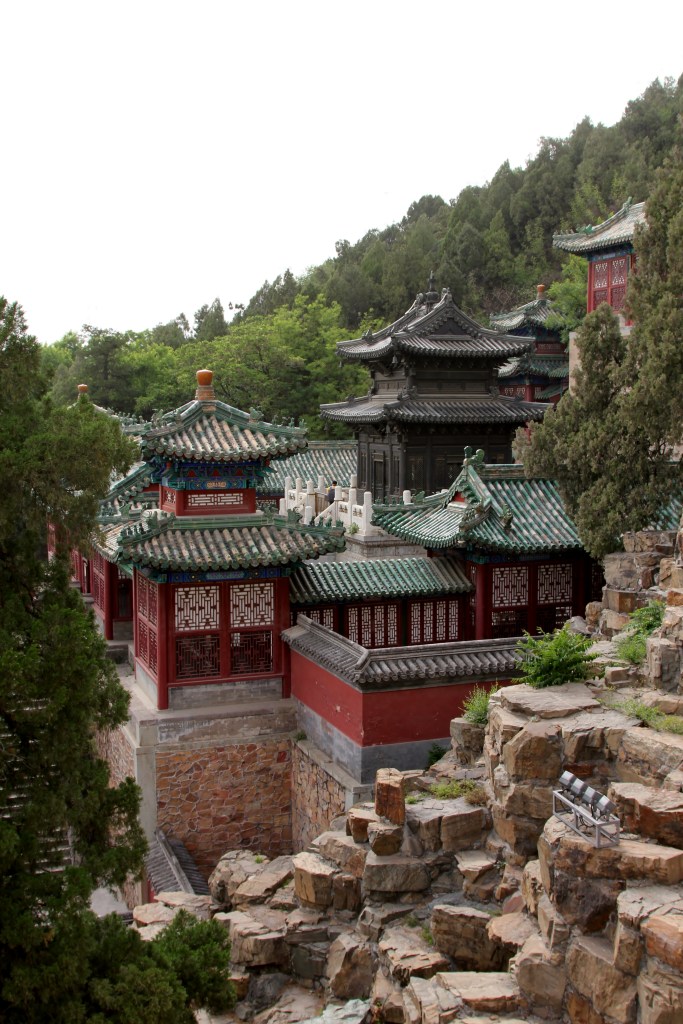
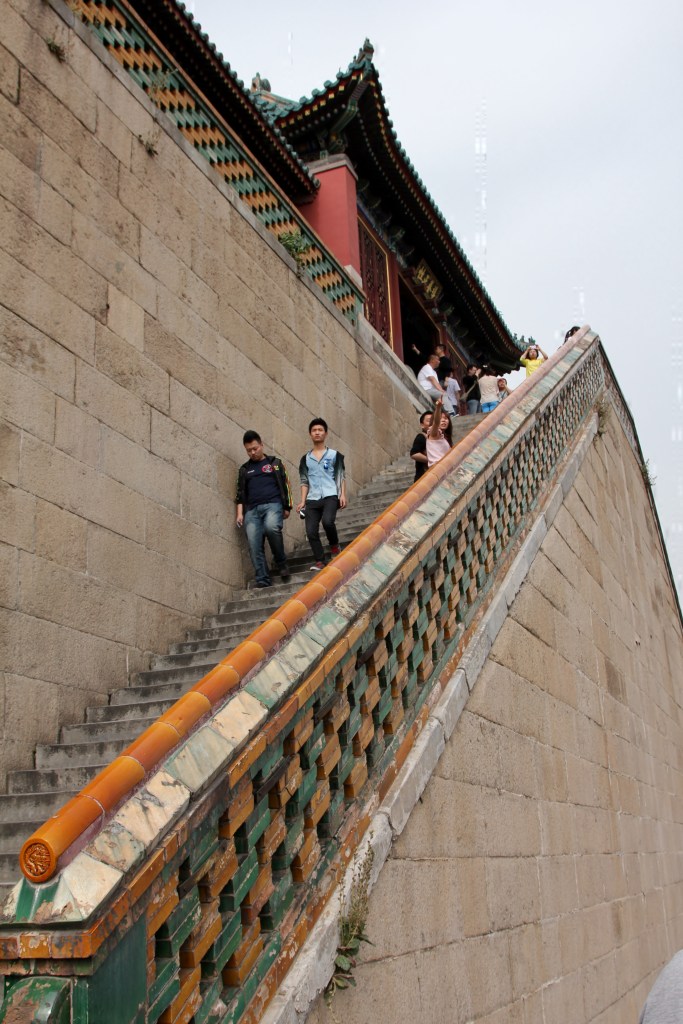
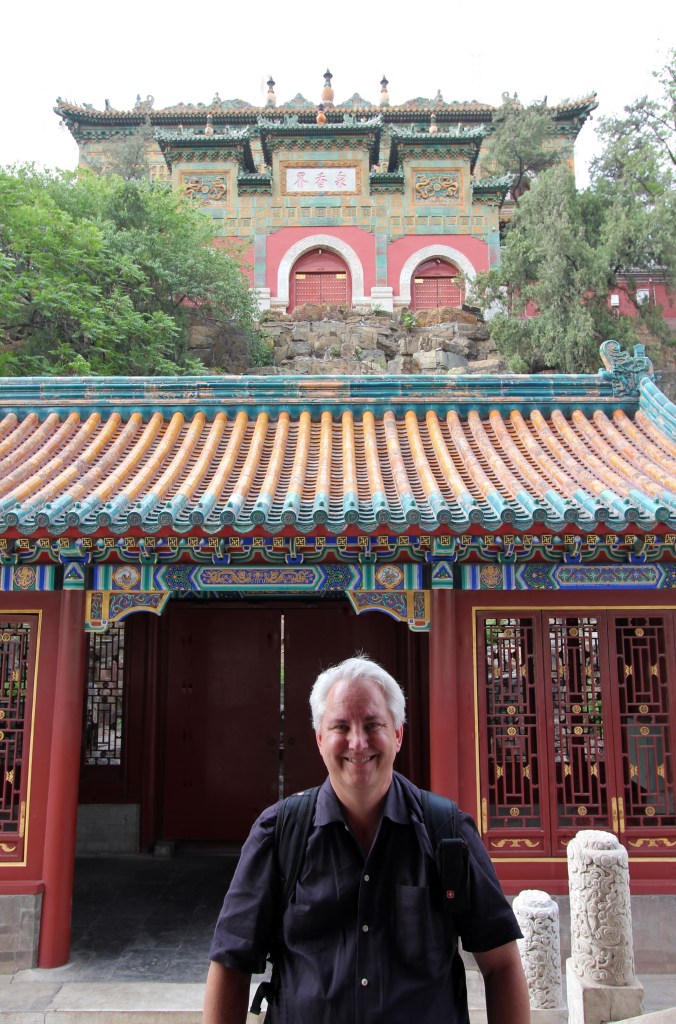
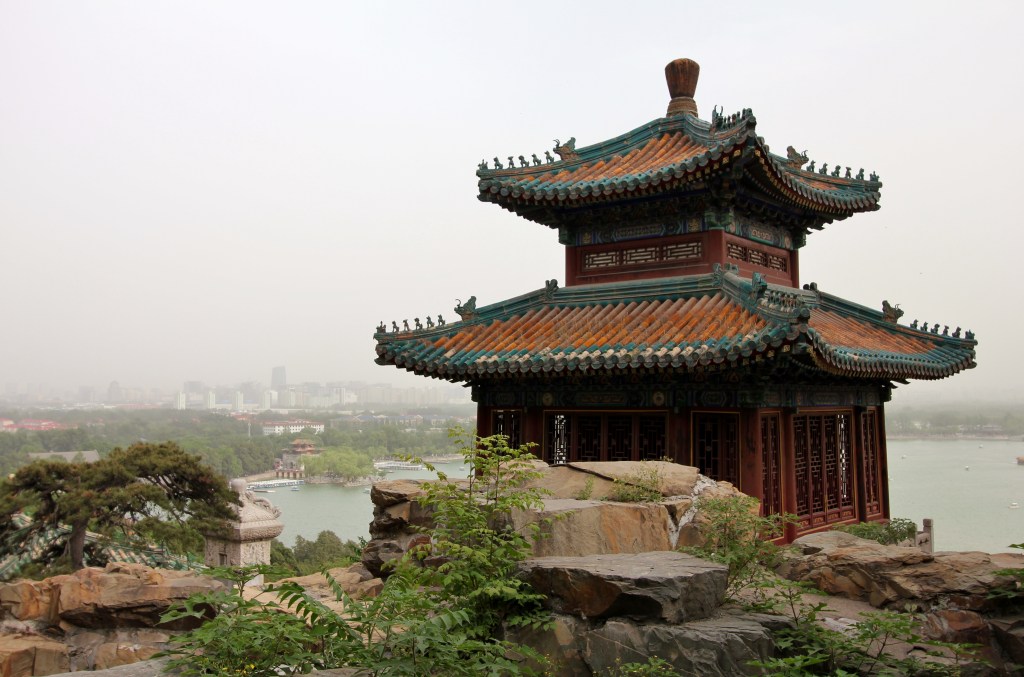
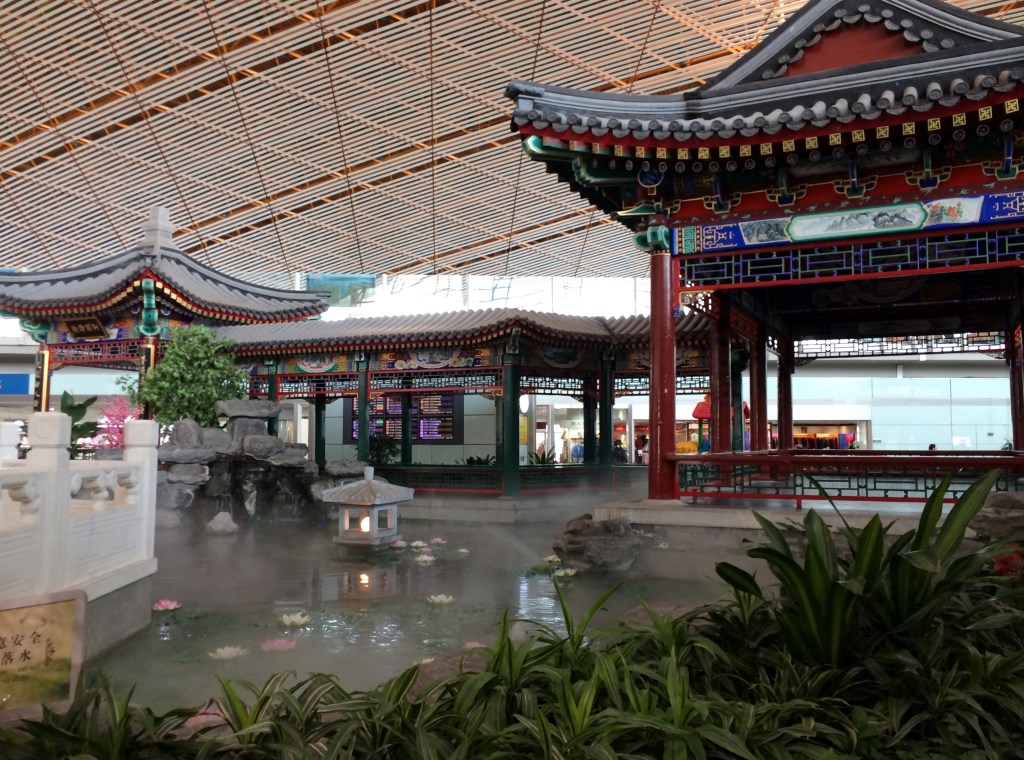
I really enjoyed my time at the Summer Palace and the views of the lakes, the temples and other buildings made it a fantastic capstone to my Beijing trip. But all good things must come to an end so back to our hotel we go. Now time to pack our bags for the return trip to the US and reflect on the memories of the trip. Governments can like or dislike each other but I found the everyday Chinese person very nice, helpful and accommodating to us western strangers.
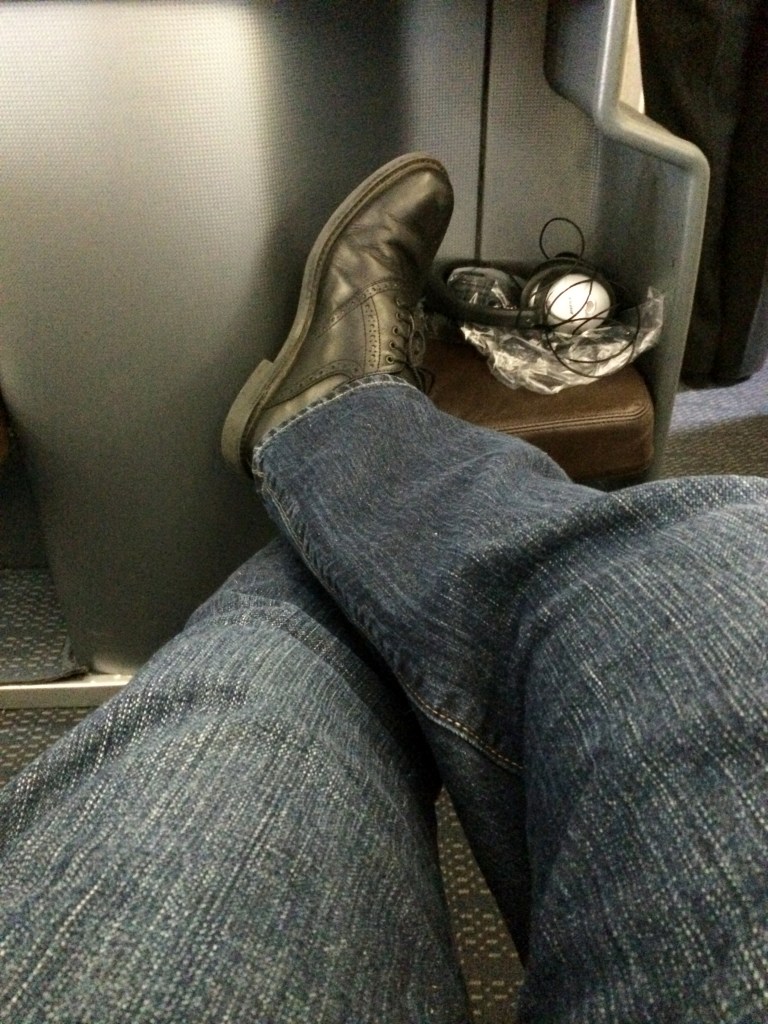
If you like or dislike this post please feel free to comment. I enjoy feedback.

 The Sane Adventurer
Leave a comment