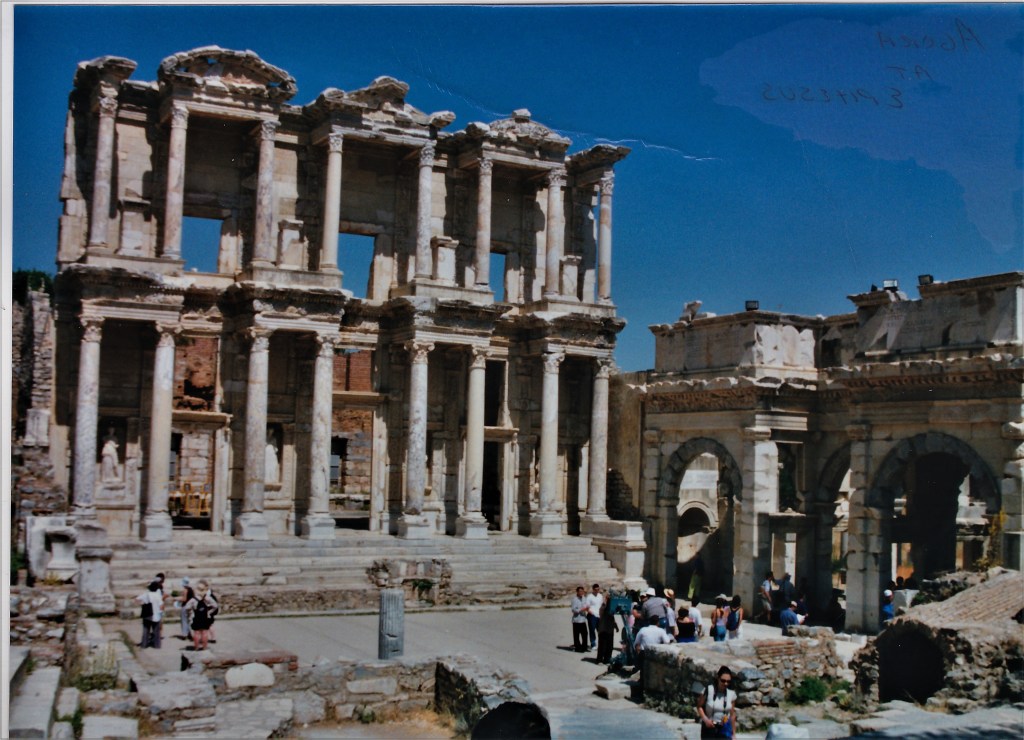
Library of Celsus
The beautiful Ephesus ruins that I saw, and that most people think today, are actually the result of the Roman Empire’s expansion and date from 88 BC. But Ephesus already had a long and tumultuous history. Founded by the Greeks in 1200 BC, but legend has it that Ephesus was founded by Amazon women whose original name was Apasus. Inhabited from the end of the bronze age the city has actually moved location several times. In fact, Lysimachus, a general of Alexander the Great wanted to move the city 2.5 km to the southwest from its location during the Persian rule. Unfortunately, the people were complacent and happy to stay where they were, so Lysimachus blocked the city’s sewage system rendering all the homes inhabitable. I guess that is one nasty way to get people to move.
Harbor Issues

In ancient times Ephesus was a thriving harbor town of 200,000 inhabitants and was thought to be one of eastern Asia’s most important trading centers. It was also a leading political and intellectual center and had the second school of philosophy in the Aegean region. While Ephesus enjoyed a protected harbor the Cayster river had other ideas. The silt and other alluvium slowly built up a delta and finally cut off Ephesus from the Aegean Sea.
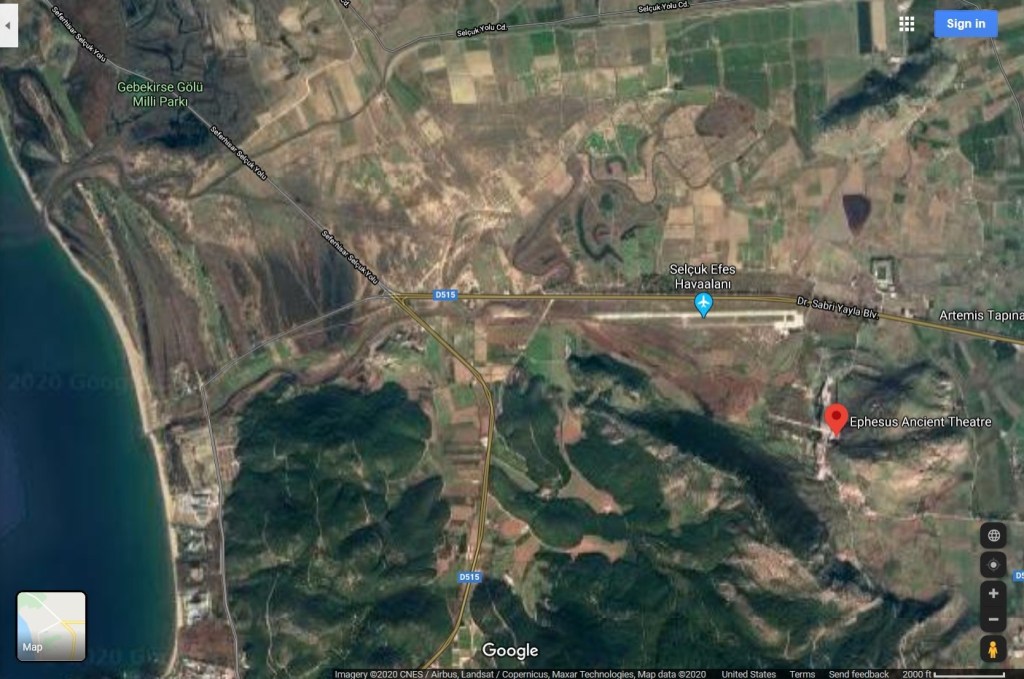
With the harbor rendered useless it became now a swampy bug infested and malarial ridden area the Ephesians abandoned their city. Today, the Cayster river still flows but with the regression of the Aegean Sea and the continued alluvial buildup, Ephesus is now landlocked and 5 km from the Mediterranean Sea and we took a minivan from Kusadasi to Ephesus.
St. Paul: Letters to the Ephesians
Let me preface this section by saying I am not a biblical scholar so any misinformation is my fault or a result of faulty research.
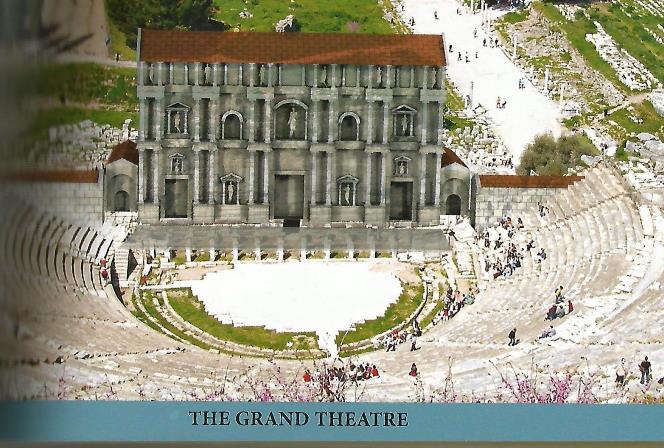
St. Paul was in Ephesus from 65-68 AD. At the time Ephesians were predominately polytheistic with one of the main gods being Artemis. Paul was preaching his famous sermons where he told the populace to embrace the faith in the one true god. Unfortunately, Paul’s sermons were not well received by the towns craftsmen who had amassed wealth from the production of Artemis statues. Later, Paul was speaking at the theater of Ephesus, when Demetrius, a silversmith, stirred up the people where they began to boo, chant, and stone Paul. While it seems that Paul did spend some time in Ephesus jails, his preaching’s soon threatened to cause the populace to erupt in violence. City officials soon forced St. Paul to leave Ephesus. However, still determined we can still see him telling the Ephesians to turn away from Artemis in his biblical letters.

Our view of Theater 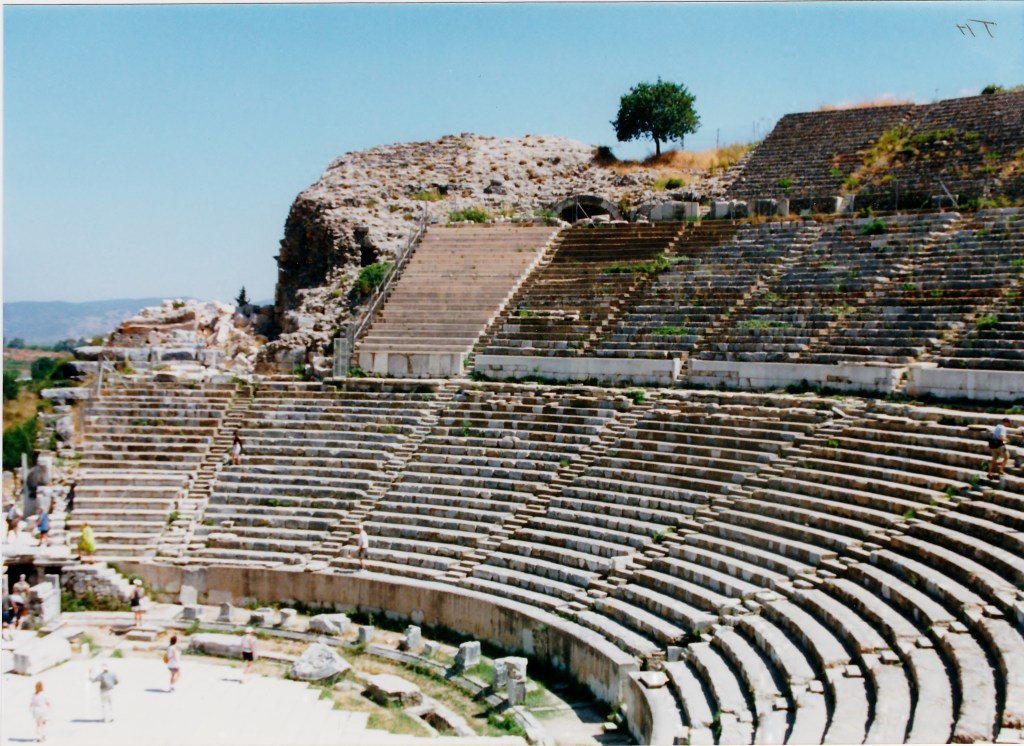
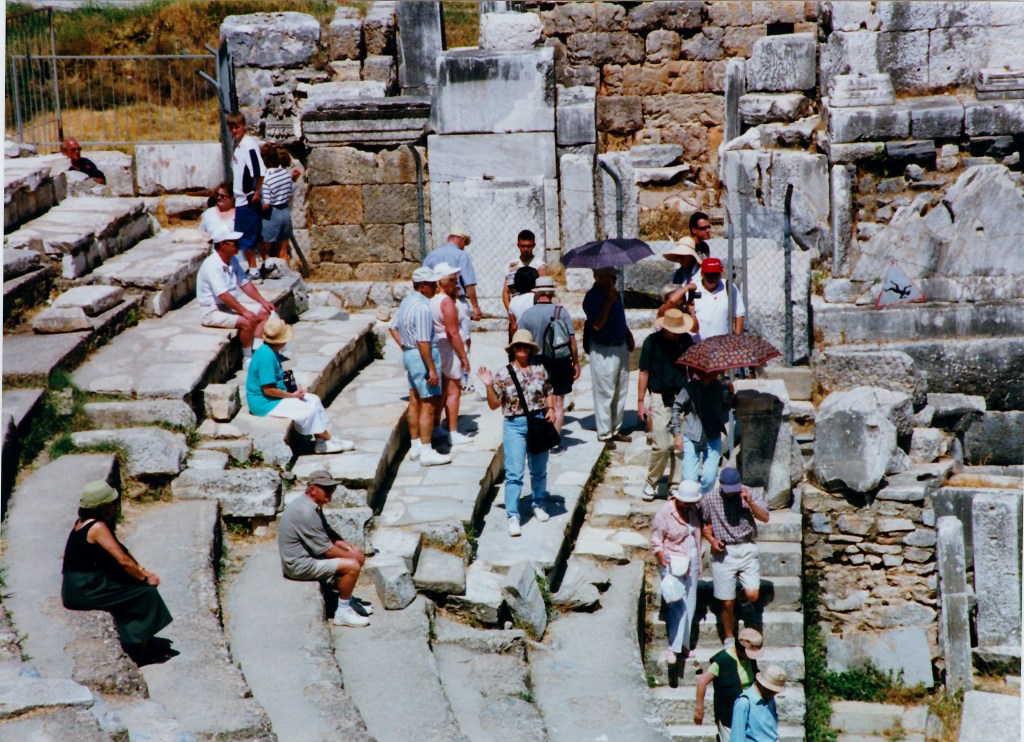
Wife waving at me!
For me, it was odd being so near many of the biblical sites I learned of so far away in Kansas. Being at the same theater and walking the same streets seemed surreal. To be honest, 20 years ago when my wife and I were in Ephesus I didn’t fully realize this was the location of many of his sermons. We were simply caught up with a theater that seated 25,000 people from a time before Christ.
City Ruins
Regular excavations on Ephesus started in 1869 and have continued to present day. The colonnade areas and the wealthy areas with mosaic tile floors are amazing. Here are few pictures from our trip.
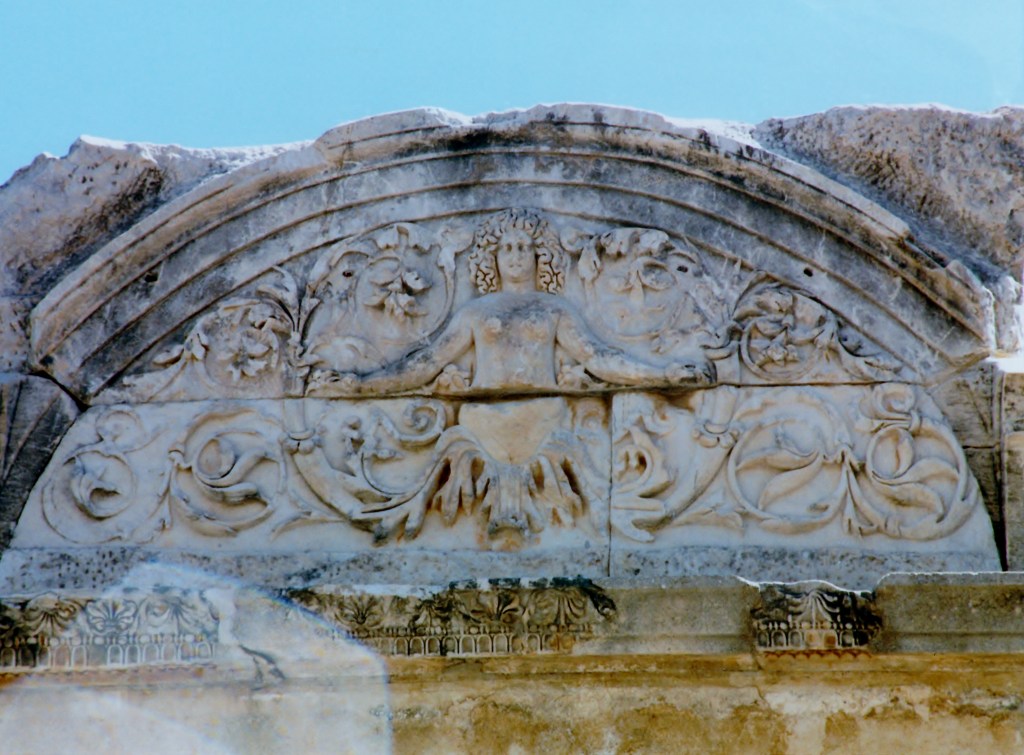
Temple of Hadrian inner Relief 
The Arcadiane 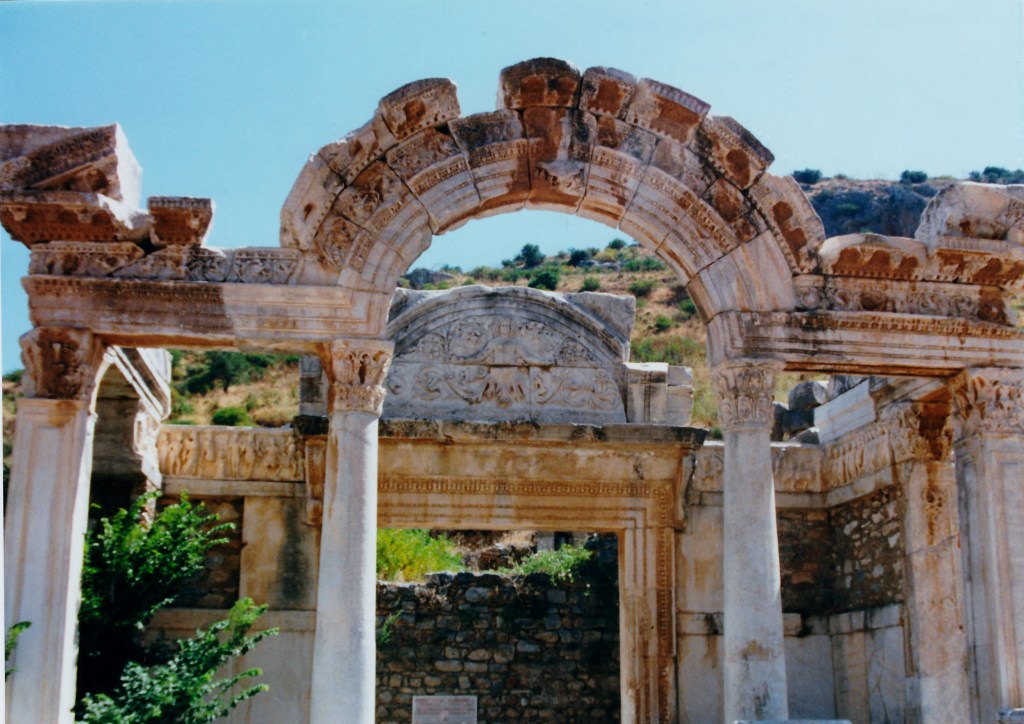
Temple of Hadrian 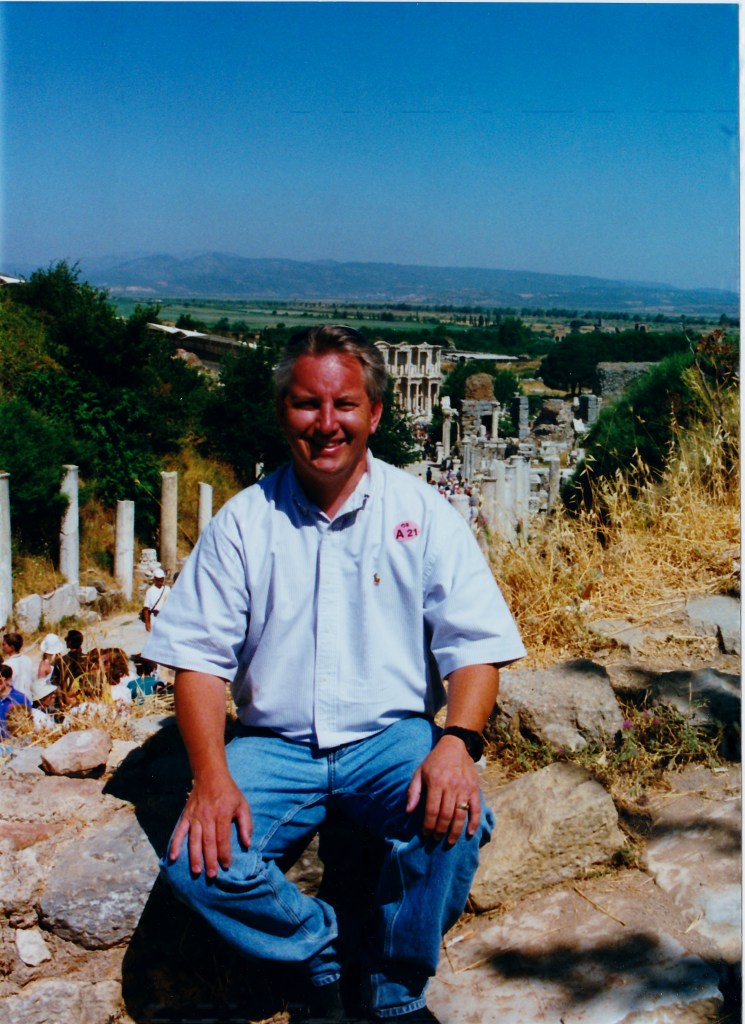
Getting some sun in Ephesus 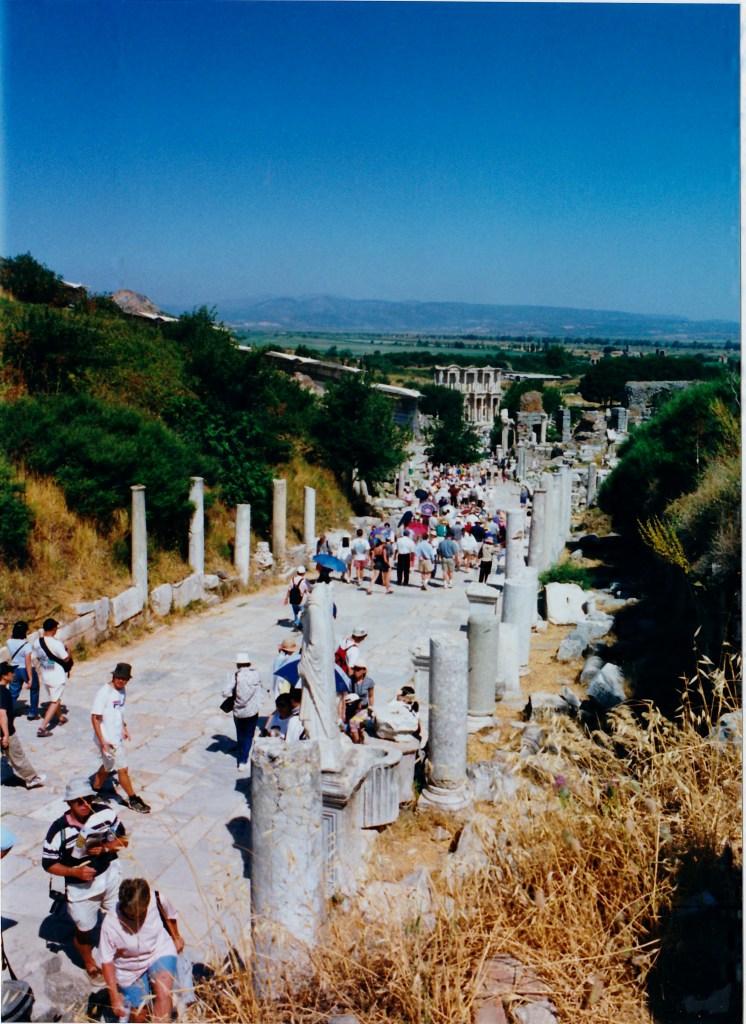
Street of the Curetes 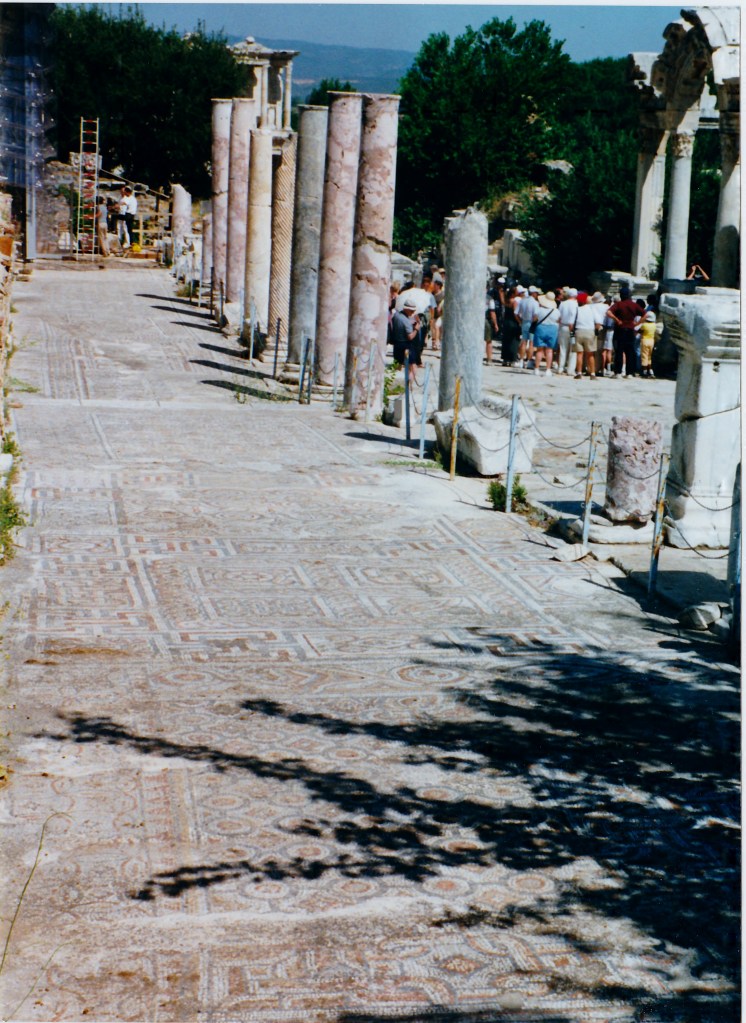
This was a mosaic lined covered Colonnade (at least it was covered at one time) 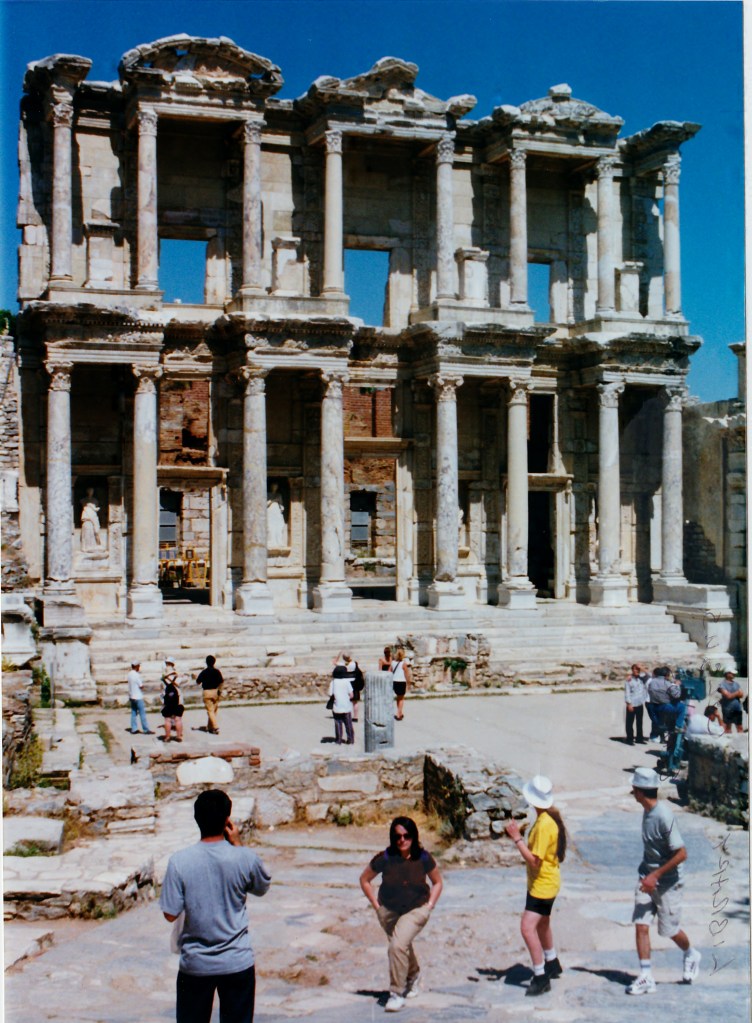
Library of Celsus 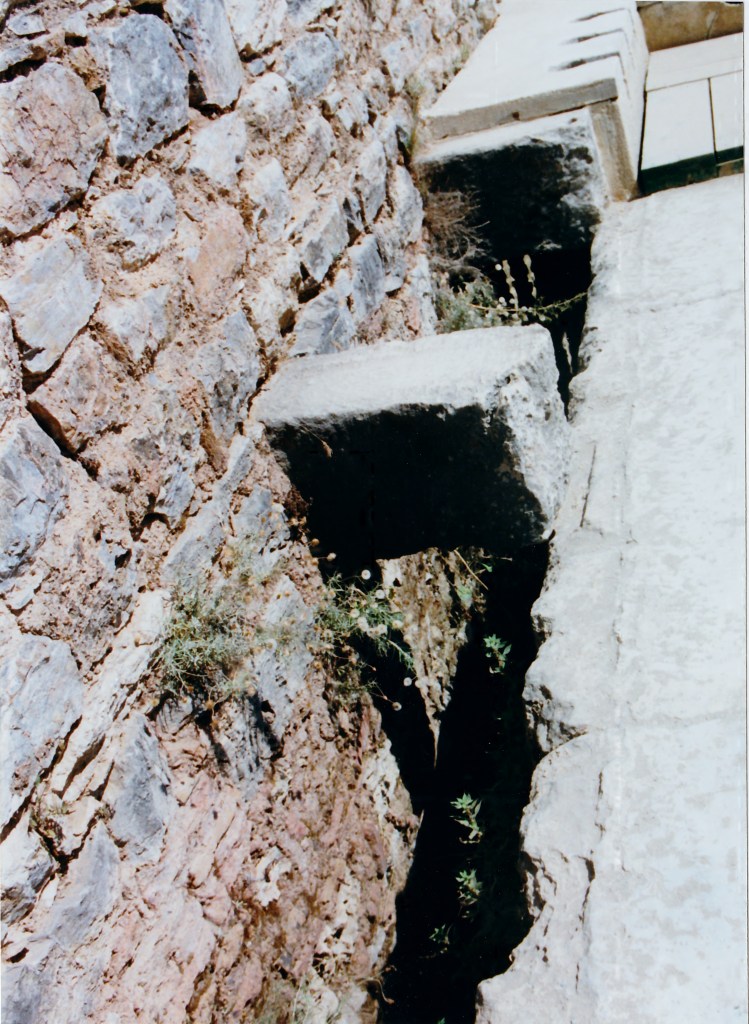
The men’s room of Ephesus. Urinal in front and toilets in background 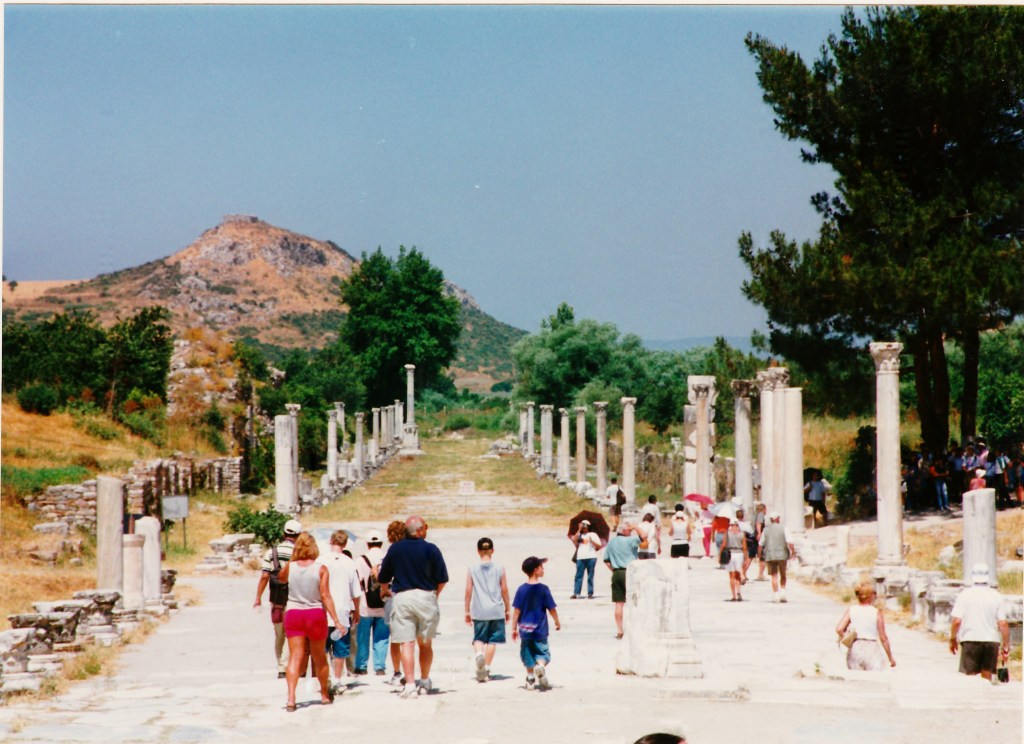
The highlight of the ruins is typically the Library of Celsus. The library which dates from the 2nd century and also is a tomb. The library also contains the sarcophagus of Celsus that is excellently preserved. The façade today is mainly a result of excavation work begun in the 1970’s.
Basilica of St. John and Virgin Mary’s Home
Near Ephesus is the Basilica of St. John, which is now just a ruin. Most of the stone was recycled for the nearby Mosque when Turkey once again became predominantly Muslim. The church itself was built in 565 AD and is located about 2 miles from Ephesus. Build in a typical cross shaped it also contains the tomb of St. John.
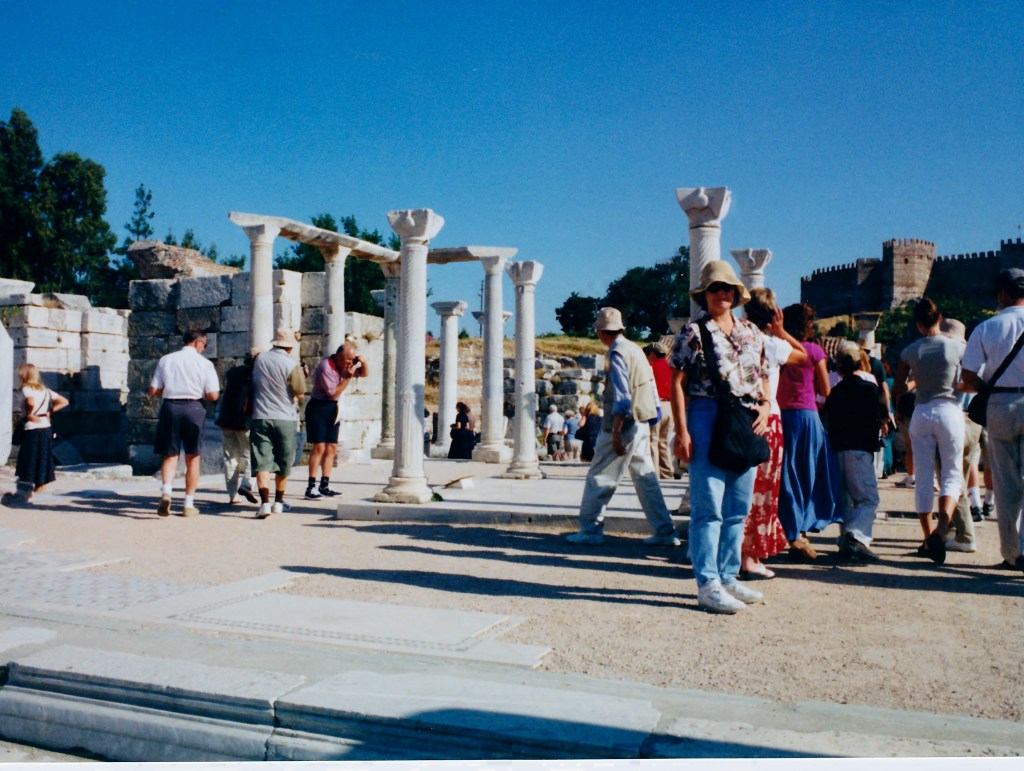
Inside the Basilica 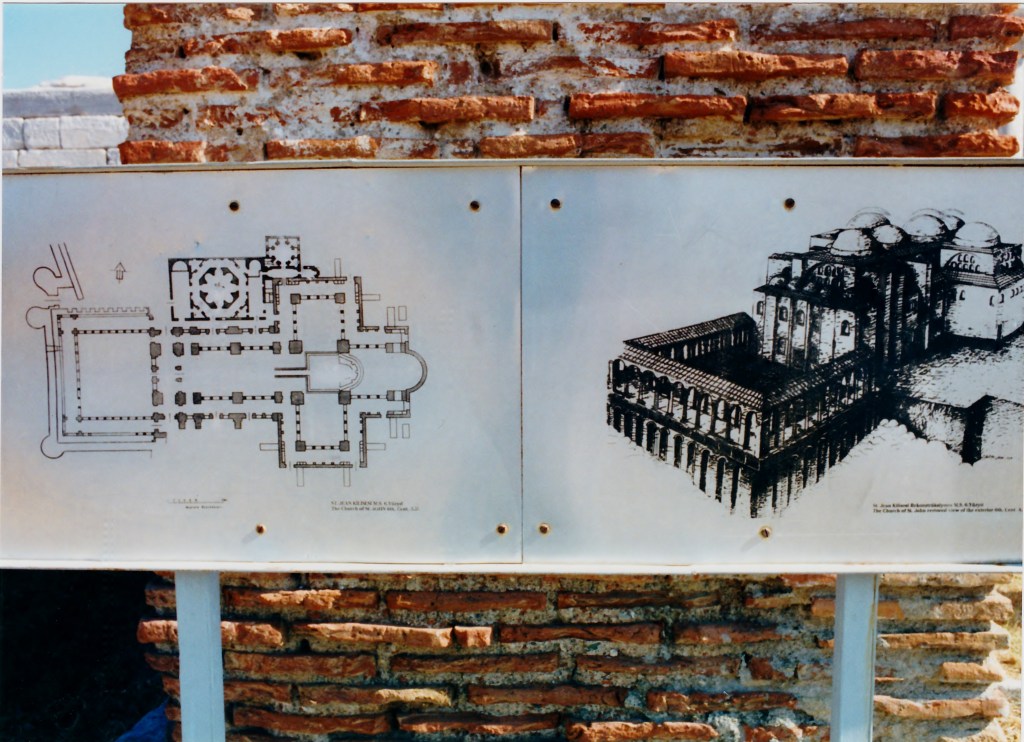
What they think it looked like 
Behind me is tomb of St. John 
Church grounds 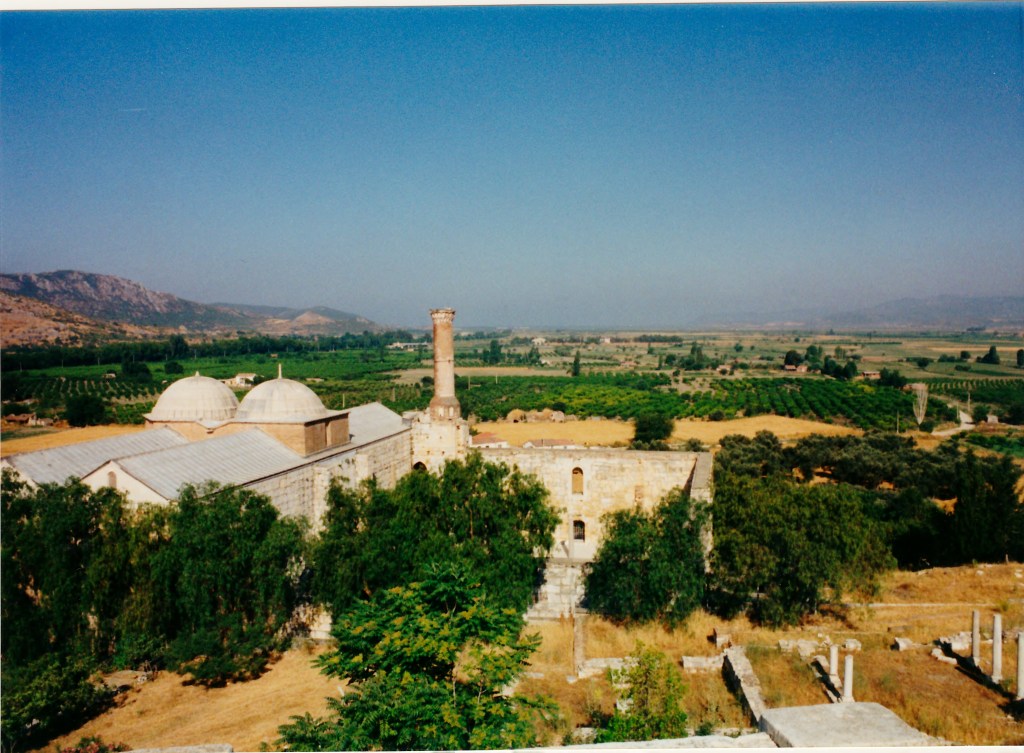
On the left is the Mosque created from recycled stone of Basilica 
Baptismal font
Just up the hill from the Basilica of St. John is the House of the Virgin Mary. While not officially blessed by Rome, after the first pilgrimage by Pope Leo XIII in 1896, taken a positive attitude towards the site and its status was elevated the house to that of a Holy Place, a privilege, made permanent by Pope John XXIII. From my perspective it was odd to have potentially walked in her home and captured the same vista from the surrounding grounds that she might have almost 2000 years ago.
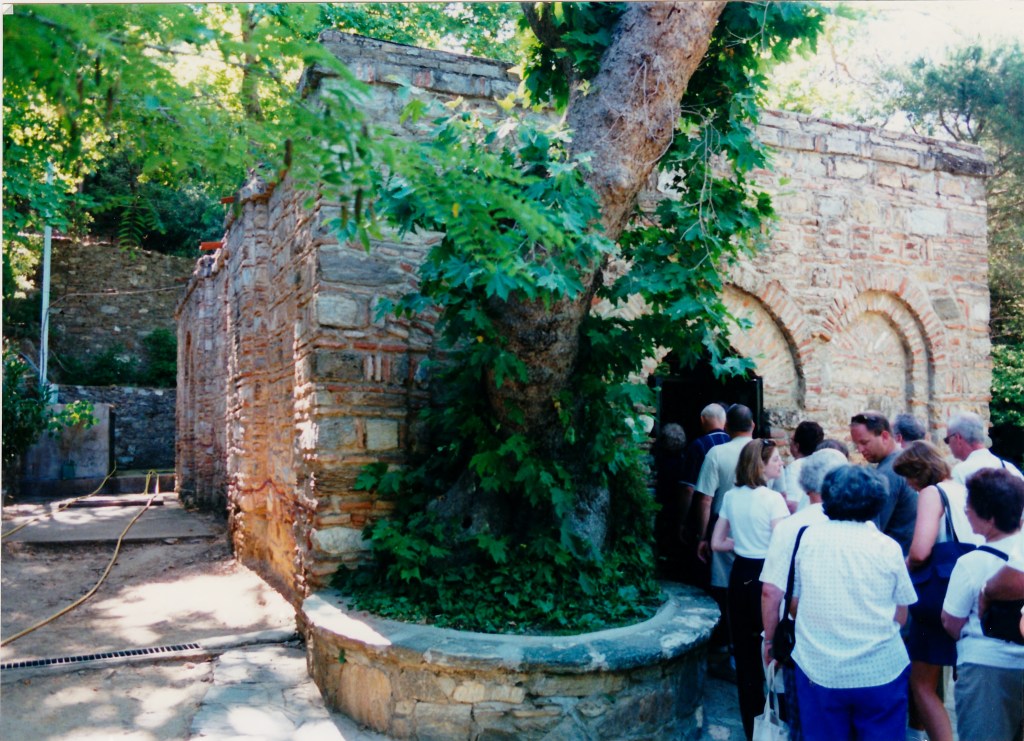
Waiting to go inside Virgin Mary’s home.
Nearby Kusadasi
The port our cruise shipped docked at was Kusadasi. I found it a warm and welcoming small village with beautiful views of the Mediterranean Sea. The people were nice and both my wife and I felt much more relaxed than we did in Istanbul.
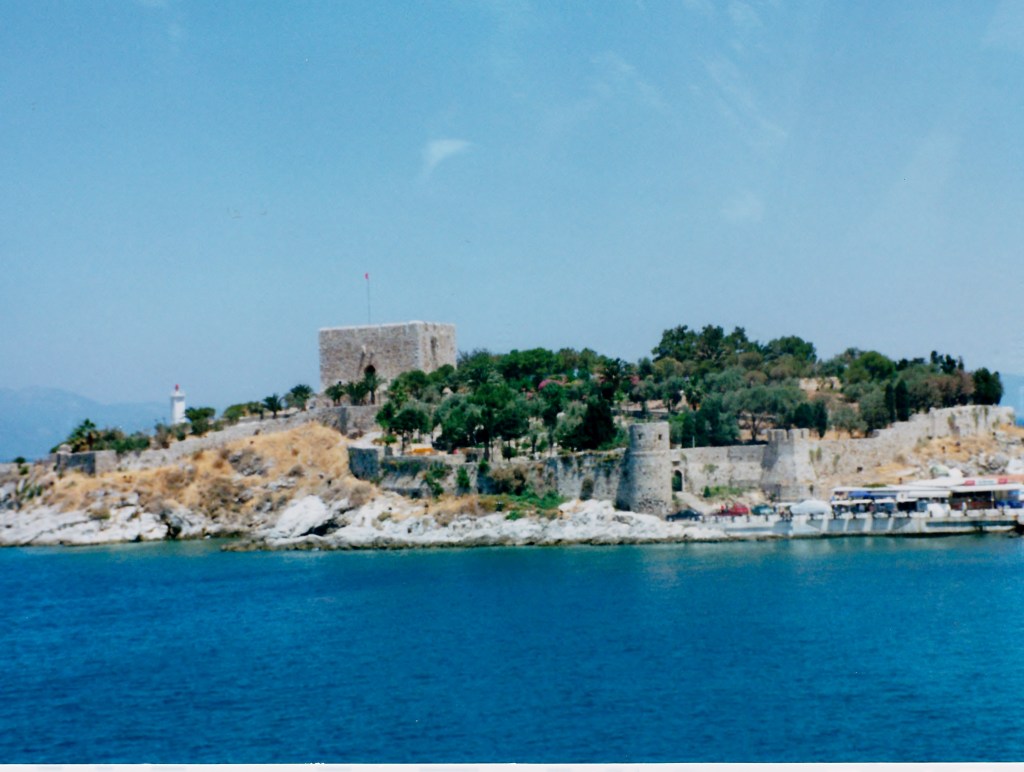
Thanks for taking a trip to Ephesus Turkey with me. Sorry I didn’t have more pictures but these were the pre-digital days when a 36 exposure roll could last a whole day. I can’t imagine now, as on trips I might shoot more pictures before even leaving the house! LOL
Let me know your thoughts and if you have any comments. I appreciate your views and feedback. Thanks!
 The Sane Adventurer
Leave a comment