
On our last trip to Paris, my wife decided that she would book the excursions as this was our wedding anniversary trip. One excursion was to Giverny, France where we were going to see Monet’s gardens, his house and his final resting place, nearby.
Sitting 50 miles west and a bit north of Paris, Giverny is in the state of Normandy, France. Sitting quietly on the right side of the Seine river this town is home to a little less than 500 residents. The town’s most famous impressionist painter was Claude Monet who lived and painted in Giverny from 1883 to his death in 1926.


Water Lily Garden
Our small tour group arrived early in the morning and our guide was focused to be the first in line allowing us to go directly to the water lilies pond, which allowed time for each of us to have a private picture on the Japanese bridge before the days crowds arrived in mass.
Once the requisite photo opportunity was completed, we had a brief overview of the grounds, home, and life of Claude Monet. Monet loved to paint the same scene many times in order to capture the changing of light and the passing of the seasons. There are many Water Lilies paintings as well as other paintings of people and the fields around Giverny.
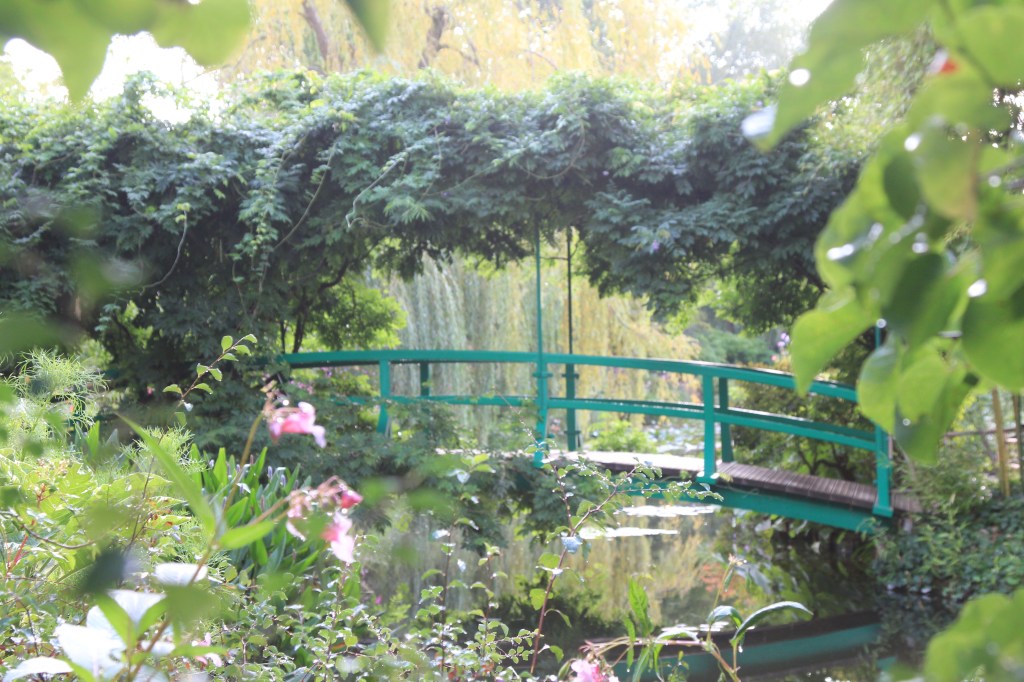
Japanese bridge 

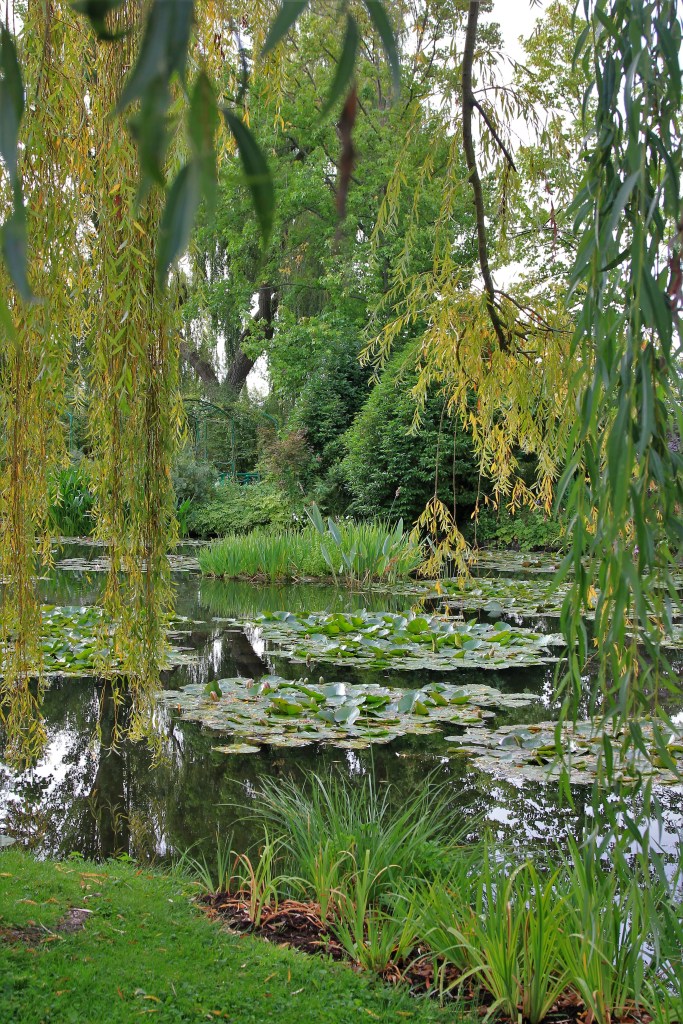

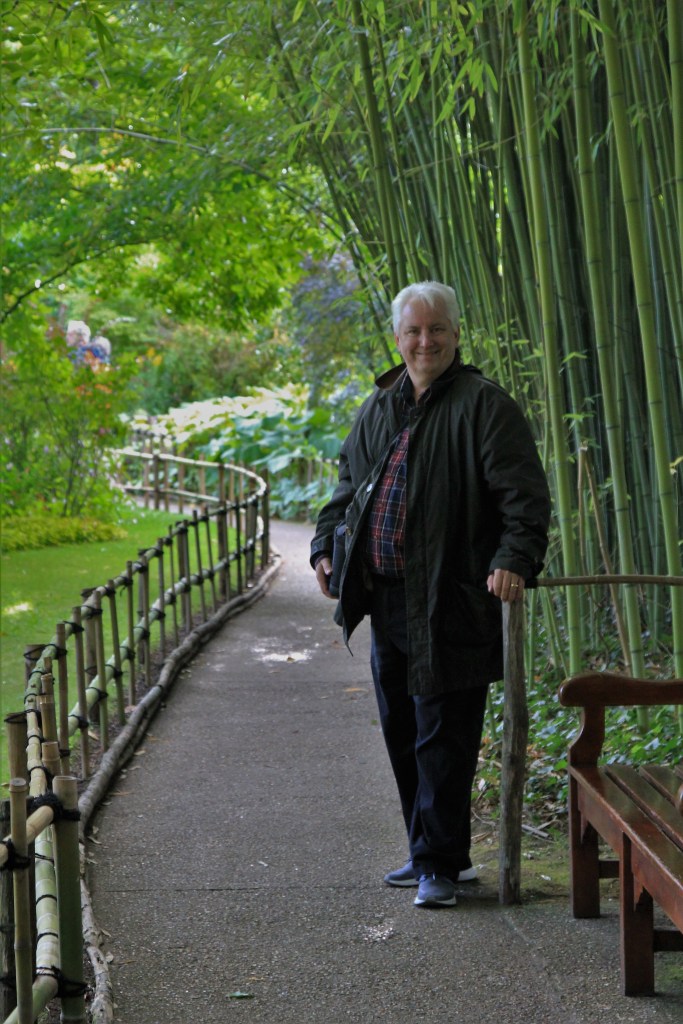
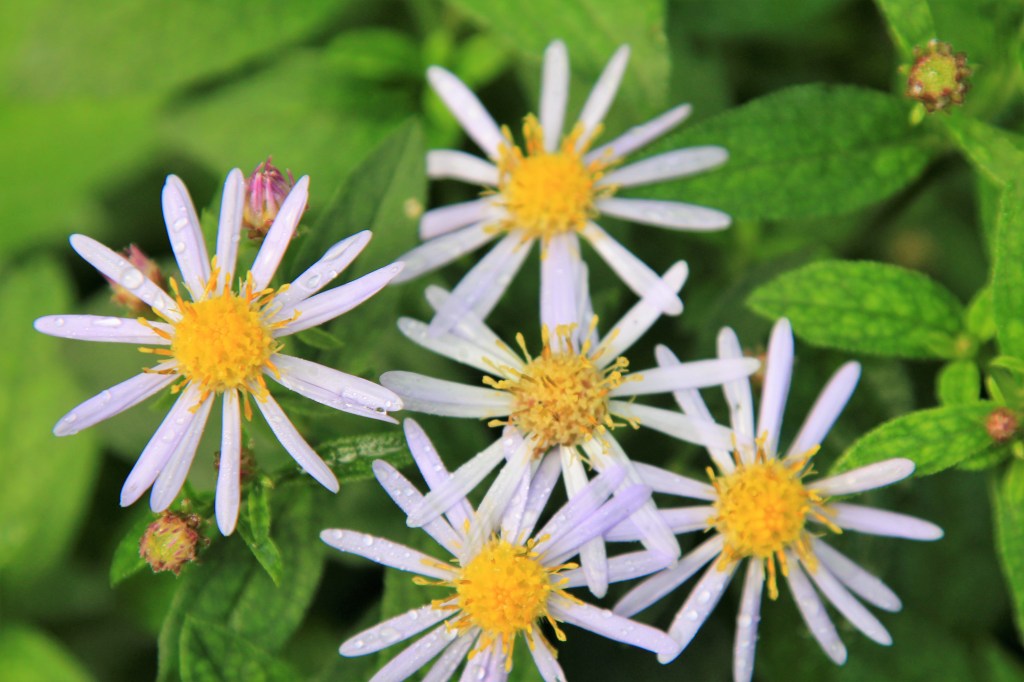
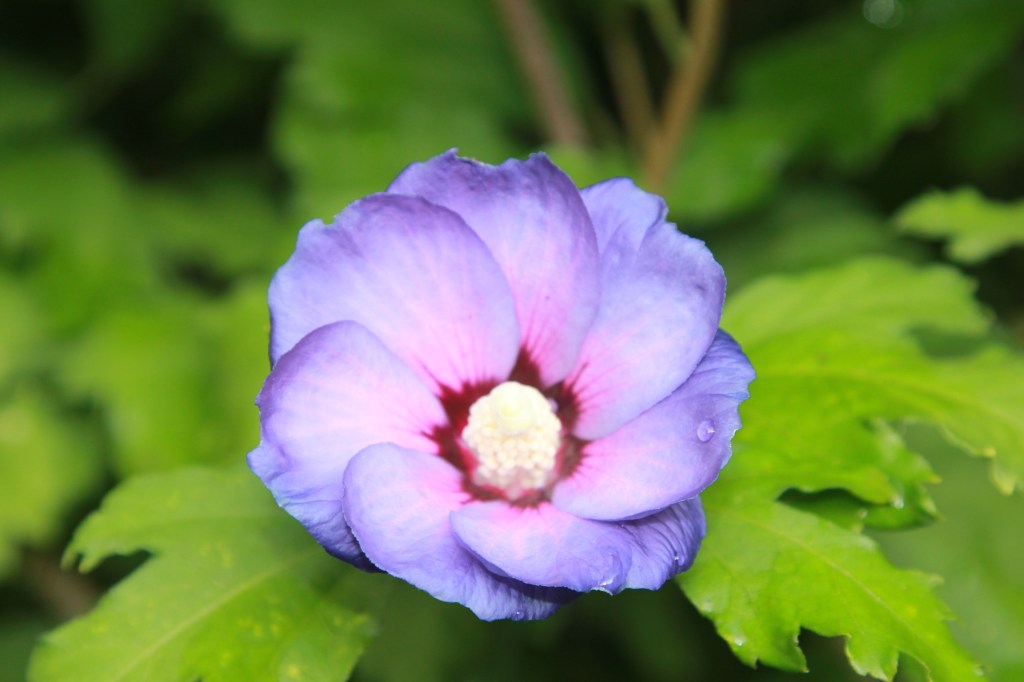
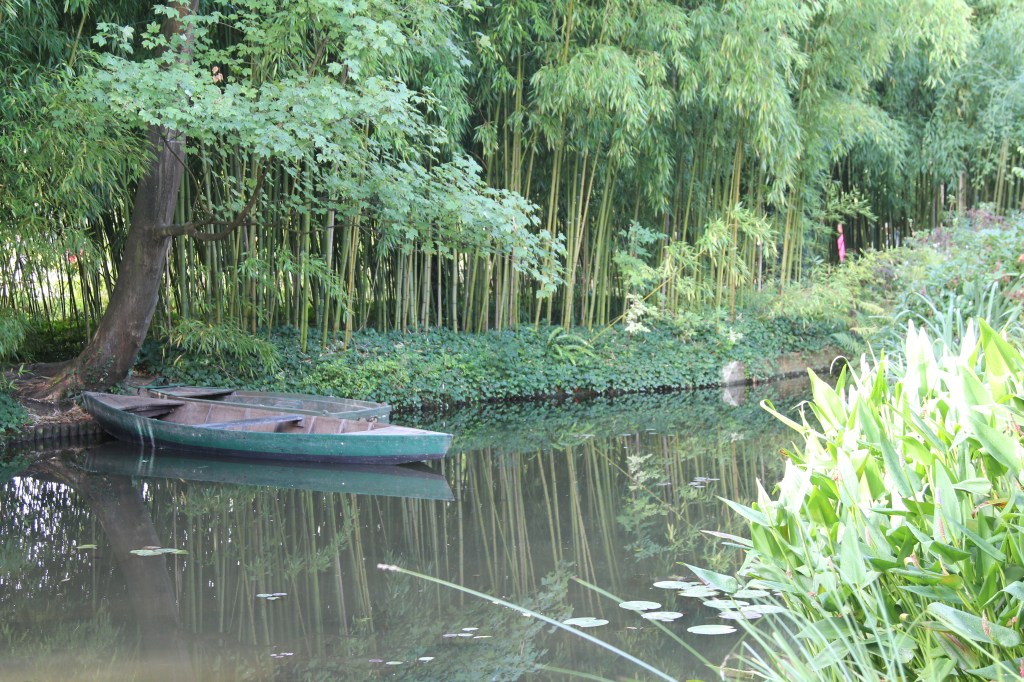
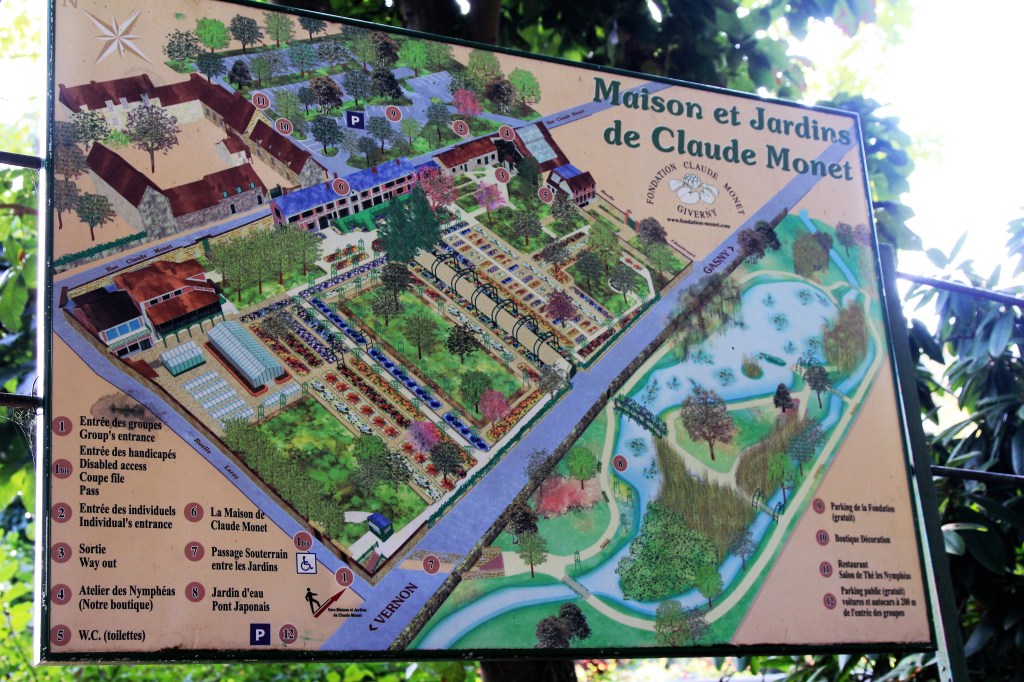
Across the road from his home Monet purchased additional land near a pasture with a creek running through it. In 1893 he began a major landscaping project which included lily ponds that would become the subjects of his best-known works. White water lilies local to France were planted along with imported from South America and as far away as Egypt. The colors of the lilies included yellow, blue and white lilies. We were told that not all his neighbors were happy with this project and the foreign plants, (such as bamboo) he brought in. In 1899 he began painting his water lilies series with the Japanese bridge as a central feature, while later in life he painted large-scale paintings that kept him busy and earning him money for the next 20 years of his life. Monet’s eyesight was so bad towards the end of his life that many of his later paintings have a bluer tone due to influence of his cataracts. Walking around the pond tourists are transported to Monet’s private world of light and shadow. Only a short 6 yards away from the edge of his garden is literally a pasture like many in Kansas, complete with grazing cows.
Gardens around Monet’s Home
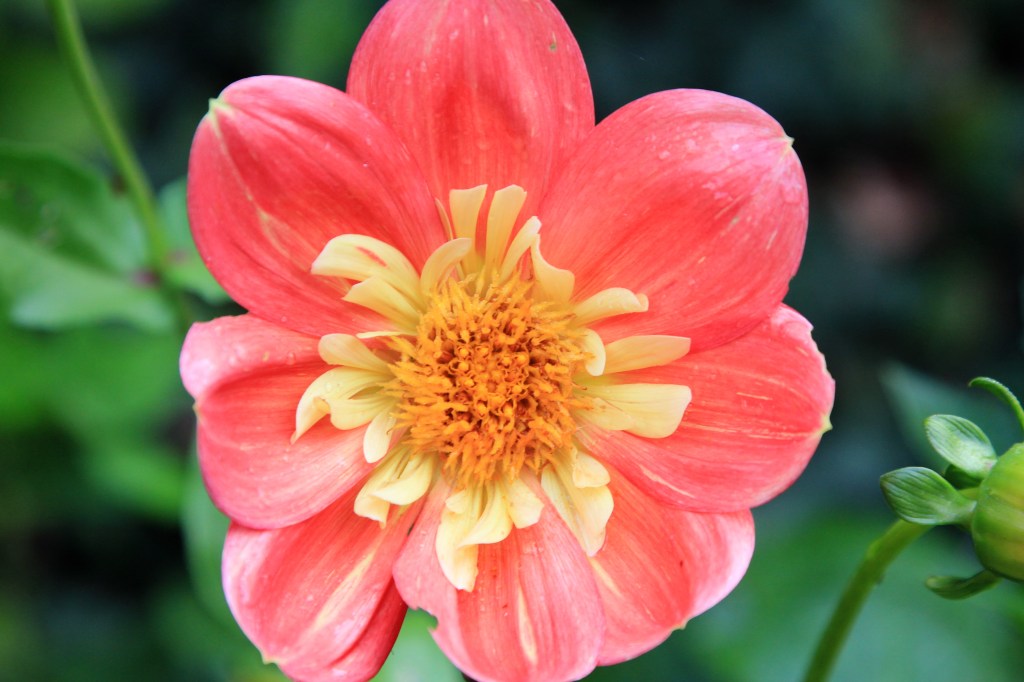
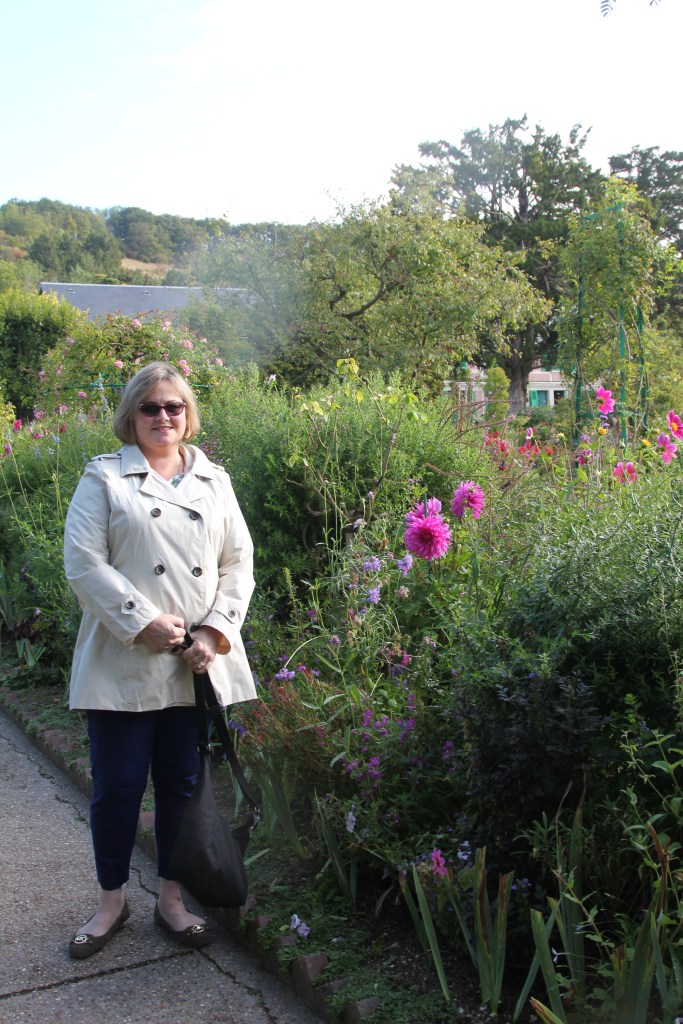
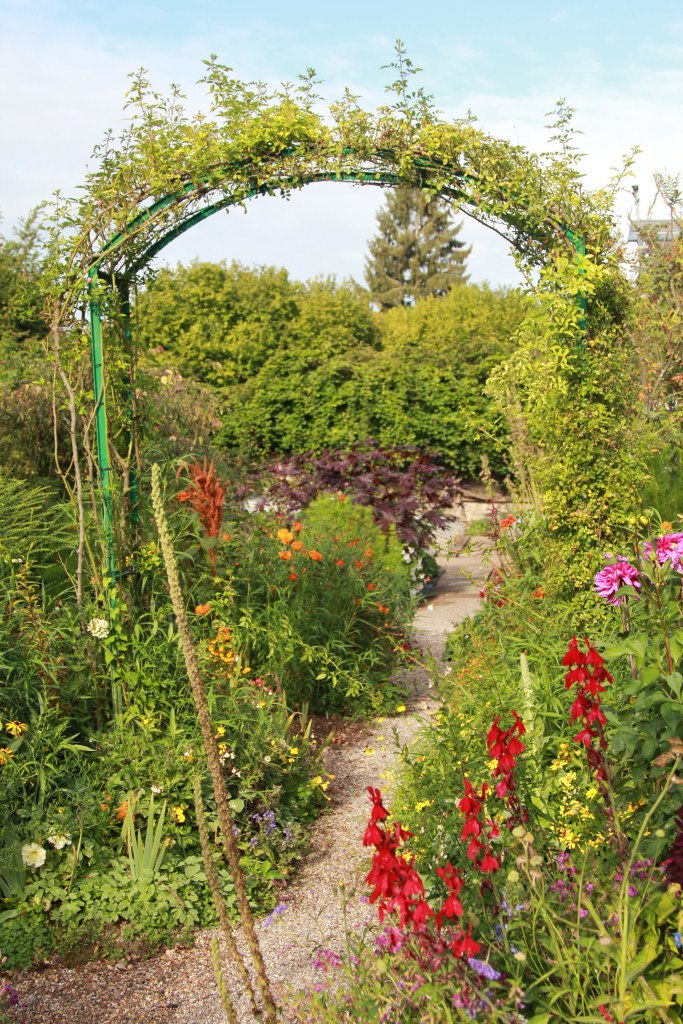
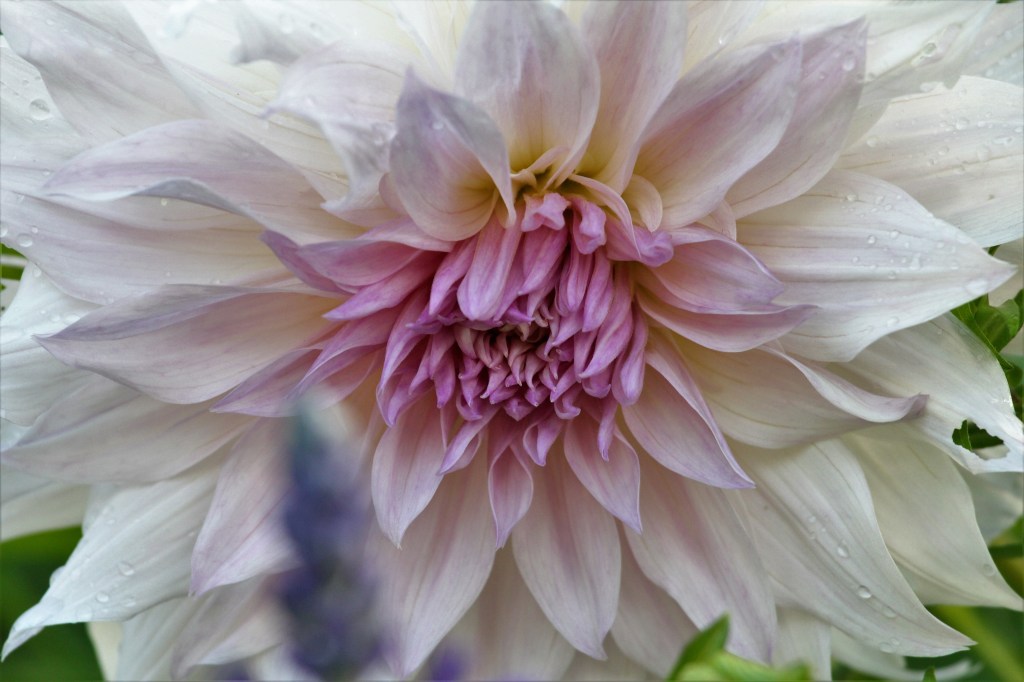
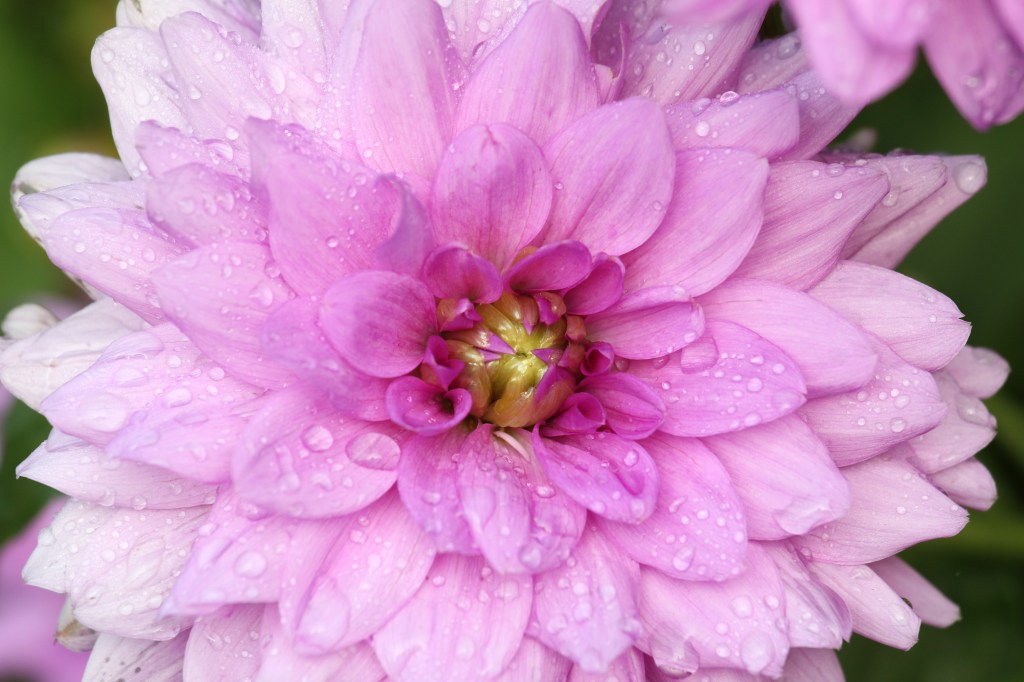
Monet designed and instructed his landscapers daily. He selected the flowers and by the time he was more prosperous, he employed 7 full-time gardeners. Today, the Fondation Claude Monet organization maintains the grounds, gardens, and home of Claude Monet and still employs 10 full-time gardeners. This Clos Normand garden, near the house, is laid out in grid fashion with several different flower arranged within the beds. A with a central walkway leading from the house has arches that allow the greenery to continue up to the sky above you.

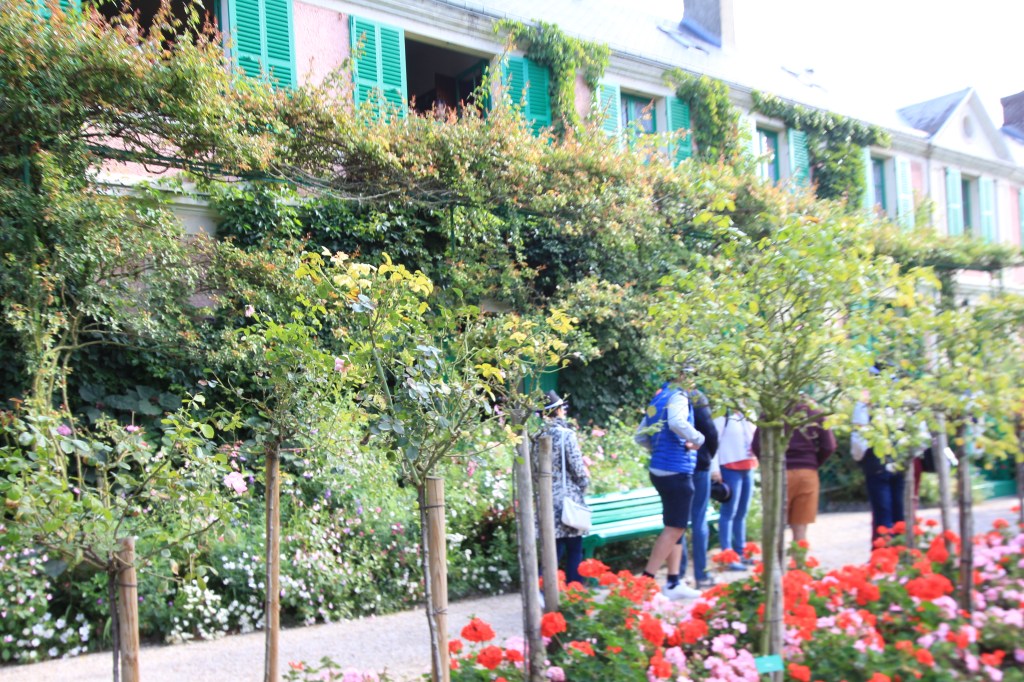
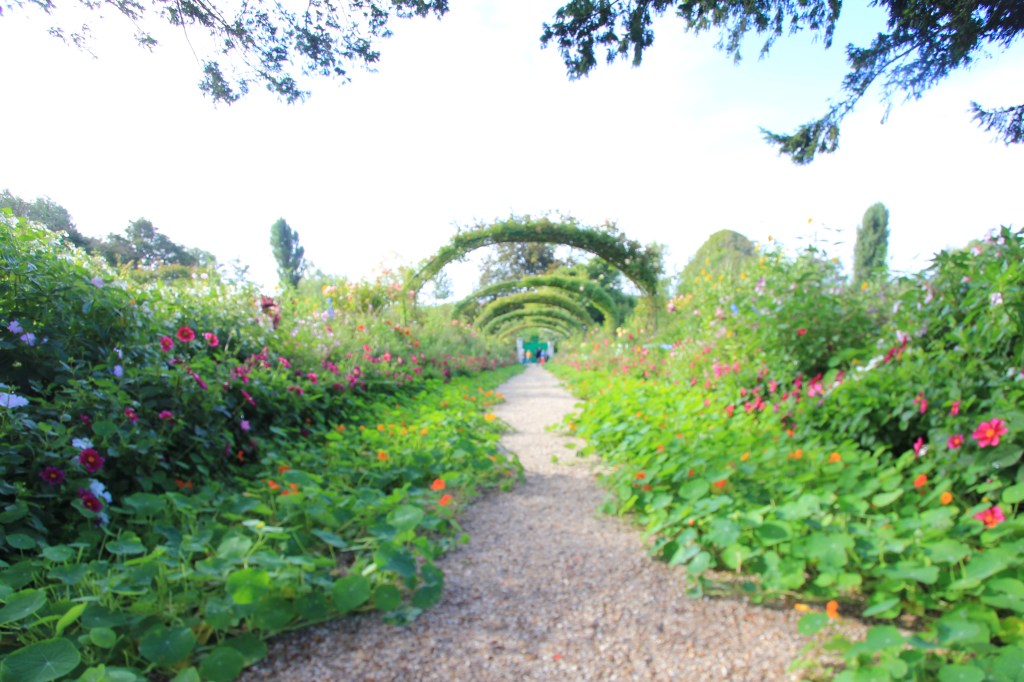
Central walkway 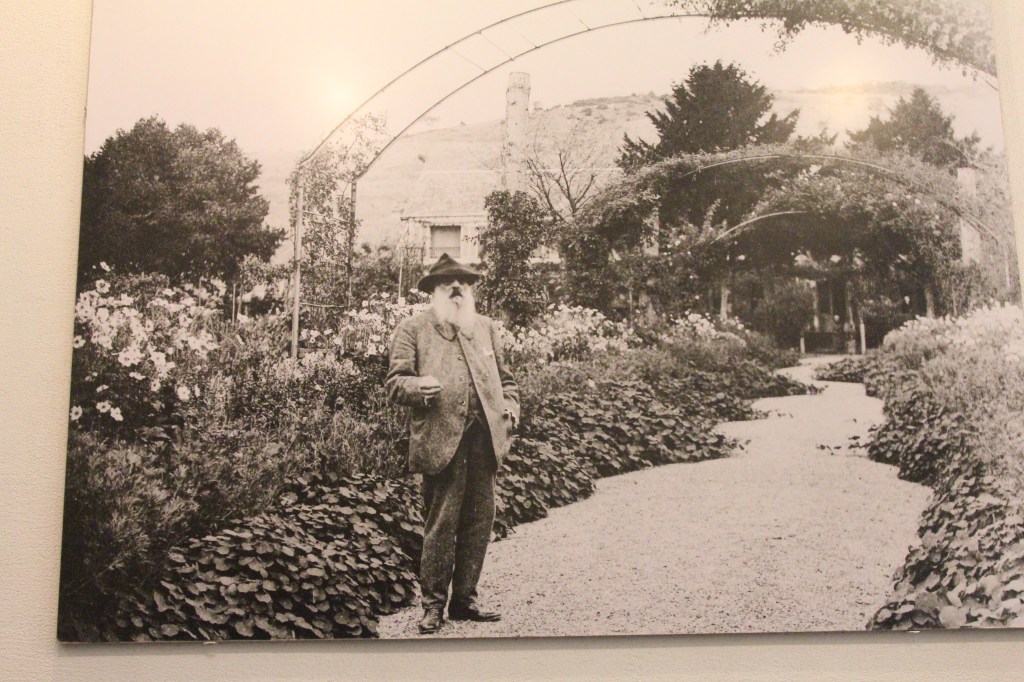
Central walkway with Monet 
Looking out the upstairs window
Monet’s House
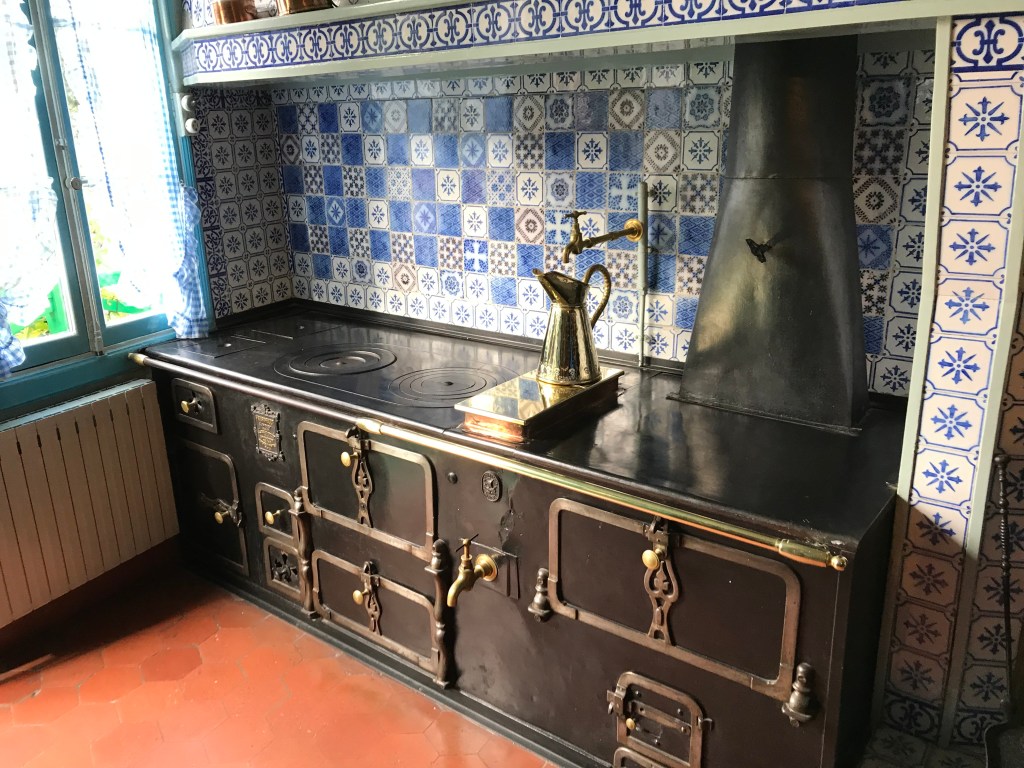
Monet lived in this Giverny home with his wife and 8 children. Two of his children were his from his marriage to Camille and the 6 other children were Alice Hoschede’s who became his second wife. The home is a two story where ground floor visitors can see the blue salon (Monet’s reading room), the “épicerie” (the pantry), the living room, which was his early studio, the dining room and the blue-tiled kitchen. Upstairs you can see the family rooms, including Monet’s which was renovated in March 2013. Nearby (and now the gift shop) is the small barn that was converted to a studio where Monet painted the larger water lilies paintings and murals that would not fit in his home.
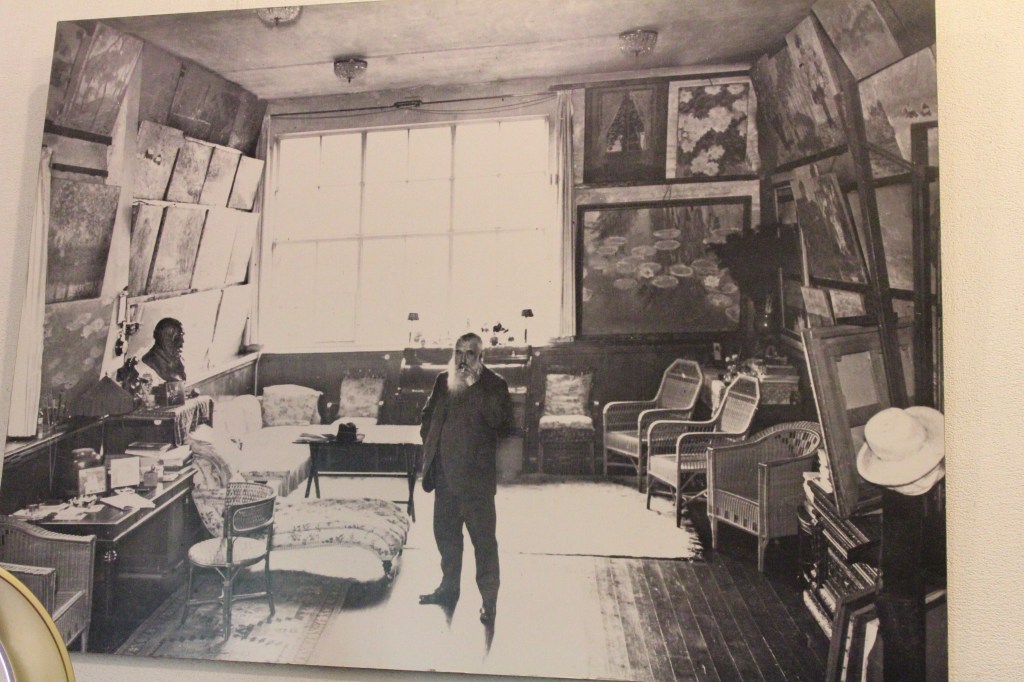
Monet in his Studio 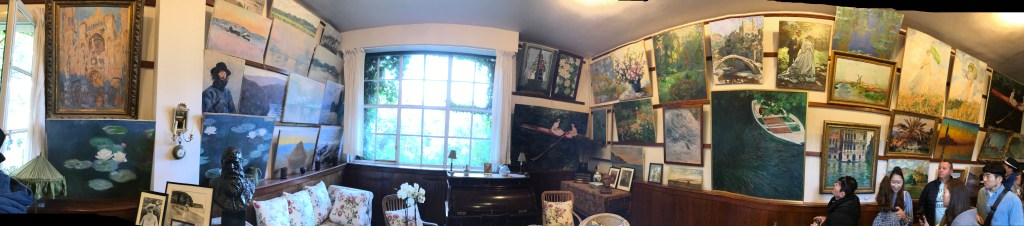
Studio today 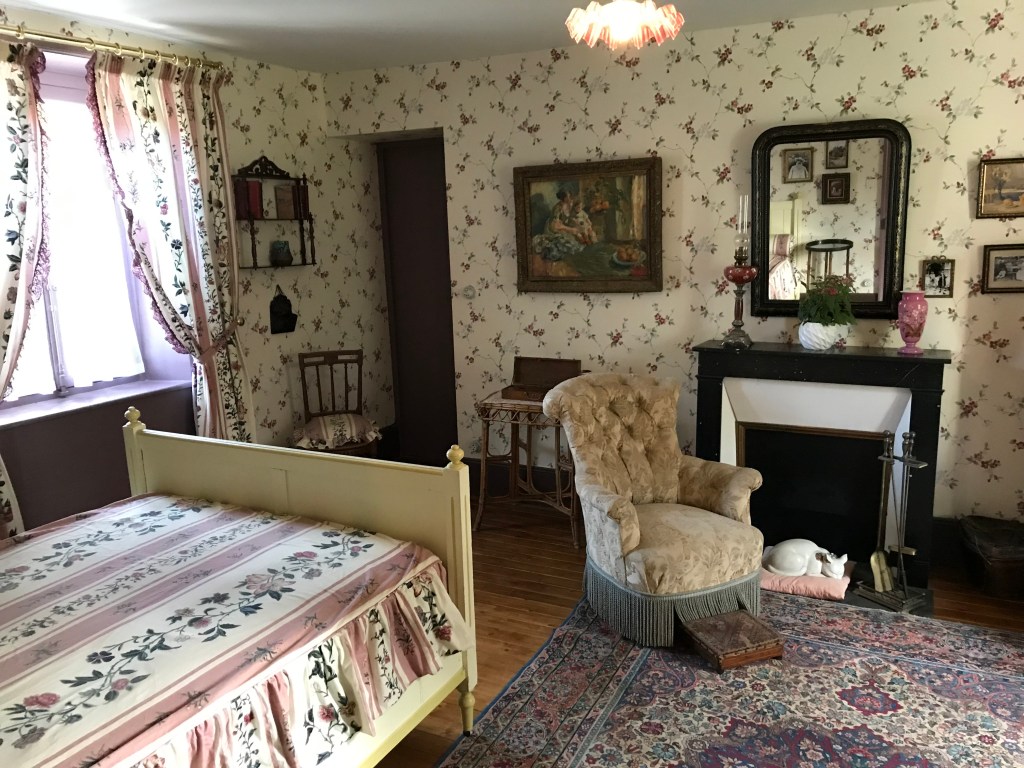

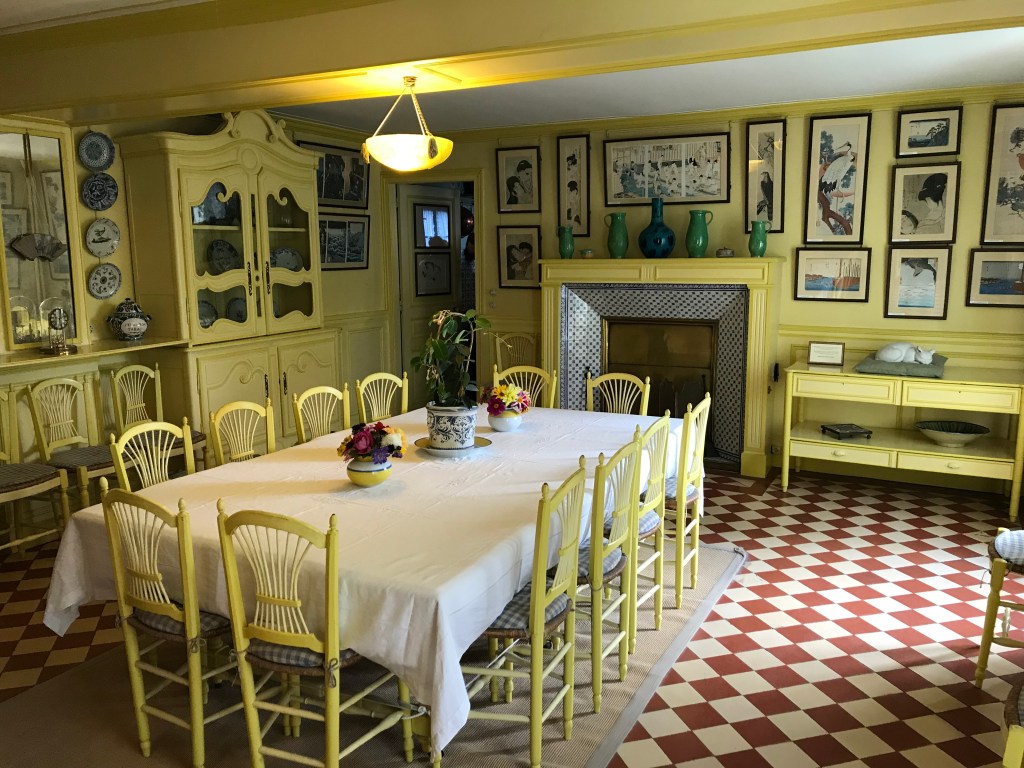
Crazy yellow dining room 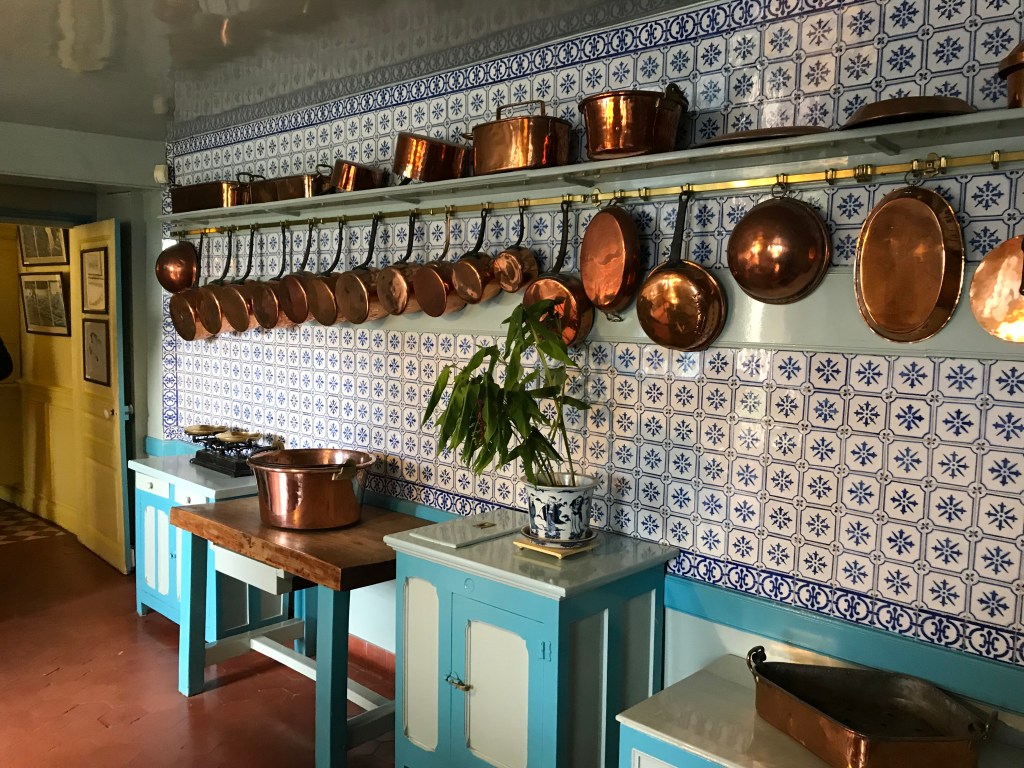
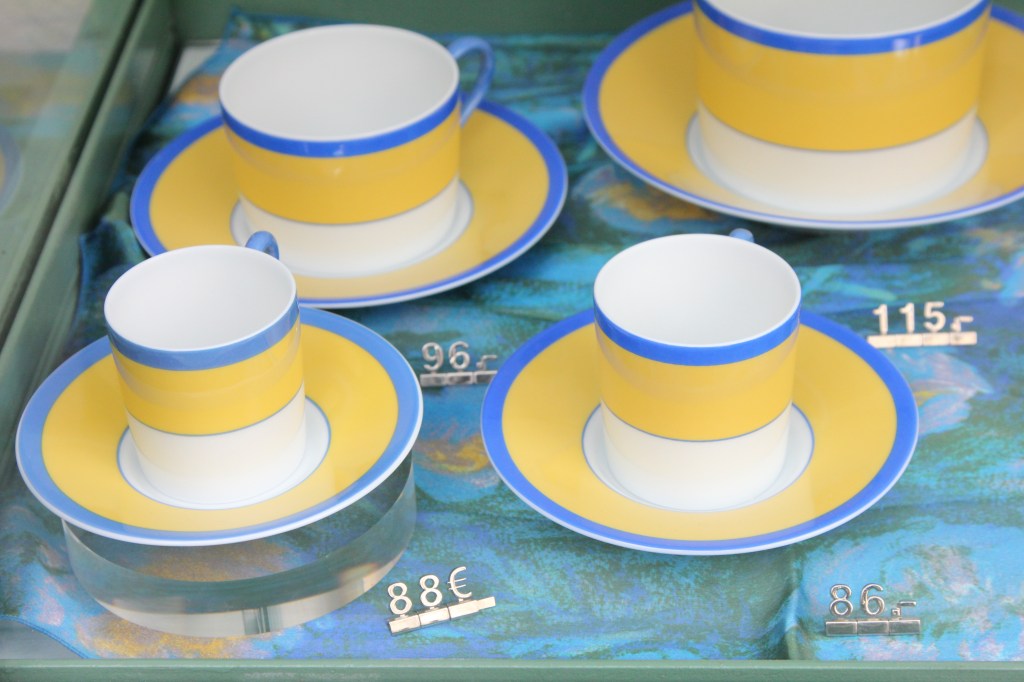
Colorful cups in gift shop
After exiting the gift shop and grabbing a coffee and croissant at the nearby café, we traveled to the nearby Giverny church where he is buried along with several family members. At Monet’s funeral, his long-time friend removed the black cloth draped over the coffin, stating, “No black for Monet!”. It was replaced it with a flower-patterned cloth.

Leaving Monet’s grounds 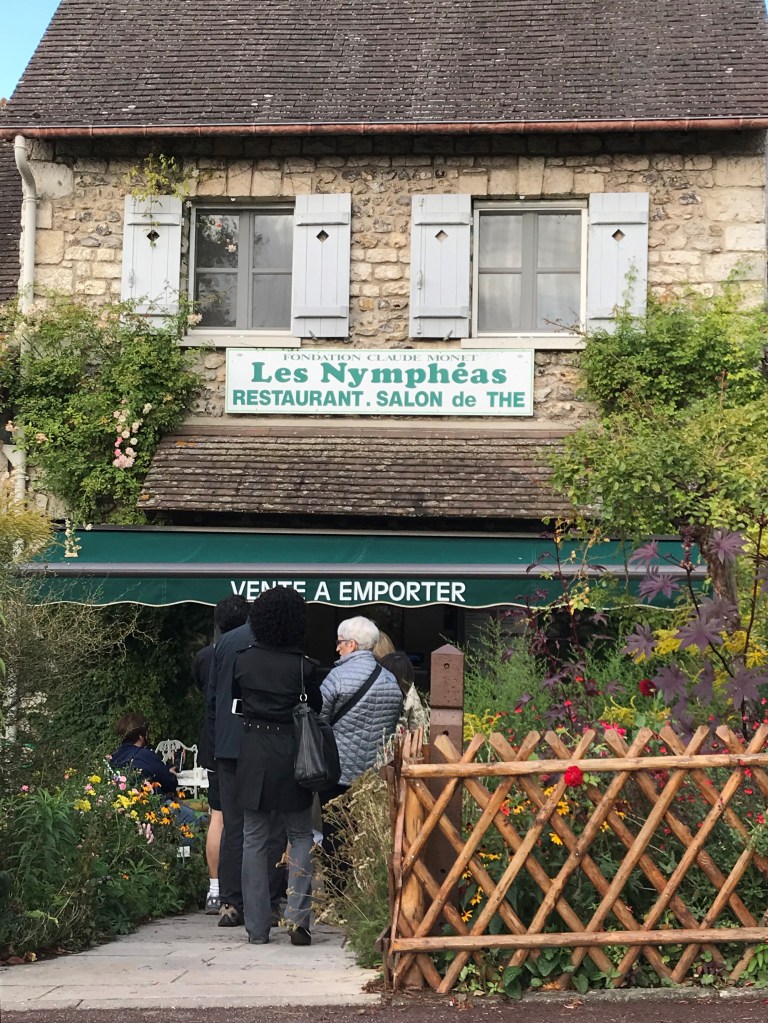
Time for café and croissant 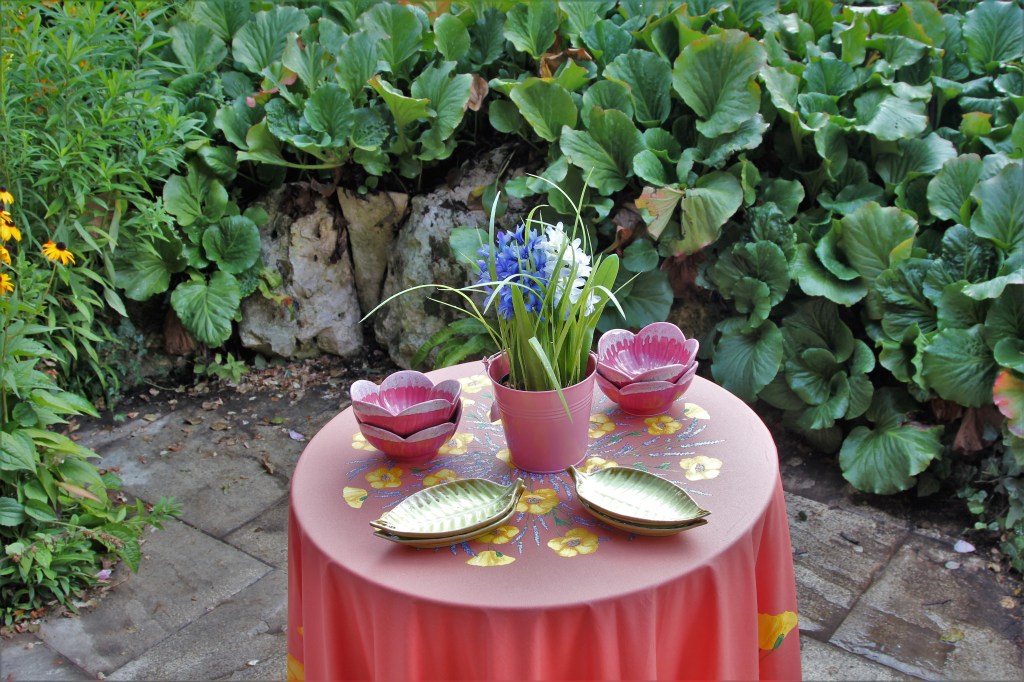
Cute table waiting for a couple 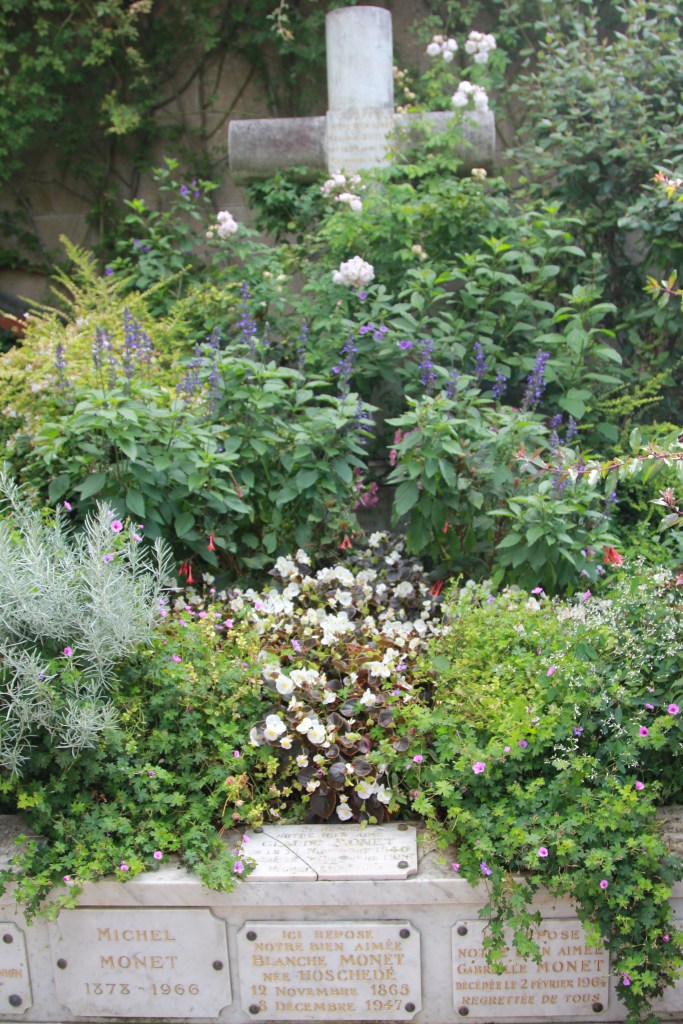
Monet’s final rest
Time to head back to Paris and away from the unique world of Monet and Giverny. I hope you enjoyed the trip as much as I did and hope, on your next trip to Paris, you leave time for a side trip to Giverny. I am so glad my wife booked ours!
To learn even more about Monet check out Amazon books. Let me know if you have visited or any comments on this post!
 The Sane Adventurer
Leave a comment